Chiang Rai rice scare hits southern rice shops
Southern millers say Chiang Rai river-toxin fears are denting northern rice sales, even as officials report Mae Sai grain meeting Codex arsenic limits.
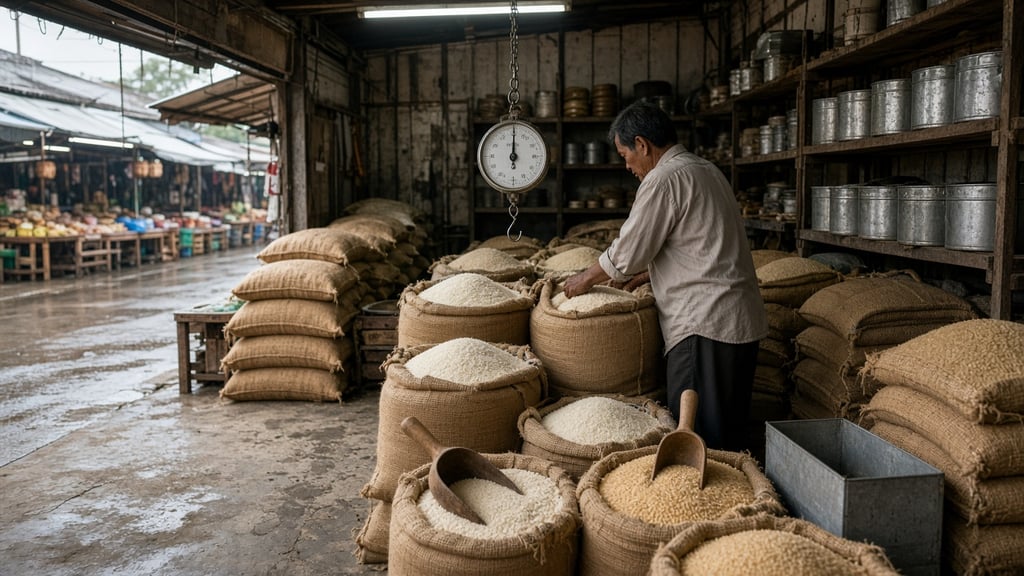
Consumer alarm over heavy-metal contamination in Chiang Rai's Kok, Sai and Ruak rivers has travelled the length of Thailand, rattling rice shops and millers as far south as Hat Yai and Nakhon Si Thammarat. The scare is not a new finding of poison in supermarket sacks. It is a confidence shock. Buyers on the peninsula are asking whether northern-origin rice is safe, and some traders have quietly shifted orders toward Isan jasmine and Central Plains grain while they wait for a clearer map of which paddies actually sit on tainted irrigation water.
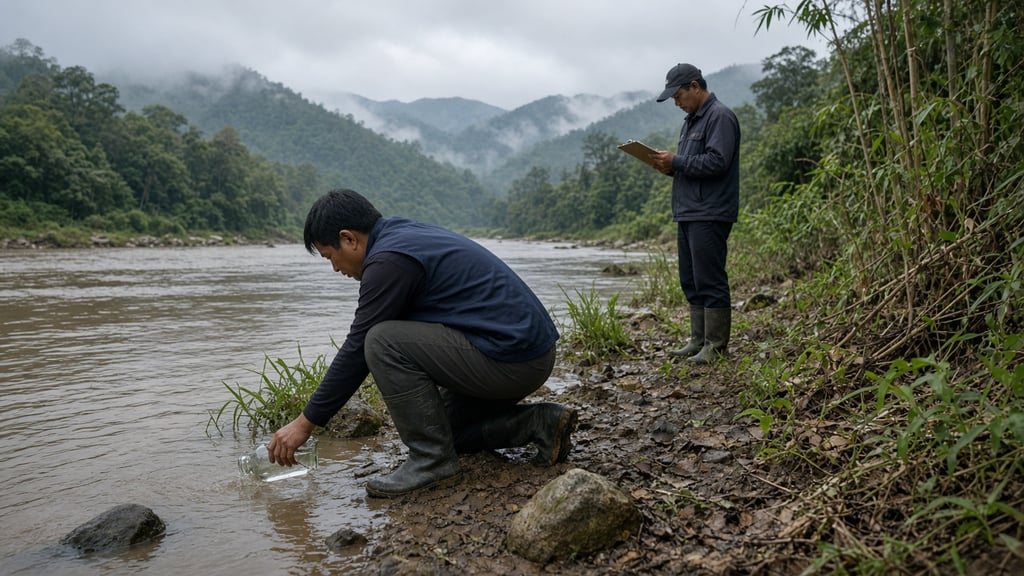
The Kok rises in Myanmar's Shan State, crosses into Mae Ai in Chiang Mai, runs through Chiang Rai city and meets the Mekong after a 285-kilometre course. The Sai and Ruak form the Mae Sai border reach. Testing since early 2025 has repeatedly found arsenic and other metals in water and sediment, widely linked to upstream rare-earth and gold mining. That water crisis is now showing up in the rice trade more than 1,000 kilometres away.
Southern shops feel a northern water crisis
Southern millers say only about 10 percent of the rice sold in the South is northern-origin grain, with jasmine and RD varieties still coming mainly from the Northeast and Central plains. Local paddies still cover 30 to 40 percent of southern consumption. That mix should, on paper, limit the damage. In practice, origin labels are thin at neighbourhood shops, and a rumour about northern rice is enough to slow the till.
Paddy land in Nakhon Si Thammarat, Songkhla and Phatthalung has shrunk to roughly 200,000 rai from more than 1 million rai, with wet- and dry-season output around 200,000 tonnes a year. Much of the lost acreage went to oil palm. The Southern Rice Millers and Farmers Association, led by Likhit Lekhaphan, has been telling members that the peninsula cannot feed itself if buyers reject the remaining northern inflows, and that freight from Isan and the Central region will push retail prices higher. Wet-season 2026/27 southern paddy is expected to rise 10 to 20 percent after farm-gate prices climbed from about 6,000 baht a tonne to around 9,000 baht, but that still leaves the South dependent on trucked-in grain.
What the tests show, and what they do not
On 20 November, laboratory results for 10 rice samples from Mae Sai and Chiang Saen, seven white and three brown, all met Codex Alimentarius limits for inorganic arsenic. Researchers at Rajamangala University of Technology Lanna in Chiang Rai collected the grain on 17 November from Ko Chang, Wiang Phang Kham, Si Mueang Chum and Si Don Mun, with millers watching. Officials later cautioned that ten lots are not a census of every paddy in the district.
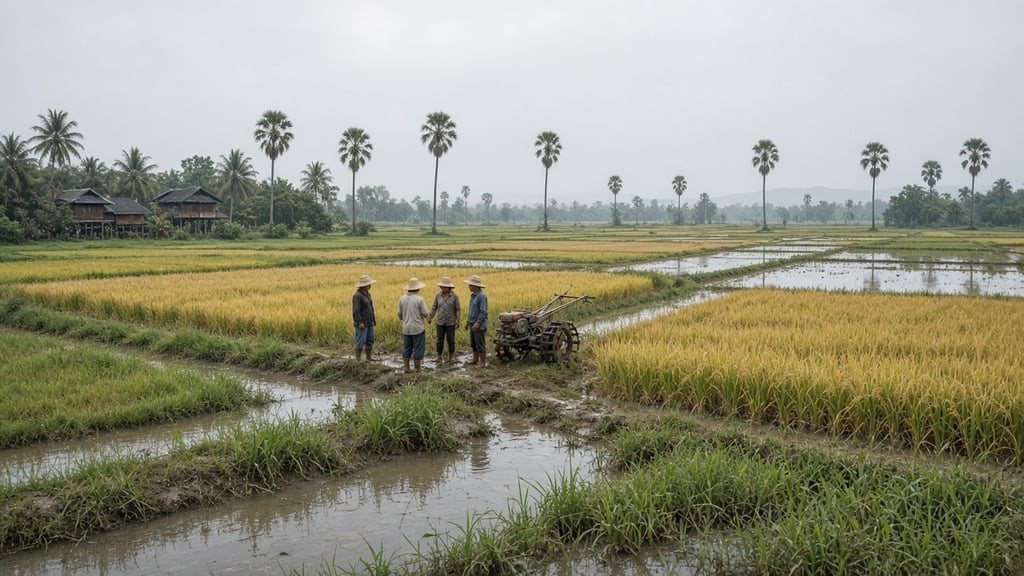
Farm-gate prices in Mae Sai had slipped to 9.10 to 9.20 baht a kilogram when mills paused, then recovered to 10 to 10.20 baht by 29 November after the tests were publicised. The Department of Internal Trade brought two mills into a paddy fair at Mae Sai Agricultural Cooperative's Si Mueang Chum branch, paying at least 100 baht a tonne above the local market: 10,000 baht a tonne at 25 percent moisture and 11,750 baht at 15 percent. The first day moved nearly 400 tonnes. About 94 to 95 percent of Chiang Rai's wet-season crop is already sold.
On 28 November, Disaster Prevention and Mitigation director-general Nirat Pongsitthaworn and Internal Trade director-general Wattanasak Sur-iam visited that same Si Mueang Chum branch. They said Chiang Rai rice sent for testing had met safety standards, and that mills in the district were still buying glutinous paddy at 10,000 baht a tonne. Prime Minister Anutin Charnvirakul, who also holds the Interior portfolio, had assigned both departments to monitor harvest purchases and prices and to coordinate rice-quality checks with the Commerce Ministry so farmers, millers and consumers could have confidence in Chiang Rai grain.
Cooperatives that had frozen purchases in Mae Sai, Chiang Saen, Mae Chan and Chiang Khong reopened after the 20 November briefing. Mae Sai Agricultural Cooperative, which gathered 38,000 tonnes last season, has already taken in more than 18,700 tonnes this crop year, posting 9,000 baht a tonne for RD6 and Nan 59 and 14,500 baht a tonne for Hom Mali under a collection scheme.
That rebound does not erase the water data. The Pollution Control Department recorded 0.25 milligrams of arsenic per litre in the Sai River at Ban Hua Fai in Mae Sai on 6 November, 25 times the 0.01 milligram surface-water standard. Agriculture Minister Suriya Juangroongruangkit ordered the Rice, Fisheries and Livestock departments to recheck the food chain. Fisheries officials separately reported heavy metals above limits in some fish taken from the Kok and the Mekong, while warning that a handful of specimens cannot be read as a river-wide ban.
Earlier 2025/26 field work had already found arsenic above applicable limits in rice from some Kok-basin sites and in soil and grain in the Sai and Ruak basins. Farmer networks around Wiang Chai described buyers stepping back and prices in affected pockets falling toward 8 baht a kilogram even as other districts recovered. Disaster-prevention officials have been repeating a zoning argument: fields irrigated from the Sai or Ruak are not the same as fields on other water sources, and lumping all Chiang Rai rice together is what crushed bids.
The Agriculture Ministry is collecting about 200 soil, water and crop samples along the Kok, Sai and Ruak, with a risk map due by 15 December. Sampling points sit 200 metres and 500 metres from the banks. The plan is a red, yellow and green Agri-Map: certified green zones to restore buyer confidence, red zones for soil recovery and, if needed, official purchase and destruction of unsafe lots through the Bank for Agriculture and Agricultural Cooperatives. A sediment-trap pilot at the Mae Sai irrigation intake is meant to protect on the order of 27,000 rai of paddy.
What This Means for Expats and Travelers in Thailand
Household rice in Phuket, Samui, Hat Yai and Krabi is mostly Hom Mali and Pathum Thani-style white rice from the Northeast and Central plains, not Chiang Rai sticky rice. If a sack is labelled northern-origin, ask the shop for the mill and province. The November Mae Sai tests are reassuring for those specific lots. They are not a blanket certificate for every farm on the Kok.
Visitors heading to Chiang Rai should treat river recreation as a separate question from supermarket rice. Waterworks officials have been checking turbidity hourly because cloudier water can track with higher arsenic, and some village systems drawing from surface water have been told to stop if readings fail. Rafting, swimming and eating river fish in the Kok-Sai-Mekong corridor remain the higher-risk behaviours, not a plate of jasmine rice in a southern hotel. Until the 15 December agricultural risk map is published, labelled Isan Hom Mali or southern Sang Yod is the straightforward household choice. Thailand's rice export brand is the quiet stake: a scare that reaches Hat Yai can reach buyers in Hong Kong and the Gulf just as easily.
Related Coverage
All Economy →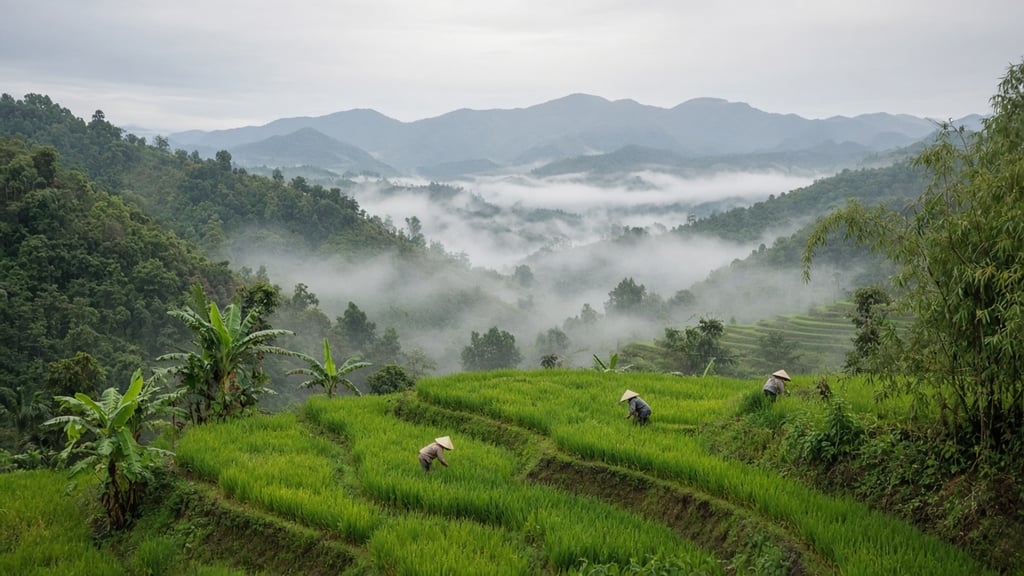
Revision History (2 versions)JSON API
- Rev 2THAI.NEWS Editorial Desk
Add 28 November DDPM and Internal Trade field confirmation that tested Chiang Rai rice met safety standards, with mills still buying glutinous paddy at 10,000 baht a tonne, and cite Thansettakij.
On 28 November, the DDPM and Internal Trade directors-general said tested Chiang Rai rice met safety standards, with mills still buying glutinous paddy at 10,000 baht a tonne.On 28 November, Disaster Prevention and Mitigation director-general Nirat Pongsitthaworn and Internal Trade director-general Wattanasak Sur-iam visited that same Si Mueang Chum branch. They said Chiang Rai rice sent for testing had met safety standards, and that mills in the district were still buying glutinous paddy at 10,000 baht a tonne. Prime Minister Anutin Charnvirakul, who also holds the Interior portfolio, had assigned both departments to monitor harvest purchases and prices and to coordinate rice-quality checks with the Commerce Ministry so farmers, millers and consumers could have confidence in Chiang Rai grain. - Rev 1 · OriginalSiriporn Rattanakul
Original publication
Comment verification
Step 1 of 3
Verify your email once to publish your comment. Your email is never shown publicly.
Enter the 6-digit code sent to .
Choose the display name shown next to your comments.