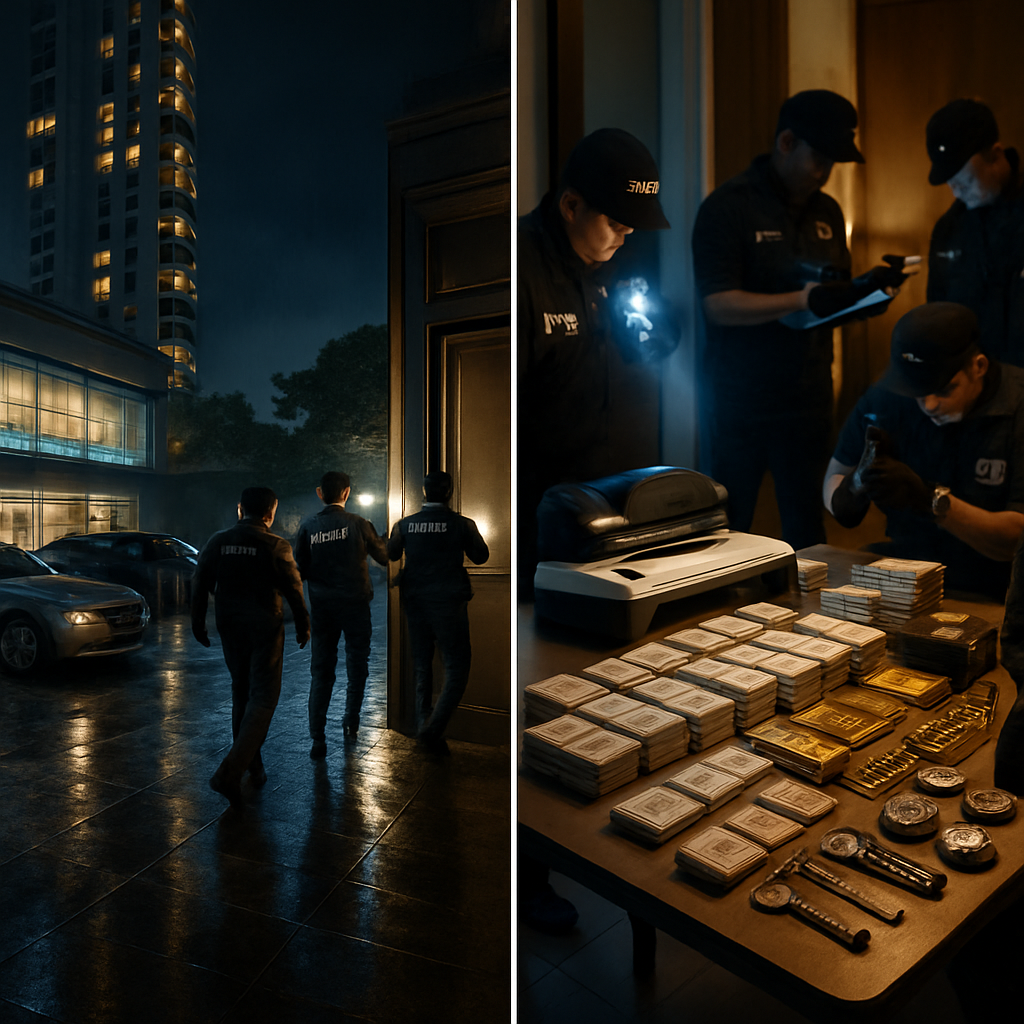
Bangkok’s narcotics scene got a weekend wake-up call after a three-month probe culminated in the arrest of four suspects allegedly tied to a cocaine distribution network operating across the capital and neighbouring provinces. Announced by the Royal Thai Police and the Narcotics Suppression Bureau on 24 January 2026, the coordinated swoop pulled together the Metropolitan Police Bureau, the Office of the Narcotics Control Board and several specialist investigative units.
The operation’s headline arrest involved a 38-year-old Thai woman identified by police as a central figure in the network. She was taken into custody on the evening of 23 January at approximately 8:30pm at an ice rink on Soi Pridi Phanomyong 37 in Watthana district. Authorities have charged her with the sale and distribution of Category 2 narcotics for commercial purposes — a serious accusation that carries heavy penalties under Thai law.
Three other suspects were detained between 22 and 23 January during raids across Bangkok’s districts of Watthana, Chatuchak and Sathorn. Two of those arrested face possession charges, while the third is accused of assisting with distribution activities. All four remain in custody as the investigation continues and prosecutors prepare the next legal steps.
Officers recovered a haul of items that paint a picture of an organised operation: 250.57 grammes of cocaine, vacuum sealing equipment and packaging materials often used to preserve and portion narcotics, plus financial and luxury assets. Confiscated property included cash, gold bars, gold jewellery, branded goods and three vehicles. Police also froze bank accounts connected to the suspects. Investigators estimate the total value of seized assets at roughly 6.28 million baht.
Investigators say the case has roots in an earlier inquiry triggered by arrests in the Nana area several years ago. From those beginnings, intelligence work gradually identified alleged distribution activity centred in residential condominiums and gated private communities. During searches of residences in both Bangkok and nearby Samut Prakan province, officers discovered transaction records showing repeated cocaine sales over an extended period — and, notably, indications that many clients were affluent.
According to police statements reported by Khaosod, the main suspect admitted involvement in distribution during questioning and was transferred to the Narcotics Suppression Bureau for further legal procedures. Law enforcement officials stressed the importance of following financial trails in building this case: with bank accounts frozen and luxury assets seized, investigators hope to disrupt the economic backbone that supports trafficking operations.
Beyond the headline arrests, the operation highlights how modern narcotics investigations increasingly blend old-fashioned legwork with forensic financial inquiry. Vacuum-sealers and small packaging might be the telltale tools of street-level dealing, but the presence of bank accounts, gold and branded items points to deeper commerce and profit — the kind of infrastructure investigators say must be dismantled to cripple supply chains.
For residents of Bangkok’s Upcountry-style condos and high-rise neighbourhoods, the case is a reminder that illegal networks don’t always operate on the margins. Police allege some distribution was aimed squarely at wealthier clientele, using privacy and anonymity in apartment blocks to avoid detection. Whether that pattern is widespread or confined to this particular ring remains to be seen as police continue their enquiries.
Authorities have not released the suspects’ names publicly pending further legal action. Officials did confirm that the arrests represent just one phase of an ongoing effort by multiple agencies to trace, freeze and ultimately prosecute the money flows and logistics behind cocaine trafficking in the region.
As the investigation proceeds, the Narcotics Suppression Bureau will prepare formal charges and evidence for the public prosecutor. For now, those arrested are being held while authorities comb through seized phones, ledgers and digital records — the modern breadcrumbs that can link dealers, suppliers and buyers.
Khaosod’s reporting on the operation cited statements from senior police officials directly involved in the case. With assets seized and suspects in custody, police say they will press on, using a mix of intelligence-led policing and financial forensics to try to bring the entire network to heel.
The arrests mark a notable development in Bangkok’s ongoing battle against drug trafficking — and a clear signal that law enforcement will chase leads from the streets to the bank accounts that keep illicit commerce flowing.
















This reads like a movie script — rich condo parties and hidden bank accounts, but the police finally made a big catch in our city.
Looks good for headlines, but are we sure this won’t just be a scapegoat to show action while higher-ups stay untouched?
I worry about that too; freezing bank accounts is good, but without follow-through on suppliers and networks it might be cosmetic justice.
Why is everyone surprised? Drugs follow money — follow the gold, not the ice rink photos.
Basic financial forensics wins again, but I bet they’ll only prosecute the small fish and leave the big laundering alone.
That’s cynical but believable; when wealth and power mix with illegal markets, real accountability often evaporates.
As someone who lives near those condos, I’m relieved but also uneasy that my neighbors might have been clients.
Six million baht seized — sounds like a victory, but is that tip of the iceberg or the whole operation?
Given the seized packaging and ledgers, it looks systemic and recurring, not just a one-off stash; financial trails often reveal wider rings.
Thanks, Dr. Chen — so prosecutors probably have plenty of evidence to pursue others?
Or they could use those files selectively to pressure people, not to dismantle the network entirely.
This is bad. People should stop doing drugs.
Noble sentiment but simplistic; prohibition alone doesn’t erase demand or the socioeconomic drivers behind it.
Combining old-fashioned policing with financial forensics is a global best practice, but success depends on judicial independence and anti-corruption safeguards.
Exactly — legal systems must be able to pursue money laundering across borders, which requires political will and international cooperation.
And public transparency about asset forfeiture helps prevent misuse of seized assets, so civil society should demand clear reporting.
Why arrest the woman at an ice rink? Did she think skating would hide her bank transfers?
Places like ice rinks are public but private enough for meetings; wealthy clients can rendezvous without obvious suspicion.
Weird place but plausible — I’ve seen clandestine meetings in coffee shops and gyms, not just alleys.
I’m torn — pleased to see action, but worried this becomes a PR stunt before the election cycle.
Policing for optics happens everywhere, true, but the asset freeze suggests prosecutors are serious, not just cameras.
Hope you’re right; I’d like to see names released and cases proceed transparently rather than vanish into court backrooms.
If many clients were affluent, maybe the real problem is inequality — richer people buying escape, poorer people paying the cost.
Good point — demand among the wealthy fuels sophisticated distribution, and enforcement often targets lower-level dealers while clients avoid scrutiny.
I smell collusion: small busts for show while the suppliers and bankers keep operating behind shadow companies.
Conspiracy talk, but not implausible; without full disclosure of investigations it’s hard to trust long-term disruption claims.
Exactly — transparency matters, otherwise these stories are smoke and mirrors.
As a parent, I’m terrified that such networks are operating near family condos; safety should be our priority.
Totally — community reporting and better condominium security policies could help, but police responsiveness matters too.
From an economic view, the seizure of luxury assets and frozen accounts should impose real costs on the network and deter laundering.
Yes, but only if the state efficiently converts seizures into public benefit and avoids diversion of funds.
Agreed — governance of forfeited assets is critical to maintaining public trust in such operations.
We must ask why affluent buyers are insulated; legal reform and demand-reduction strategies are as important as arrests.
So education instead of arrests? Both are needed, but don’t let sympathy for users excuse dealers.
Education, treatment, and targeted enforcement — not one or the other — that’s the balanced approach.
Three months of work and they nailed four people — that’s efficient policing if it’s real and not selective.
Efficiency is good, but how many higher-level contacts will face charges? That determines the operation’s real impact.
True — the follow-up indictments will show whether this was a cage to trap a whole network or just a small ring.
I worry about privacy and abuse of power when police freeze bank accounts; due process must be respected even in drug cases.
I agree — freezing accounts is useful but must be judicially supervised to prevent political weaponization.
Local condo managers should vet residents more carefully and report suspicious behaviour instead of ignoring it for rent.
Easier said than done; privacy rights and tenancy laws limit what managers can do without clear evidence.
Still, basic due diligence and swift reporting could disrupt small-scale distribution in residential towers.
Also remember cultural stigma stops people from reporting friends or colleagues, which lets networks thrive in plain sight.
Yes, fear of shame and retaliation keeps people quiet; community outreach could lower that barrier.
The mention of gold bars and luxury goods shows trafficking is profitable and intertwined with legitimate markets.
Which is why anti-money-laundering at jewelers and car dealers matters; they’re the conversion points for dirty cash.
Why aren’t the suspects named? Transparency or standard legal protection?
Media often waits until prosecutors file charges to avoid defamation; it’s a legal caution, not necessarily secrecy.
If wealthy clients are buying, maybe we should tax luxury goods more to reduce laundering avenues — think outside just arrests.
Tax policy might help but would be indirect; targeted financial controls and beneficial ownership registries are more effective.
Police said many clients were affluent — why not publish demographics and let society judge who enabled this market?
Publishing client info risks privacy and legal breaches; better to prosecute with evidence than broadcast allegations.
Fair, but selective silence breeds suspicion that elites are protected.
As a teen, this scares me — drugs in fancy places means it’s normalised at higher levels than I thought.
That’s concerning; prevention programs in schools should address normalization and the role of wealthy enablers.
From a law-enforcement perspective, this is a textbook case: intelligence, coordinated raids, and asset tracing.
Textbook on paper — we’ll judge success when indictments and convictions follow, not just arrests.
Fair point — the legal process will reveal the depth of the network and whether this was just a surface sweep.
People blaming the rich is easy; verifying client lists requires warrants and a lot of proof, so patience is necessary.
Patience is fine for justice, but transparency about process would prevent cynicism about selective enforcement.
Confiscating branded goods and vehicles is smart because it directly impacts the lifestyle that funds recruitment.
Still, community support for rehabilitation rather than pure punishment could reduce recidivism among lower-level participants.
I want the full paper trail — phones and ledgers can lead to suppliers overseas, which is the real prize here.
Cross-border tracing is difficult but essential; digital forensics can uncover transactional links if cooperation with foreign agencies exists.
Overall, arrests matter but so does systemic change: demand reduction, better financial controls, and community resilience.
I can accept prevention and enforcement together; just don’t let it turn into endless talk with no convictions.