Khon Kaen holds Korean on Interpol Red Notice
Khon Kaen Immigration arrested a 70-year-old South Korean on a Seoul fraud warrant and Interpol Red Notice, then revoked his retirement stay.
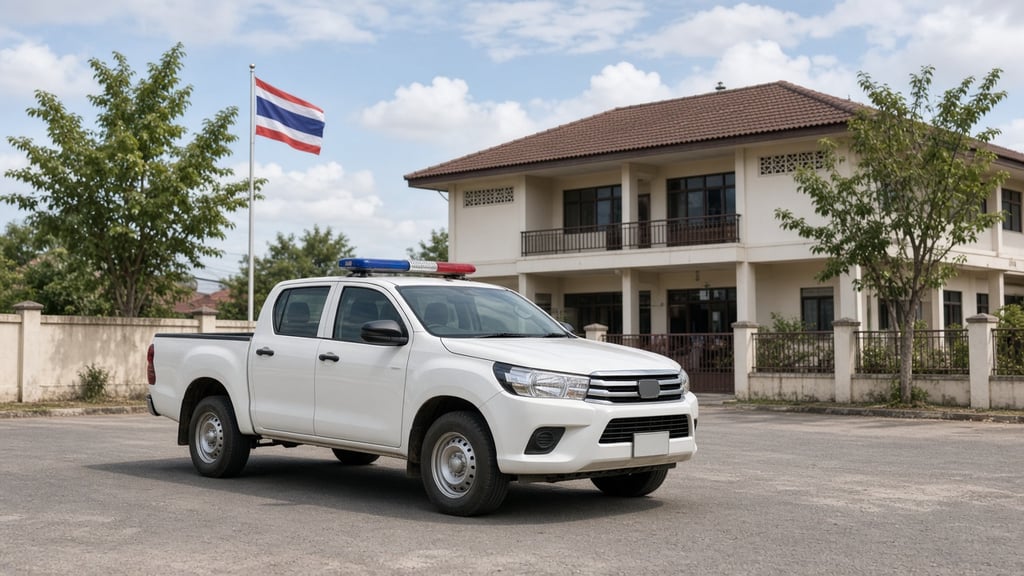
Immigration officers in Khon Kaen detained a 70-year-old South Korean national at a house in Kranuan district on 26 November 2026 after a biometric match flagged him as a wanted fraud suspect.
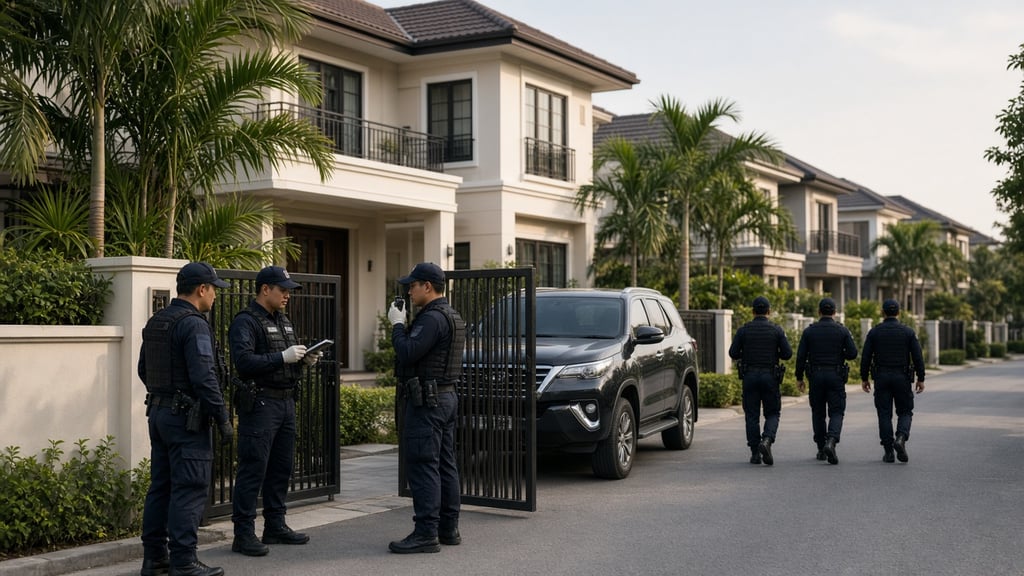
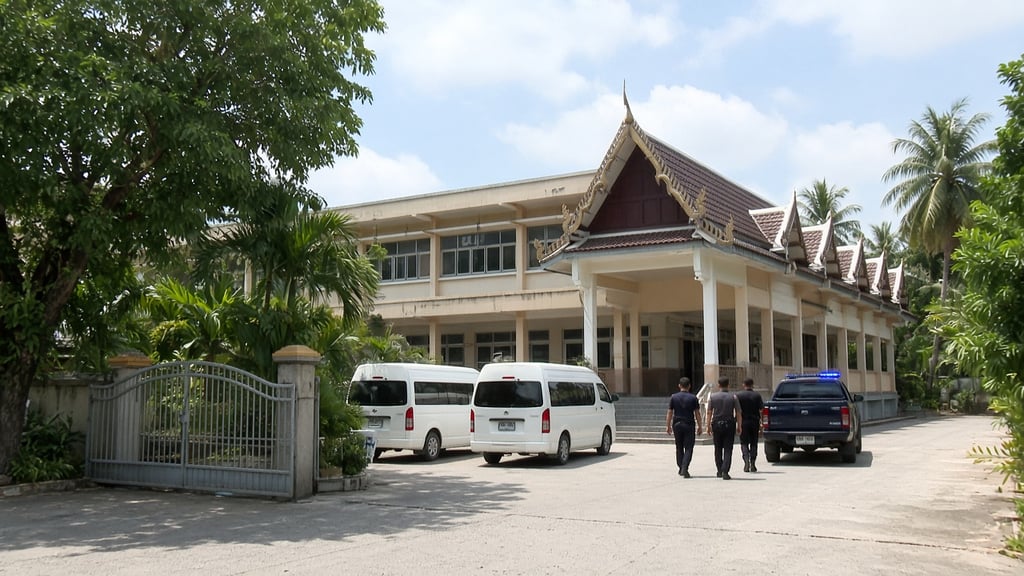
The man, identified as Jea Suk Lee, had been living in village 8 of Nong Ko subdistrict on a retirement-based temporary stay that still had almost a year to run. Officers from Immigration Division 4 and Khon Kaen Immigration, backed by Tourist Police and provincial internal-security staff, arrived at the house at about 16:00, cancelled that permission in writing, and moved him to the provincial immigration office to arrange a return to South Korea.
How a Kranuan house came onto the radar
Kranuan sits in the northeast of Khon Kaen province, a large Isan jurisdiction of 26 districts whose main city lies well south of the arrest site. Local reporting says Khon Kaen Immigration's investigation team first saw an alert in the Immigration Bureau's biometric database on 23 November 2026, then spent three days tying the hit to a residential address rather than an airport queue.
Police Maj. Gen. Pairat Pukcharoen, commander of Immigration Division 4, led the field group. Officers identified Lee at the house, showed him the stay-revocation order (form TM.83), and explained his legal rights. A 34-year-old Thai relative was present as a witness and interpreted until he confirmed he understood the allegation and the next steps. He was then taken to Khon Kaen Immigration, not to a criminal court, because the immediate Thai case is an immigration one: his permission to remain had just been pulled.
What Seoul wants, and what a Red Notice actually does
Division 4 said Lee is a suspect under a warrant from the Seoul Northern District Court for fraud and economic crimes. Thai officers have not published the amount alleged, the number of victims, or the year the Korean case was filed. That silence matters. A wanted notice is not a conviction, and INTERPOL itself states that a person sought for prosecution should be treated as innocent until proven guilty in the requesting country.
A Red Notice is a request that police worldwide locate and provisionally arrest a person pending extradition or similar legal action. It is not itself an international arrest warrant. INTERPOL publishes the notice at a member country's request after a compliance review. Each member then applies its own law. Thailand did not need the notice to invent a new crime on Thai soil. It used the match to find a foreigner already inside the Kingdom, then used the Immigration Act to cancel his stay and hold him for removal.
Those are two tracks that often run in parallel. Extradition is a judicial process between states. Administrative removal, which Thai immigration offices call pushing a foreigner back to the country of origin, is an Immigration Bureau procedure. Officers have not said which path Seoul has asked Bangkok to follow, or when a flight will be booked. Until travel documents and a receiving-end handover are in place, Lee remains in immigration custody in Khon Kaen.
Five years on a retirement permission
Lee last entered Thailand through Suvarnabhumi International Airport on 8 May 2021. He later obtained temporary permission to remain until 10 October 2027 on retirement grounds. That is a little more than five and a half years between the last recorded arrival and the Kranuan arrest, and a stay stamp that would have carried him into late 2027 if the biometric hit had never landed.
Retirement permission is a temporary stay, not permanent residence. It can be withdrawn when a foreigner becomes a prohibited person or otherwise fails the conditions of stay. Once permission is revoked, remaining in the Kingdom is an offence under section 81 of the Immigration Act B.E. 2522 (1979), with a maximum of two years in prison, a fine of up to 20,000 baht, or both. The daily 500-baht figure familiar to overstayers is a compounding practice under section 84, not the sentence written into section 81. In a Red Notice case the bureau's usual next move is detention and removal, not a counter fine and a new stamp.
What This Means for Expats and Travelers in Thailand
Long-stay retirees in secondary provinces are not invisible to the Immigration Bureau's biometric system, even if the nearest immigration office is a provincial shop-front rather than Suvarnabhumi. A clean bank book and a valid extension do not freeze an overseas warrant. If a Red Notice or a foreign court order is later linked to a passport already in Thai files, officers can revoke the stay under the 1979 Act and hold the person for deportation without waiting for a Thai criminal trial on the foreign fraud allegation.
Anyone living outside hotel lodgings should assume that address data, 90-day reporting, and biometric records can be read together. Tips still go to the Immigration Bureau hotline 1178. The practical lesson from Kranuan is narrower than a panic about every retirement queue: keep your own record clean, do not treat Isan quiet as a legal shield, and understand that a Red Notice is a locate-and-hold request that Thai immigration can convert into a one-way ticket home.
Comment verification
Step 1 of 3
Verify your email once to publish your comment. Your email is never shown publicly.
Enter the 6-digit code sent to .
Choose the display name shown next to your comments.