Khurusapha, UNESCO set AI teacher standards
Thailand's Teachers' Council is lining up a national AI competency ladder for educators, with six domains, four proficiency levels, and a ministerial proclamation still due this year.
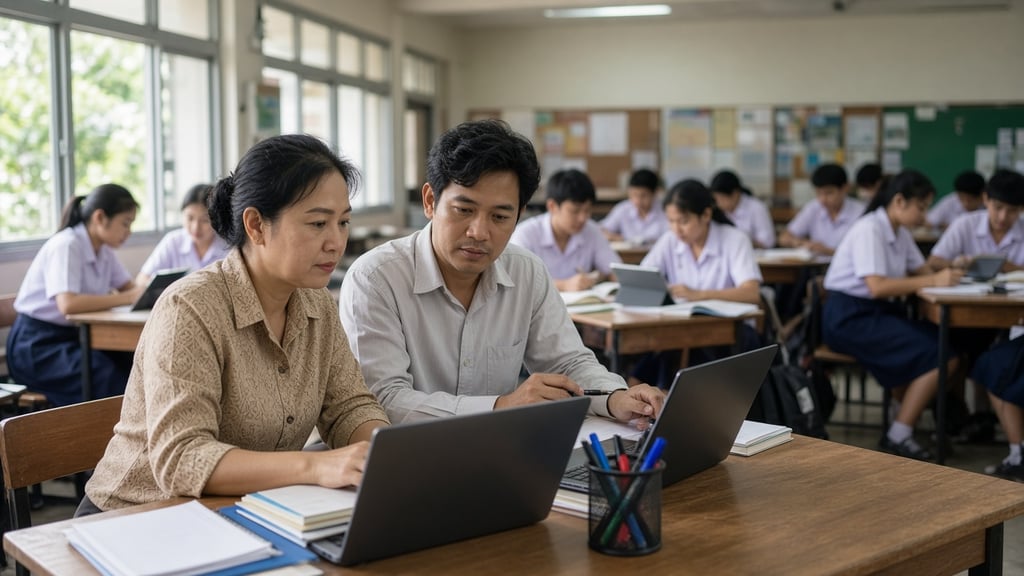
Thailand's professional teacher regulator is preparing to treat artificial intelligence as a core classroom competency, after the Teachers' Council of Thailand (Khurusapha) sat down with UNESCO's Bangkok office to finish a national standard for how educators should use the technology. The draft, named Thailand's AI Competency Framework for Teachers, sets six competency domains across four proficiency levels and is meant to receive a ministerial proclamation before the end of 2026.
Dr. Niyom Phaisopha, an inspector-general at the Ministry of Education who is acting as Khurusapha secretary-general, briefed Thai reporters on 29 November after an exchange with UNESCO Bangkok. The council wants a standard that classroom teachers, school administrators, education administrators, and academic supervisors can actually apply, with ethics and equal access treated as part of the job rather than as an afterthought.
A four-rung ladder on UNESCO's global model
The Thai briefing names the four rungs in English: Basic Level, Active User Level, Expert User Level, and Leader/Influencer Level. That is one more step than UNESCO's AI Competency Framework for Teachers, issued in 2024, which moves through Acquire, Deepen, and Create. Khurusapha said the extra rung reflects a Thai decision to score not only classroom practice but also school management and policy work.
The six Thai domain names have not been published. Officials said the matrix draws on UNESCO's global model, research from Chulalongkorn University, learner-competency work, and Thailand's existing professional teacher standards. Until Khurusapha releases the labels, the international reference remains UNESCO's five published domains: a human-centred mindset, ethics of AI, AI foundations and applications, AI pedagogy, and AI for professional learning.
UNESCO's Bangkok team, according to the council, applied three tests to the Thai draft. The standard must fit the real condition of Thai schools. It must be simple enough for teachers to use in ordinary lessons. And it must treat AI as a way to narrow, not widen, gaps between well-equipped urban classrooms and the rest of the system. Thailand is already among the 193 states that endorsed UNESCO's 2021 Recommendation on the Ethics of Artificial Intelligence. The teacher framework is also being presented as a follow-on to a May 2026 meeting between Thailand's education minister and UNESCO's director-general.
What gets signed, and what it may mean for licences
The next administrative step is a set of workshops with school representatives, teacher-training institutes, and UNESCO to write an implementation handbook. The education minister is then expected to sign the official proclamation this year. In 2027, Khurusapha plans to load manuals and training courses onto its Khuru Platform and to take the Thai model to Asia-Pacific and global education meetings.
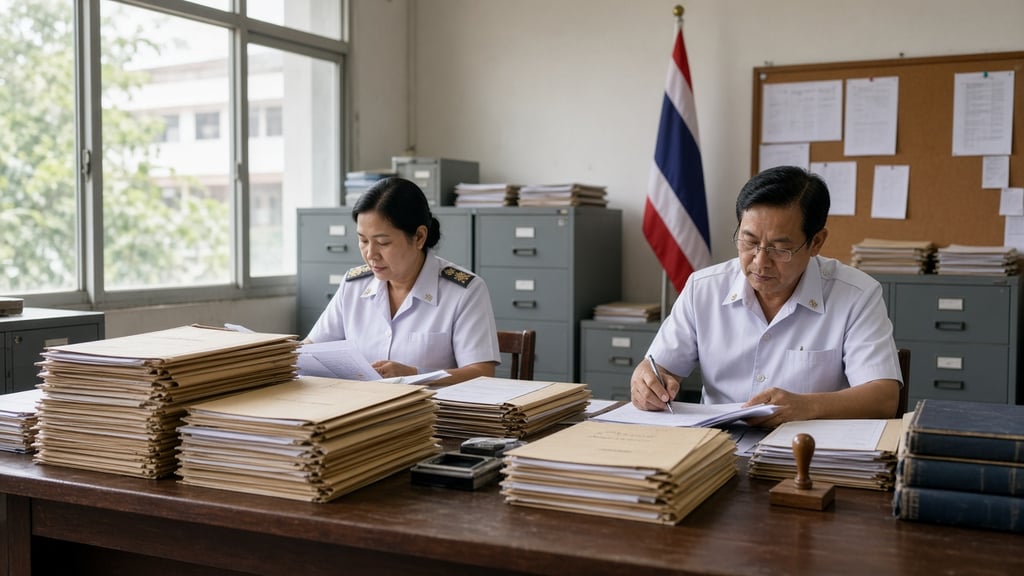
The briefing did not say the four levels will immediately become a condition for issuing or renewing a teaching licence. Khurusapha is, however, the body that licenses the profession. Pulling pre-service institutes into the workshops is a signal that teacher-education programmes may later be asked to teach to the new matrix. Foreign teachers who hold, or need, a Thai professional licence should watch whether the framework is folded into continuing professional development or licence paperwork after the proclamation, not assume that a test appears overnight.
The sequencing matters because large AI training programmes are already running. A Ministry of Education partnership with Microsoft Thailand and several education agencies reported in April 2026 that 160,507 teachers had completed the AI for Teachers programme, with certificates issued to 135,560 of them. UNESCO-linked workshops in October 2026 at the teacher-development institute in Nakhon Pathom trained further cohorts against the global framework. Khurusapha's document would sit above those courses as the professional standard, rather than as another short module.
The equity test the standard still has to pass
The sharpest constraint is hardware, not vocabulary. A UNESCO Bangkok assessment in 2025 found that more than 97 percent of Thai schools have internet access, yet only about 16 percent of households have a computer at home, with wide gaps in device access between urban and rural schools. Teachers in mountainous southern provinces have described unreliable connections as the daily limit on any digital tool. Bangkok instructors have reported students pasting chatbot answers they cannot explain, and a shortage of basic search and file skills even among well-equipped teenagers.
That split is already a public argument. On Reddit's r/Thailand, a university instructor's thread on weak computer literacy among Thai students drew hundreds of comments, including a Thai upper-secondary student who said classmates needed a lesson on how to prompt ChatGPT in class. On Pantip, parents and teachers are debating whether generative tools help children learn or simply complete the homework.
What This Means for Expats and Travelers in Thailand
Parents in Thai, bilingual, and international schools should expect more structured school rules on when students may use chatbots for assignments, and more teacher training that treats AI as an ordinary classroom tool. The first legal step in 2026 is a ministerial proclamation and a handbook, not a nationwide exam. Families outside Bangkok should not read the new standard as a promise of new devices. UNESCO's own Thailand work has already flagged a second digital divide: connectivity without computers, and computers without the skills to check what a model just wrote.
Foreign teachers who work on a Khurusapha licence, or who may need one for a government-school post, have a practical 2026 to 2027 watch list: whether the six domains are published, whether teacher-training institutes rewrite courses, and whether licence-renewal forms start asking for a proficiency level. International schools outside the public licensing system can ignore that paperwork and still feel the pressure, because Thai colleagues and university-bound students will be measured against a standard Bangkok now intends to show on a global stage.


Comment verification
Step 1 of 3
Verify your email once to publish your comment. Your email is never shown publicly.
Enter the 6-digit code sent to .
Choose the display name shown next to your comments.