Thailand cannabis bill clears Council of State
DTAM says the draft Cannabis Control Act has cleared Council of State review and will go to the Cabinet Secretariat for tighter medical-only rules.
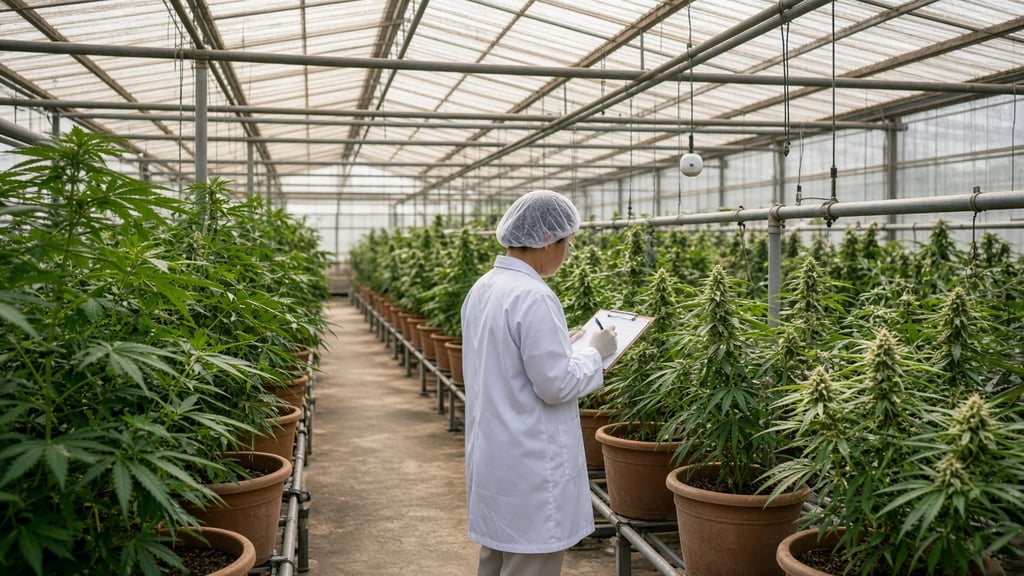
Thailand's Department of Thai Traditional and Alternative Medicine said on 29 November 2026 that the draft Cannabis Control Act has completed Council of State legal review and will be sent this month to the Secretariat of the Cabinet. That is the next administrative gate before ministers take formal notice and the text is transmitted to Parliament.
DTAM said Special Committee No. 10 of the Council of State finished its examination between 6 October and 17 November, with input from the department, the Food and Drug Administration, and the Office of the Narcotics Control Board. DTAM posted its post-vetting analysis on 26 November, then confirmed the Cabinet Secretariat step three days later.
The statute is still a draft. It is not in force. Licensed shops, growers, patients, and visitors remain under the existing controlled-herb notices until Parliament passes a bill and the Royal Gazette publishes it.
What the vetted draft would actually control
The Council of State-cleared text is a dedicated control statute, not a re-listing of cannabis as a Category 5 narcotic. It is meant to close the gap that opened after flower left the narcotics schedule in 2022 and was managed through herb notices that never fully covered cultivation.
The policy spine is medical and health use, including Thai traditional medicine and approved research. Recreational sale and on-site consumption lounges are outside that spine. A national committee chaired by the public health minister would set policy, with DTAM as the licensing authority.
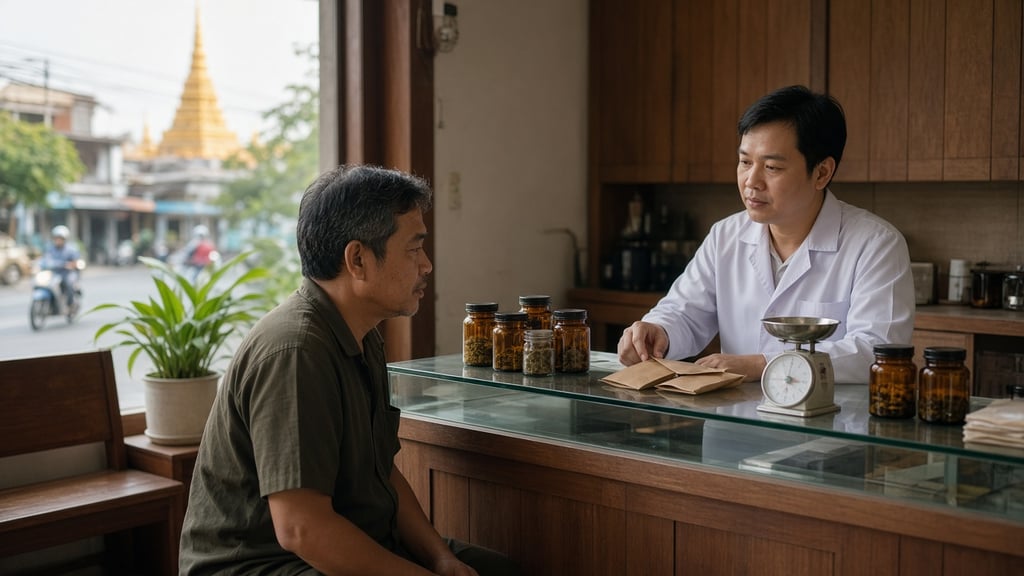
Seven licences, each for three years, would cover cultivation, production, import, export, sale, plus one-off import and export permits. Flower would be dispensed only in four kinds of authorised premises: hospitals and clinics, modern pharmacies, licensed herbal-product shops, and the workplaces of registered folk healers. A PT33 prescription and a 30-day supply cap would still apply.
Sales to anyone under 20, and to pregnant or breastfeeding women, would be forbidden. So would advertising of flower, resin, and smoking equipment, and sales in temples, schools, dormitories, parks, zoos, and amusement parks. Licensees would file digital stock accounts every three months with Lot ID codes tied to each plot.
Penalties would sit above the current controlled-herb notices, which already allow up to one year in prison or a 20,000 baht fine for some breaches. The draft attaches prison terms and fines to unlicensed production and sale, with a steeper scale for selling to minors, pregnant women, or breastfeeding women. Recreational use outside permitted medical purpose is framed as an offence. Exact prison terms can still move in Parliament.
From the Cabinet Secretariat to the statute book
Cabinet approved the ministry draft in principle on 22 September 2026 and sent it to the Council of State on 6 October. Next, the Secretariat of the Cabinet submits the vetted bill, the government House whip committee is told legal scrutiny is finished, Cabinet acknowledges that notice, and Parliament is informed. House and Senate readings follow. Only Royal Gazette publication turns a draft into binding law.
That path will not be empty. On 27 November, health and youth networks compared the ministry text with separate drafts from the People's Party, Prachachat, and the Democrat Party. ONCB's board, chaired by the prime minister, has already told the Council of State it does not support recreational use of any kind.
Even after Royal Gazette publication, DTAM still needs about 15 pieces of subordinate law: licence fees, farm standards, inspection manuals, digital reporting specs. Officials have put that build-out at one to two years. Sunday's announcement does not switch on new criminal offences tomorrow morning.
Shops, growers, and the tourist strip
Existing three-year retail licences are due to expire in a rolling wave from 2026 to 2028. Shops that are not medical facilities would have to convert, with a practitioner on site, if they want to renew. Public Health Minister Pattana Promphat said in September that more than 10,000 outlets and plots were pinned on DTAM's public GPS registry, and that any shop absent from that map should be treated as unlicensed. About 1,500 outlets had already renewed by July.
Growers face a split by plot size: small farms up to 5 rai, medium farms above 5 to 20 rai, and large farms above 20 to 400 rai. Community operators have warned that laboratory certificates for THC, CBD, and heavy metals can cost 10,000 to 20,000 baht per test. DTAM has talked about state labs to cut that bill and a 3,000 baht three-year licence fee. Foreign nominee structures remain an enforcement target.
Tourist corridors in Bangkok, Chiang Mai, Phuket, and Pattaya are the obvious inspection priority. The live rule set already requires a prescription for flower and treats public smoking as a nuisance that can draw a fine under the Public Health Act.
What This Means for Expats and Travelers in Thailand
Do not treat Sunday's announcement as a ban that starts this week, and do not treat it as a stay of execution for recreational cafes. The controlled-herb notices, the PT33 prescription, the age-20 floor, and the public-smoking nuisance rule are the law you are under today. Shops counting on another year of grey-market walk-ins are making a business bet, not reading a legal safe harbour.
Visitors who treat Bangkok, Chiang Mai, Phuket, or Pattaya dispensaries as casual souvenir shops will find the legal box getting smaller, not larger. Buy only from a GPS-listed outlet, expect a prescription, keep use private, and do not assume a hotel corridor or beach is a consumption lounge.
Taking flower or extracts out of Thailand remains a serious risk: cannabis is still a narcotic in most destination countries, and customs already coordinates with DTAM on outbound shipments. Residents who grow, work in a shop, or rely on flower for treatment should watch their licence expiry and the parliamentary calendar. Clinic conversion, a named practitioner, Lot ID records, and a GPS listing are the practical checklist.

No comments yet. Be the first to join the conversation.