Songkhla FMD alert after 100 cattle deaths
Farmers in Na Mom, Songkhla, have buried more than 100 cattle lost to foot-and-mouth disease as southern pig and cattle producers lock down monsoon livestock movements.
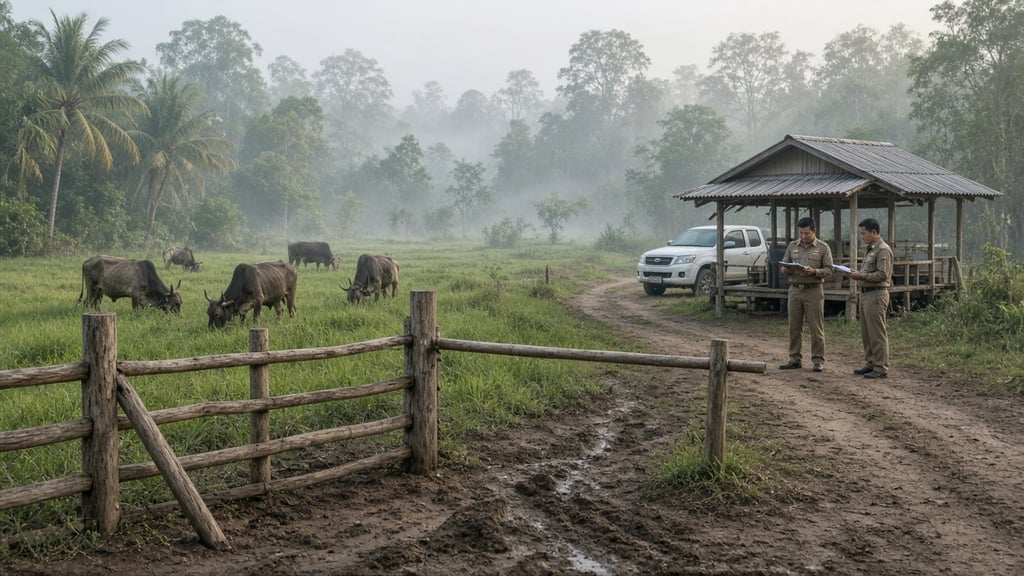
Livestock officers and pig producers across southern Thailand have moved onto a monsoon foot-and-mouth disease watch after farmers in Na Mom district, Songkhla, reported more than 100 cattle dead since the rains began about a month ago. Losses have been heaviest among free-grazing animals that had not been vaccinated, while regularly vaccinated fighting cattle have shown fewer cases.
Local reports dated 28 and 29 November 2026 describe fever, drooling, mouth sores and lameness spreading through Na Mom herds as the wet season set in. Farmers say they have been hiring excavators to bury carcasses themselves. They are pressing the Na Mom district livestock office and the Songkhla Provincial Livestock Office to come to the field, confirm the virus, and stop sick animals being moved or cut up for food.
Fighting-cattle keepers in the same district say this year's illness has run harder than recent monsoon seasons, with some animals deteriorating within days of the first signs. The pattern matches classic FMD in cloven-hoofed stock. Official laboratory typing of the Na Mom cluster had not been released in the public notices reviewed for this report.
Unvaccinated pasture herds took the brunt
Herd owners say the dead animals have mostly been cattle left on open pasture without a regular FMD shot. Fighting cattle and pedigree animals on a scheduled vaccine round have stayed largely well. That is how FMD usually behaves in endemic parts of Asia: the virus races through unprotected groups, while a matched vaccine blunts clinical disease. Standard shots protect for about four to six months, which is why twice-yearly pen-side rounds are the local defence.
Thailand's Department of Livestock Development still treats FMD as a standing economic threat. A 2026 WOAH laboratory briefing recorded serotype O in Chiang Mai and Nakhon Pathom dairy cattle in 2024 and flagged extra SAT-serotype surveillance. DLD's April 2026 SAT 1 contingency plan does not name Na Mom. In November 2025 the Hat Yai veterinary research centre joined the Pakchong FMD reference laboratory to sample beef cattle and train staff for Livestock Region 9, which covers the far south.
Movement controls, pig farms, and the fighting-cattle circuit
The Southern Pig Raising Trade Association has put pig and cattle holdings across the south on a November-December alert, the window Livestock Region 9 flags as most sensitive for FMD in cattle, pigs, goats and sheep. Officials say they have not logged a pig outbreak this round, but they are tightening biosecurity because an FMD flare in cattle can travel on vehicles, clothing, and animals moving between farms.
Particular pressure is falling on fighting-cattle arenas. In Phatthalung, livestock officials have singled out six districts where animals and handlers travel from bout to bout: Bang Kaeo, Tamot, Pa Bon, Kong Ra, Khuan Khanun and Mueang. Those venues function as informal gathering points. Tamot district itself reports no FMD in local cattle or pigs this season and still runs twice-yearly vaccination at farm pens.
Neighbouring Songkhla districts were already on notice. On 6 November, Chanong Subdistrict Municipality in Chana district sent staff to advise cattle keepers in Village 7. On 9 November it posted a rainy-season FMD warning for owners of cattle, buffalo, pigs, goats and sheep, telling them to clean pens and report suspected cases to the Chana district livestock officer. Those steps sit short of a named highway quarantine post, but they are the local form of movement control now wrapping the Songkhla-Phatthalung belt: do not move cloven-hoofed animals into or out of affected ground, and do not butcher sick or dead animals for food.
What farmers want next
Na Mom producers want an on-site investigation, ring vaccination for remaining pasture cattle, and a pause on moving animals out of the district until the cluster is mapped. They also want help with carcass disposal. Hiring a backhoe for every burial is an immediate cash cost on top of lost animals, and it is the nearest thing to a compensation demand now on the table. Provincial livestock offices have not announced a payout scheme for the Na Mom deaths in the public statements reviewed.
Guidance circulating with the alert tells farmers to watch for fever, dullness, a drop in feed intake, stringy saliva, and blisters or pitted sores on the mouth, tongue, gums and the cleft of the hoof. There is no specific antiviral cure in the field. FMD rarely infects people and is a different pathogen from childhood hand, foot and mouth disease. The Songkhla warning is narrower: do not turn a sick or dead animal into village meat, because slaughter spreads virus on knives, floors and vehicles even when the meat is not a typical human infection route.
What This Means for Expats and Travelers in Thailand
Visitors heading to Hat Yai, Songkhla town, or Phatthalung this week do not face a human travel ban. Hotels, markets and restaurants remain open. Cooked beef and pork from regular commercial supply is not the pathway that spreads FMD among people. The practical cautions are for anyone who keeps animals, visits a farmstay, or buys meat from an informal roadside slaughter. Stay off livestock pens if a host farm is under watch. Do not accept freshly killed beef from a sick animal. If you keep goats, pigs or cattle, call the district livestock office rather than moving the herd. A child's rash on the hands and mouth is a different virus, not evidence that the Songkhla cattle outbreak has jumped species.


No comments yet. Be the first to join the conversation.