Mae Sot MPs find Myanmar antimony stockpiles
A House money-laundering committee found stacked Myanmar antimony ore at a Mae Sot bonded warehouse and a trial dressing plant, as Bangkok prepares January 2027 import-permit rules.
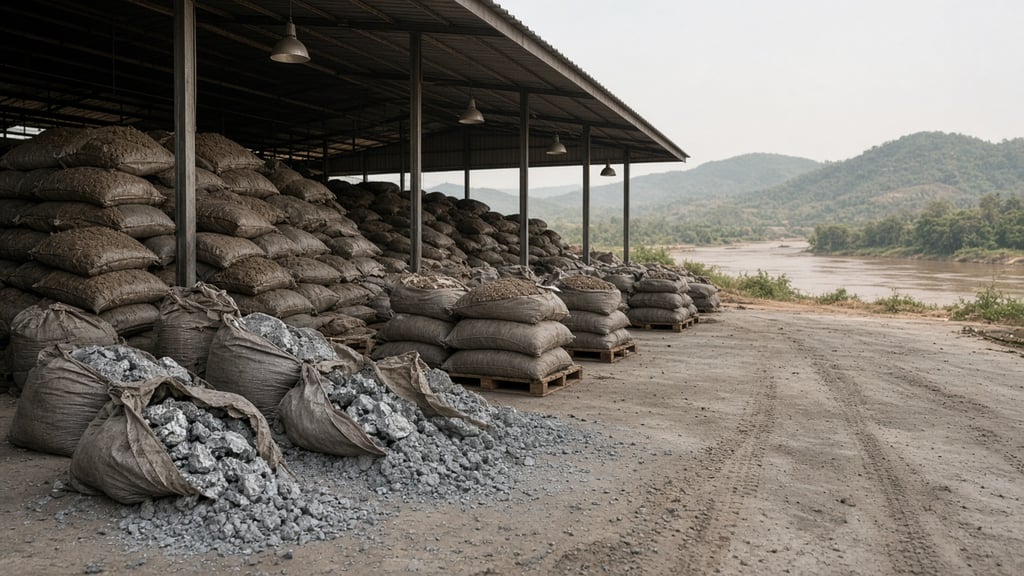
A House of Representatives committee that investigates money laundering spent the weekend inspecting a bonded warehouse on the Moei River and a mineral-dressing plant in Mae Sot, Tak, and found stacked sacks of antimony ore imported from Myanmar.
Deputy chair Supakorn Tontipaiboonthana led the visit with Tak provincial police, Mae Sot customs, and industry officials. A Government Public Relations Department notice dated 28 November 2026 recorded the House Committee on Prevention and Suppression of Money Laundering and Narcotics travelling to the Mae Sot checkpoint to examine neighbour-country antimony shipments.
What inspectors found in Mae Sot
At Pier 27 in Ban Wang Takhian, Tha Sai Luad, inspectors found antimony ore from Myanmar that had already cleared Mae Sot customs, packed in sacks and piled high inside the storehouse. Officials did not publish a tonnage figure. The political point was the scale of a trade that has not required a specific antimony import permit.
The delegation then drove inland to the mineral-dressing plant of Dao Nuea Group Ltd. Partnership at Moo 9, Ban Mae Kasa. The plant, still in trial operation, was bringing in four mineral types from Myanmar. Managing director Kanit Maklai told visitors that Thailand should dress and sell the ore into domestic industry rather than act as a transit corridor, arguing that re-export leaves Mae Sot with damaged roads and little retained tax.
Committee spokesperson Angsana Niamwanichkul, an Economic Party MP, said the panel wants the import chain to yield public benefit, including tax for local roads. Supakorn said an additional Industry Ministry regulation due in January 2027 will place antimony and some other minerals onto the controlled list.
Why a money-laundering committee is involved
The House panel's mandate is financial crime, not mining geology. In September 2026, former industry minister and Tak lawmaker Chaiwut Bannawat told the same House committee that some buyers were paying above-market prices for antimony, cycling the ore through processing sites on the Myanmar side, then bringing it back or transiting it for export. He put short-period turnover in the billions of baht and flagged possible scam-network cash conversion, plus waste risk into a Moei River used for tap water in Tak and Mae Hong Son.
That briefing helps explain why a money-laundering committee walked the warehouse floor. Antimony is a silvery metalloid used in flame retardants, alloys, batteries, semiconductors, and some munitions. It is also toxic. A legal customs stamp does not answer whether the cargo is fairly priced, correctly labelled, or tied to a mine dumping heavy metals upstream.
Thailand's new mineral import net
The Department of Primary Industries and Mines has drafted a ministerial announcement adding five minerals to the permit list: antimony, lead, copper, gold, and rare earth elements. Director-general Aditat Waseenon has said the point is traceability, not a ban. Applicants would have to show a certificate of origin, a lawful mine concession, and the mine's coordinates. Industry Minister Varawut Silpa-archa has said the draft, begun in June 2026, is meant to create traceability rather than a ban, and is expected to take effect by late January 2027 after public comment.
The Mae Sot visit landed in the same week as a first Thai-Myanmar joint working group on transboundary river water, held at the Foreign Ministry on 25-26 November 2026. Officials agreed to eight shared monitoring stations on the Kok and Sai rivers. Bangkok is also preparing to declare about 150 kilometres of the Kok as a pollution-control zone and has tasked the National Security Council with a faster list of hazardous mining chemicals that could be barred from export to neighbouring mine sites.
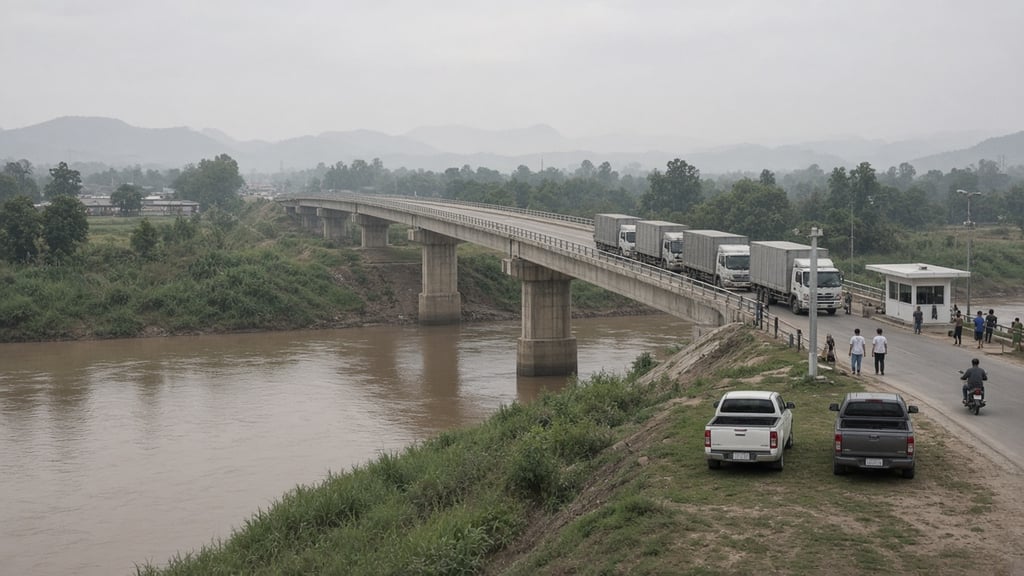
Investigative reporting published in October 2026 found that Thailand imported 105,752 tons of antimony, tungsten, copper, lead and manganese from Myanmar in the first nine months of 2025, worth more than 13.9 billion baht. More than 50 Thai-registered companies appeared in the trade, much of it re-exported to China. Field reporting at the Pheung Khleung crossing in Umphang described ore bags and antimony ingot moving from Karen State trucks onto Thai trucks bound for Mae Sot warehouses.
The Moei itself is already treated as a drinking-water risk. In November 2025, the Provincial Waterworks Authority's Mae Sot branch joined a field check after reports of antimony entering Thailand outside approved channels at Ban Pheung Khleung, Umphang. The utility said it would test Mae Sot raw water for heavy metals every two months.
What This Means for Expats and Travelers in Thailand
Northern Thailand's river contamination is the more immediate household issue. Arsenic, cadmium and lead have been found in the Kok, Sai and Ruak rivers that feed the Mekong, and in the Mekong itself. Residents and long-stay visitors in Chiang Rai and Chiang Mai who rely on river-fed taps, fish, or riverside farms should follow provincial water notices. Mae Sot municipal supply is drawn from the Moei system now on a two-month metals testing cycle.
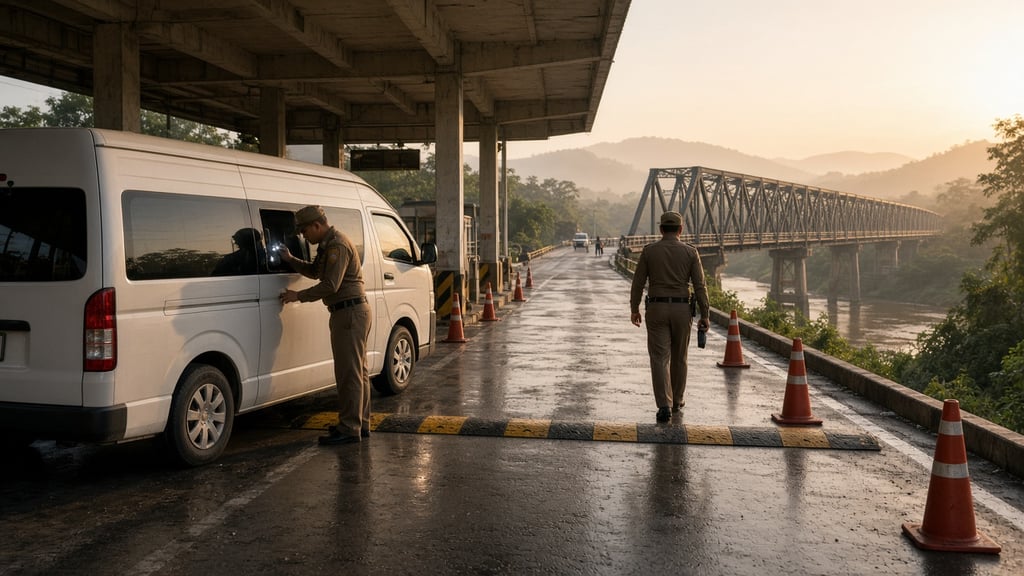
Travelers passing through Mae Sot are unlikely to see a tourist shutdown. The practical change is industrial: more ore trucks, more attention on bonded warehouses, and, from January 2027, extra paperwork for businesses that move antimony, lead, copper, gold, or rare earths across the frontier. Expats in logistics should expect origin documents and mine coordinates to become mandatory. Cheap transit mineral deals without a paper trail are a compliance risk.
Processing more ore inside Thailand would keep jobs in Tak only if dressing and smelting are tightly controlled. Unregulated runoff into the Moei would simply move the pollution onto Thai soil. The weekend visit made the stockpiles visible, and it tied a Mae Sot warehouse to a national fight over who profits from Myanmar's minerals and who drinks the runoff.

No comments yet. Be the first to join the conversation.