Interior puts 10 Thai-Myanmar border provinces on alert after stray fire hits Mae Sot
Interior Permanent Secretary Arsit Sampantharat ordered governors in ten western provinces on 9 November to ready shelters, tighten crossings, and prepare disaster-zone declarations after bullets and shell fragments from Myanmar fighting damaged homes in Mae Sot.
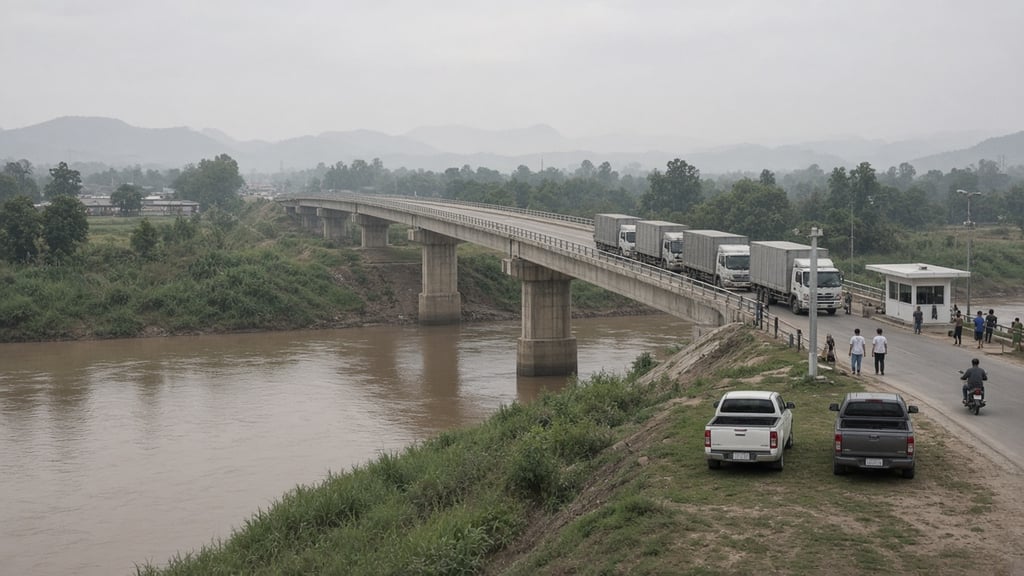
Interior Permanent Secretary Arsit Sampantharat told governors of ten Thai-Myanmar border provinces on the evening of 9 November 2026 to treat stray fire from Myanmar as a standing civilian risk, not a one-off accident in Tak. Bullets and shell fragments from fighting near Phalu village, also known as Milapan, had already crossed the Moei River into Mae Sot district and damaged homes and property on the Thai bank.
The order, issued at 19:30, covers Kanchanaburi, Chumphon, Chiang Rai, Chiang Mai, Prachuap Khiri Khan, Phetchaburi, Tak, Mae Hong Son, Ranong, and Ratchaburi. Governors must run Provincial Border Command Centres with the army, police, and local governments as one desk, and report any serious change to the ministry at once.
The fighting was between Myanmar government troops and anti-government armed groups on the Myawaddy side, opposite Mae Sot, the main official trade town on this corridor. The first Thai-Myanmar Friendship Bridge carries people and goods over the Moei River to Myawaddy. Riverside tambons sit closer to the water than the plaza, and that is where fragments have been landing.
Five measures, from shelters to disaster zones
Interior listed five steps. First, track the fighting, mark risk zones, and keep staff, vehicles, bunkers, shelters, food, water, and medical supplies ready. Warn residents early. If the threat grows, move people out, with children, older people, people with disabilities, patients, and other vulnerable groups first.
Second, tighten control of risk stretches and crossing points. Watch for unauthorised entry, unusual movement of people, narcotics, and other smuggled goods. Third, survey harm to life, property, and livelihoods, then pay relief under existing rules. Fourth, follow standing procedures for people fleeing unrest in Myanmar, and keep temporary safe ground ready if more people cross. Fifth, if fighting near the line threatens large numbers of Thai residents, a governor may declare an emergency disaster-assistance zone so compensation can be paid faster.
Army warning rounds and a call to Naypyidaw
The civil order follows days of military signalling. At 19:15 on 3 November, the Ratchamanu Task Force of the Naresuan Force fired an illumination round as a warning after stray bullets from the same Myawaddy fighting landed in Mae Sot. The unit then stepped up river patrols to keep Thai ground clear.
The same day, Deputy Prime Minister and Foreign Minister Sihasak Phuangketkeow telephoned Myanmar Foreign Minister Tin Maung Swe and asked Myanmar to keep operations away from the border. Naypyidaw said it would pass the concern on. That is diplomacy, not a ceasefire. Interior's 9 November list is the domestic follow-through: ready the bunkers even if the call does not stop the next mortar.
Late October already showed the cost. Stray fire into Mae Sot injured at least one Thai resident on 29 October, and Thai troops fired warning rounds that morning as well. Homes along the Moei took holes in roofs and walls. The 9 November alert names no new casualty. It treats the pattern as wide enough to bind all ten western provinces, not only Tak.
A frontier that runs from Chiang Rai to Ranong
The ten provinces are not one landscape. Chiang Rai and Chiang Mai watch hill crossings and the Kok basin. Mae Hong Son sits on the Salween. Tak faces Myawaddy across the Moei. The western hills then run through Kanchanaburi, Ratchaburi, Phetchaburi, and Prachuap Khiri Khan to Chumphon and Ranong. An alert in all ten is a statement that spillover is no longer treated as a Tak-only problem.
Governors still have to decide what a risk zone means on the ground. A bunker plan in Mae Sot is not a shelter list in Ranong. The useful part of the order is the authority to declare a disaster-assistance zone if a cluster of Thai houses is hit. Families along the Moei have lived with that noise for years. The paper now matches it.
What This Means for Expats and Travelers in Thailand
Chiang Mai city, Pai, and the Hua Hin to Prachuap strip are not the Moei riverbank. The elevated risk is in villages and unofficial crossings that sit within earshot of fighting, especially around Mae Sot. If you live or trade there, follow district loudspeakers, know your nearest shelter, and keep off the river edge when explosions are audible. Do not treat the Friendship Bridge plaza as a viewpoint for the war on the far bank.
Tourists transiting Tak or driving Highway 105 should check local notices before lingering in riverside tambons. Informal crossings can tighten with little English warning. Embassy registration is worth doing if you reside in Mae Sot, Mae Hong Son, or Ranong. Bangkok, Phuket, and Pattaya are unaffected by this order. The story is a western-frontier civil-protection drill, not a nationwide travel ban.

Comment verification
Step 1 of 3
Verify your email once to publish your comment. Your email is never shown publicly.
Enter the 6-digit code sent to .
Choose the display name shown next to your comments.