Hun Sen Says He Delayed Cambodia's LDC Exit to Keep Cheap Loans
The Cambodian Senate president said on Facebook on 26 November that, as prime minister, he stretched the UN least-developed-country exit so Phnom Penh could keep concessional loans. Laos left the list two days earlier. Graduation is set for 19 December 2029.
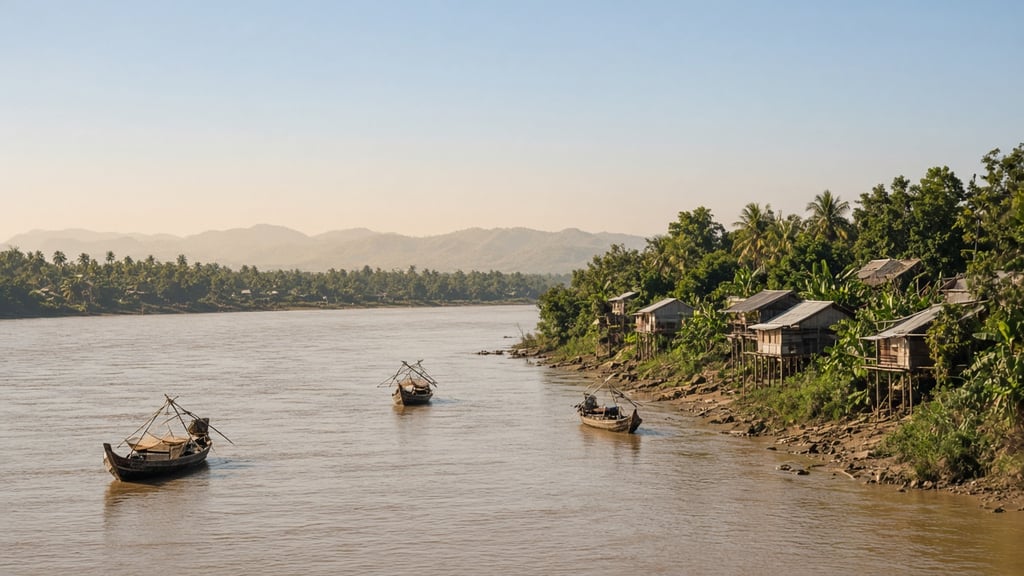
Cambodian Senate President Hun Sen said on Facebook on 26 November 2026 that the delay in Cambodia leaving the United Nations list of least developed countries was his own call as prime minister, taken so Phnom Penh could keep borrowing on concessional terms instead of paying commercial rates. The remark landed two days after Laos formally left the same UN category.
For readers in Thailand the file is not trivia. Cambodia's borrowing costs, export preferences, and factory wages feed Thai border trade, garment competition, and the price of goods that move across the Mekong. Staying on the LDC list until late 2029 is a financing choice with a Thai regional price tag.
A delay Hun Sen says he owns
Hun Sen, who left the premiership in 2023 and now chairs the Senate, replied on 26 November to a Facebook user who had listed the usual LDC perks: duty-free access to developed markets, official development assistance, extra time on some World Trade Organization obligations, and climate finance. The Senate president said the list missed the interest rate on public borrowing. Least developed countries, he wrote, can raise money on concessional terms. Commercial rates, he argued, would have cost Cambodia heavily. He took personal responsibility for stretching the exit, and closed with a proverb about not running before you can stand.
Government spokesman Pen Bona said the same day that Cambodia had met the UN criteria to graduate in 2029, pointing to an April meeting between Prime Minister Hun Manet and UN Under-Secretary-General Rabab Fatima on a transition task force.
2027 was on the table. Phnom Penh picked 2029.
On 27 November, Hun Manet told the Cambodia International Business and Investment Forum at Koh Pich that ministries had been offered two calendars after the 2024 review: an exit around 2027 after a three-year prep, or 19 December 2029 after five years. The government chose the later date so firms would have more time before some trade preferences fall away.
The UN record matches that calendar. Cambodia joined the LDC list in 1991, first met all three graduation tests in 2021 and again in 2024, and on 19 December 2024 the General Assembly (A/RES/79/230) set graduation for 19 December 2029 with an exceptional five-year preparatory period, against the usual three years. Senegal received the same timetable.
Cambodia's Ministry of Information put the latest scores on the record: gross national income per capita of about US$2,750 against a 2026 threshold of US$1,222; a Human Assets Index of 77.50 against 66; and an Economic and Environmental Vulnerability Index of 22.15, below the 32-point ceiling. Hun Manet said the country could have gone in 2027 on those numbers.
Cheap money, and what it means next door
LDC status unlocks softer multilateral and bilateral loans, extra climate windows, and duty-free schemes such as the European Union's Everything But Arms treatment. Hun Sen's public case is that those cheaper credits were worth staying in the category. Laos, which left on 24 November 2026 after more than fifty years on the list, now faces less favourable terms on some concessional windows.
For Thailand the arithmetic is local. The Bank of Thailand 2025 annual report recorded that land border trade makes up about 60 percent of Thai exports to Cambodia excluding gold. That corridor through Sa Kaeo, Chanthaburi, Trat, Surin, Si Sa Ket, Buri Ram, and Ubon Ratchathani nearly stopped after checkpoint closures from mid-2025. The same report put the Cambodia-border shock at about 0.6 percent of Thailand's total export value, small nationally, large in those seven provinces.
A Cambodia that keeps concessional finance through 2029 can keep building roads, power, and factory parks on cheaper public money. That can hold down Khmer production costs in garments, rice, and light assembly, lines that already sit next to Thai factories.
What This Means for Expats and Travelers in Thailand
If you live in Bangkok, Chiang Mai, or Phuket, this does not change your visa, TM30 filing, or the tourist fee. It does change the regional cost map. A Cambodia that stays an LDC until late 2029 will keep some trade preferences and cheaper public borrowing, which can hold factory wages and some retail prices on the Khmer side below Thai levels. Visa-run towns such as Poipet and the Trat-Koh Kong corridor will still feel that gap.
Thai residents who invest across the border, or who buy Cambodian-made garments and rice, should treat 2029 as a hard calendar. If you work in export manufacturing on the Eastern Seaboard, watch whether Khmer factories use the extra years to lock in cheaper credit and undercut Thai quotes. Travelers heading to Siem Reap should watch checkpoint hours and the baht-riel spread, not a diploma from New York. Cambodia will take cheaper loans a little longer, and Thailand's border provinces will live with that neighbour's cost of capital until December 2029.
Comment verification
Step 1 of 3
Verify your email once to publish your comment. Your email is never shown publicly.
Enter the 6-digit code sent to .
Choose the display name shown next to your comments.