Supreme Court restores 296 million baht forfeiture from former defence permanent secretary
The NACC on 26 November 2026 confirmed a final Supreme Court order forfeiting 51 assets worth 296.3 million baht from Gen Sathian Phoemthong-in, almost a year after the December 2025 ruling in a 12-year unusual-wealth case.
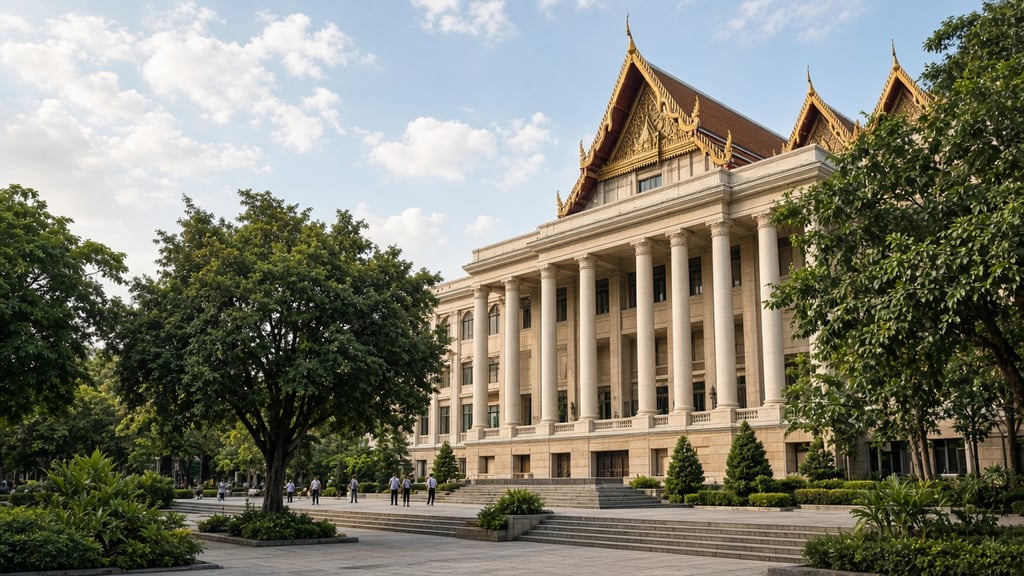
Thailand's National Anti-Corruption Commission on 26 November 2026 confirmed that a Supreme Court judgment dated 8 December 2025 is now final, restoring a full civil forfeiture of 51 asset items valued at 296,323,911.07 baht against Gen Sathian Phoemthong-in, a former permanent secretary at the Ministry of Defence. The notice landed almost 11 months after the apex court ruled, closing an unusual-wealth file the commission first decided in February 2014.
NACC secretary-general Nitiphan Prachuapmoh, speaking as the office spokesman, said the Supreme Court directed enforcement of the Civil Court's original 2017 order in full. That restores two savings deposits the Court of Appeal had carved out in 2023. The commission did not explain the lag between the December 2025 judgment and this week's public notice, and it did not say how much of the property has already been transferred to the Treasury. The NACC statement is the primary public record of the outcome.
How an asset declaration became a 12-year case
The file opened when Gen Sathian submitted an account of assets and liabilities on taking the defence permanent secretary post. Examiners found cause to suspect unusual wealth under Section 77 of the Organic Act on Counter Corruption B.E. 2542 (1999). A subcommittee was appointed. During the inquiry, assets held by the general, his spouse, his children, and other connected people were frozen.
On 6 February 2014 the NACC resolved that he was unusually wealthy, putting the disputed pool at 296,323,911.07 baht. Investigators also concluded that some property had been transferred, moved, converted, or concealed so that it could no longer be traced. The commission asked the Attorney General to freeze remaining declared assets under Section 254(1) of the Civil Procedure Code and to petition that the unusually increased property, including items held in other names, devolve to the state under Sections 4 and 80(2) of the 1999 organic act.
Under that act, unusual wealth is a civil track. Once the NACC finds a state official unusually wealthy, the Prosecutor-General files for a court order that the property devolve to the state. The official then bears the burden of proving the assets did not flow from unusual wealth.
Three courts, one restored order
The Civil Court ruled on 30 November 2017 that all 51 listed items, totaling 296,323,911.07 baht, should fall to the state. Gen Sathian was ordered to surrender the assets, transfer title, and hand over related documents together with any fruits of the property. If the listed items could not be recovered in full, the judgment allowed enforcement against his other property until the amount was made up, within a 10-year limitation period, and not beyond the value the court had ordered forfeited.
The Court of Appeal amended the judgment on 22 August 2023. It dismissed the forfeiture petition only for items 30 and 31, two deposits at the Armed Forces Development Command Savings and Credit Cooperative Limited of 634,683.53 baht and 400,000 baht, and otherwise left the trial court order intact. Combined, those two accounts were worth about 1.03 million baht.
On 8 December 2025 the Supreme Court reversed that carve-out and ordered enforcement according to the trial court. Filing fees paid at the Supreme Court stage were returned to Gen Sathian and the other objectors. The NACC said that judgment is final. From the 2014 commission vote to this week's notice, the unusual-wealth file has run for more than 12 years.
What This Means for Expats and Travelers in Thailand
This is a domestic civil forfeiture against a former Thai official, not a new tax or visa rule. Foreign residents do not file NACC asset declarations. The practical lesson is about how Thailand recovers unexplained wealth: the state can freeze family and nominee holdings during an inquiry, then spend more than a decade in three court levels before a final transfer to the Treasury.
Anyone who buys Thai property, takes assignment of a lease, or accepts a transfer from a politically exposed person should treat title history as a live risk. Assets parked in a spouse's name, a child's name, or a military savings cooperative can still be pulled into an unusual-wealth petition. A 10-year enforcement window after judgment means a completed sale can still meet a later attachment if the seller's listed items cannot cover the order.
Banks and land offices already run politically exposed person checks. If you are completing a condo transfer, a land purchase, or a large private loan secured on Bangkok real estate, insist on written confirmation that the property is not under NACC freeze or court attachment. Ask counsel to search civil enforcement records, not only the land title deed.
The 296 million baht figure is the court-ordered pool, not a confirmed cash recovery. The NACC has not published a collection scorecard for this file. Unusual-wealth cases move slowly, they survive appeals, and the final number can include modest cooperative deposits as well as the headline millions.


Comment verification
Step 1 of 3
Verify your email once to publish your comment. Your email is never shown publicly.
Enter the 6-digit code sent to .
Choose the display name shown next to your comments.