Visa Pushes Digital Payments Deeper Into Chiang Mai's 9-Billion-Baht Tourist Card Market
Visa Destinations is expanding in Chiang Mai with a target of more than 300 new small merchants after Bank of Thailand data showed about 9 billion baht in foreign card spend there in 2024.
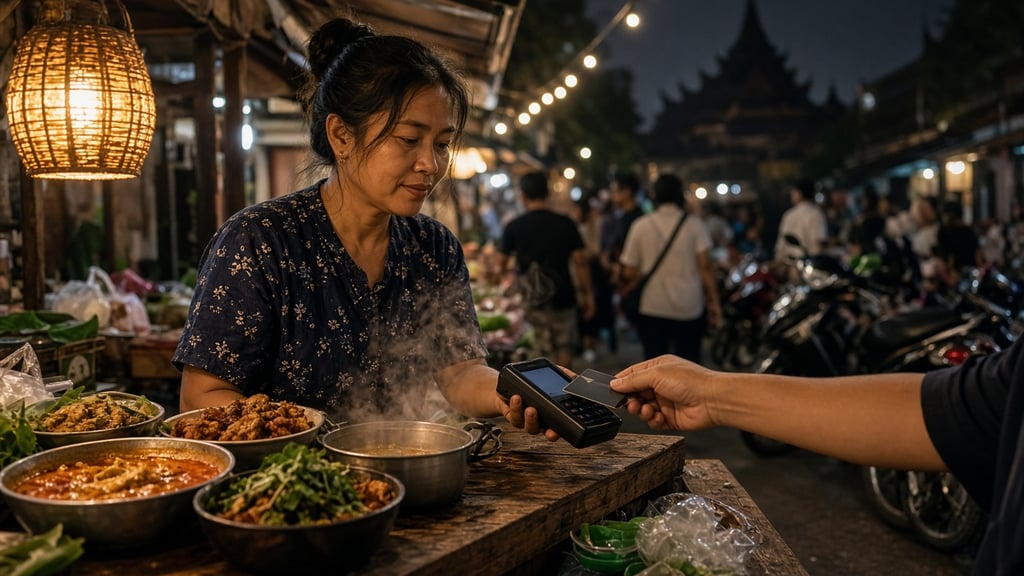
Visa is widening digital payment acceptance among Chiang Mai's small merchants, targeting more than 300 additional shops so more tourist spending stays in neighborhood businesses rather than only hotels and malls. The move sits inside Visa Destinations Thailand, launched nationwide in May 2026 as the first Asia-Pacific market to run the model at country scale.
The commercial case is blunt. Bank of Thailand figures used in a joint tourist-payment study with Visa put foreign-visitor card spend in Chiang Mai at about 9 billion baht in 2024, roughly 3 percent of the 327 billion baht recorded nationwide. That is a dense pool of cross-border money. It also flags a gap: many stalls, craft workshops, and cafes still settle in cash even as visitors expect to tap a card or scan a code.
Why Chiang Mai, and why this timing
Chiang Mai is Thailand's largest northern city, founded in 1296 as the Lan Na capital and later listed by UNESCO as a Creative City of Crafts and Folk Arts. Ministry of Tourism and Sports figures for 2024 counted about 3.54 million foreign visitor trips and 43.7 billion baht in foreign-visitor tourism revenue. Card spend of 9 billion baht is only a slice of that wallet. Hotels already take plastic. The residual is the street-level economy that loses a sale when a visitor holds a foreign-issued card and little cash.
A Bank of Thailand Northern Office note found foreign guests spend more than twice as much per trip as Thai visitors, with Chiang Mai absorbing most northern foreign arrivals. That mix of tour groups, long-stay travelers, and remote workers is why the drive is planted in Nimmanhaemin Road, One Nimman, Jing Jai Market, and Jing Jai Village. Those districts already combine coffee, design retail, and craft footfall. They are also where a missing terminal still means a tourist walks on.
From Bangkok's Song Wat to the northern capital
The expansion follows a Bangkok pilot that onboarded more than 50 merchants in historic Song Wat. Nationally, Visa has talked of extending digital acceptance to about 56,000 small businesses across dining, retail, lodging, and wellness, working with the Tourism Authority of Thailand and the tourism ministry ecosystem . The Destinations platform lists eight focus cities, including Bangkok, Phuket, Chiang Mai, Pattaya, Udon Thani, Samui, Hua Hin, and Hat Yai, and is open to all Visa cardholders.
Visa is also pairing merchant onboarding with a festival test at the Chiang Mai CAD Khomloy Sky Lantern Festival, so participating local vendors can take card payments for the first time. Yi Peng and Loy Krathong already draw visitors used to paying with a phone or a chip card. If settlement works in a temporary night market, it can work on a weekday soi.
The Bank of Thailand and Visa white paper published in December 2025 sketched the rails Thailand already has: more than 900,000 electronic data capture terminals and about one million QR points. Digital payments are common in large retail and thin among smaller merchants. Card payments were 20 percent of tourist transaction value in 2024. Three hundred extra Chiang Mai shops will not close that national gap. They are a concentrated attempt to close it where visitors buy khao soi, tea, and handmade goods.
What the 9-billion-baht figure actually measures
Treat the 9-billion-baht number as card rails, not as the whole Chiang Mai tourism wallet. Provincial tourism revenue from foreign visitors was more than four times larger in 2024. Card volume is concentrated in hotels and larger retail, while restaurants generate many small tickets. That stall-and-cafe layer is the merchant class the 300-shop target is built to reach. If those tickets stay in cash, the headline understates what visitors would spend locally if they could tap everywhere they eat.
Visa frames Destinations as more than terminals. Cardholders are pointed to curated offers on the Thailand Destinations site , with Chiang Mai listed among launch cities in the May 2026 country announcement . For a stallholder, the useful questions are whether settlement arrives the next day, whether the fee is tolerable on a 60-baht snack, and whether staff can reverse a failed tap without a queue forming.
What This Means for Expats and Travelers in Thailand
If you live in Chiang Mai or visit often, the practical change is coverage, not a new app. Foreign-issued Visa cards should work at a wider set of small merchants in Nimman, Jing Jai, and festival sites, which can cut the ATM run before a night market. Keep a PromptPay-capable wallet as backup. Many Thai vendors still prefer a Thai QR, and some foreign cards can already ride local QR through wallets such as TrueMoney. Tap-to-phone setups are cheaper for tiny shops than a full terminal, so do not assume every new acceptor will have a plastic reader on the counter.
- Carry a modest cash float for wet markets and shops that still refuse cards even with a sticker in the window.
- Tell your issuing bank you are in Thailand. Cross-border taps fail more often from fraud filters than from missing terminals.
- Ask before ordering at small cafes. A Visa mark on the glass is not always an active device.
- Long-stay residents will still find local bank QR and PromptPay faster among Thai-owned shops. The tourist-card push is aimed at visitors who will never open a Thai account.
The larger story is distribution. Chiang Mai already earns tens of billions of baht from foreign visitors, a city whose Old City moat, night markets, and Nimman strip sit at the center of northern tourism. Three hundred extra terminals will not rewrite that map. They can, if fees stay low enough, stop a visitor from walking past a local stall because they only brought a card.

Comment verification
Step 1 of 3
Verify your email once to publish your comment. Your email is never shown publicly.
Enter the 6-digit code sent to .
Choose the display name shown next to your comments.