Pattaya raid closes unlicensed USDT desk police tie to 200 million baht a month
Region 2 police, Pattaya officers, and Chonburi immigration searched a Nong Prue house and a Jomtien condo, detaining six Chinese nationals over an alleged unlicensed digital-currency exchange.
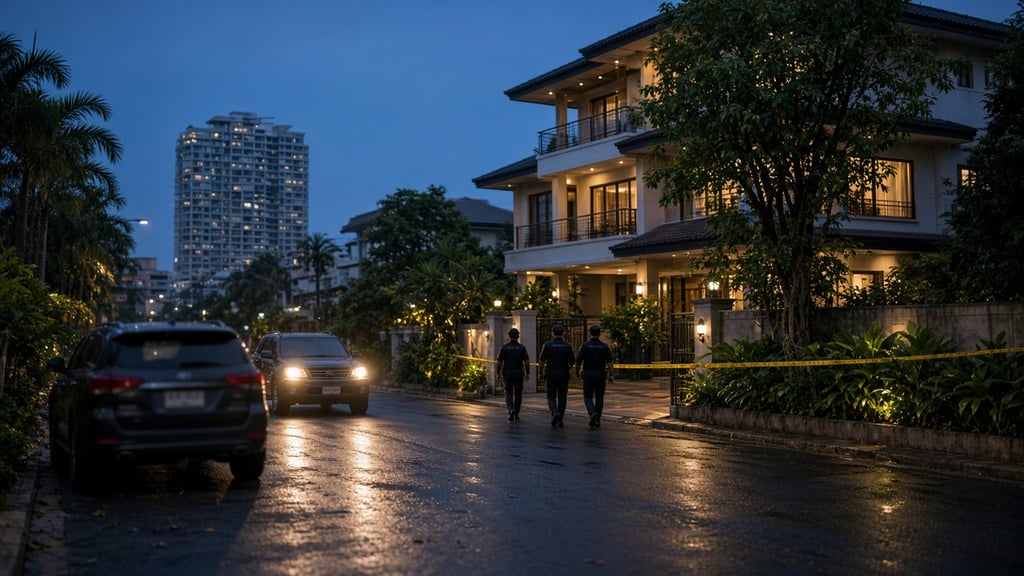
Pattaya's latest financial raid did not start on Walking Street. It started in a rented house in Nong Prue, Bang Lamung, and in a 17th-floor condominium unit in Jomtien. On the evening of 27 November 2026, Provincial Police Region 2, Pattaya City Police, and Chonburi Immigration searched both addresses under warrants from Pattaya District Court and detained six Chinese nationals. Investigators say the sites were used as an unlicensed digital-currency exchange, with a preliminary monthly turnover of about 200 million baht.
The first search, under warrant No. 41/2569 dated the same day, targeted a house on Chaiyaphruek Road in Moo 12, Nong Prue. Officers say they found five people exchanging USDT, a dollar-pegged stablecoin used as a settlement token. Those detained at the house were identified as Li Longzhou, 35; Zhao Shanquan, 35; Liu Shu, 42; Liu Xin, 37; and Tang Jianbing, 56. Seized items listed by police included computers and monitors, 13 mobile phones, internet routing gear, and three crypto hardware wallets.
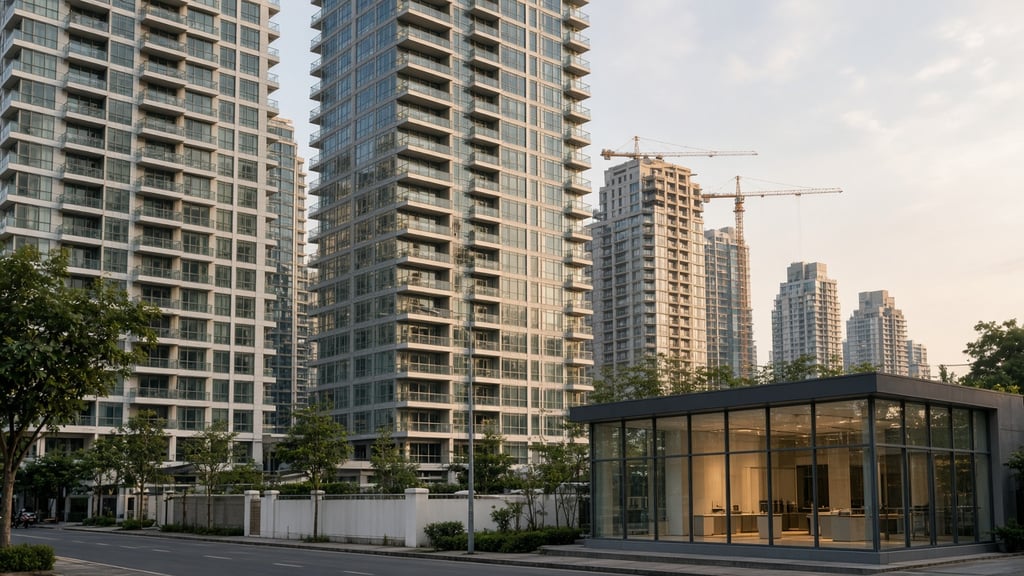
The second search, under warrant No. 40/2569, was a unit at Lumpini Park Beach Jomtien, Building B, floor 17. Officers detained He Yalong and seized two desktop computers and two phones. Investigators treat him as a possible controller of the five people at the house. Pol. Lt. Gen. Wasan Techakrakasem, commander of Provincial Police Region 2, led the joint operation with Pattaya City Police and Chonburi Immigration.
A student-visa house with a 70,000 baht rent bill
Police say the case began with a tip about unusual traffic at the house, followed by surveillance, then the court warrants. The five people at the Nong Prue house had rented it for more than a year at 70,000 baht a month. All held student visas. Officers say they were working without permission and drawing about 50,000 baht a month each. Thai immigration law is blunt on that point: a temporary entrant may not take up an occupation without the required permission, and a student stamp is not a work permit.
Investigators describe a cash-to-token desk rather than a licensed trading venue. They say some of the money may have come from scam networks and online gambling, then been moved through online-purchase transactions. Most of the alleged victims, police add, are in China, not in the bars and hotels that give Pattaya its tourist economy. The 200 million baht figure is a police estimate of monthly circulation, not a court finding. Thai criminal process comes first, then deportation, while Chonburi Immigration expands the money trail around He Yalong.
Licensed baht, licensed tokens, and the grey desk in between
Cash foreign exchange in Thailand is a licensed business. The Bank of Thailand states that purchase, sale, exchange, or transfer of foreign currency must go through persons granted a foreign-exchange licence by the Minister of Finance. Banks, authorized money changers, and money-transfer agents sit on that list. A private house converting cash and USDT does not.
Digital-asset venues sit on a different rail. Under the Emergency Decree on Digital Asset Businesses B.E. 2561 (2018), exchanges, brokers, and dealers need a licence recommended by the Securities and Exchange Commission and granted by the Minister of Finance. Licensed operators are treated as financial institutions for anti-money-laundering duties and report to the Anti-Money Laundering Office , created in 1999. An unlicensed USDT desk skipping know-your-customer checks is the opposite of that perimeter.
Pattaya City is a special local government inside Bang Lamung district, Chonburi, about 150 kilometres southeast of Bangkok. Nong Prue sits inside that boundary. Jomtien is the southern beach strip. A quiet house and a beach condo are easier to miss than a shopfront changer with a licence number on the glass.
What This Means for Expats and Travelers in Thailand
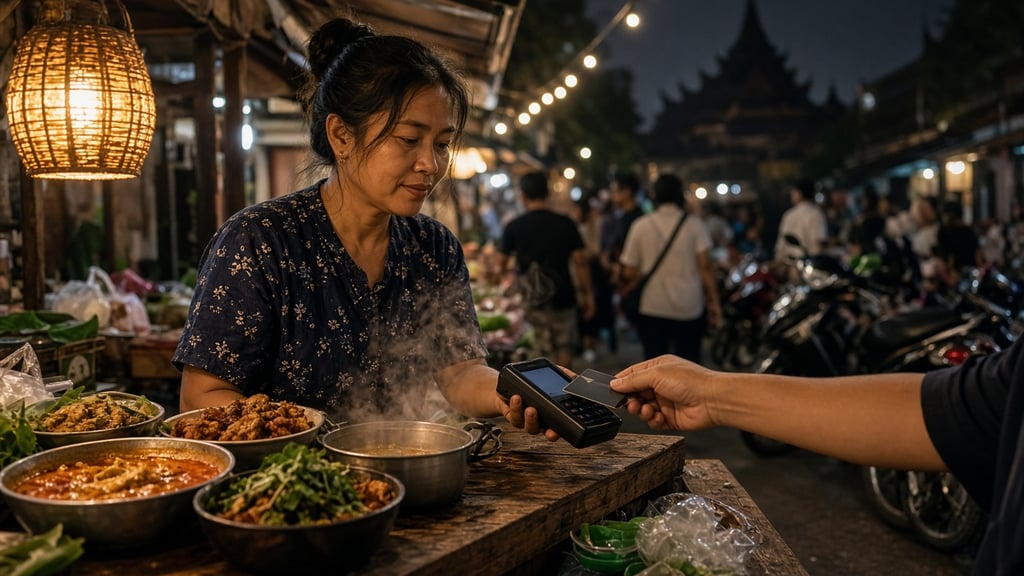
Changing holiday cash at a licensed booth, a bank, or an authorized transfer agent is still the lawful path. The Nong Prue house was not that path. If someone in a condo, a rented villa, or a Telegram group offers to buy your USDT, pay you in cash, or "help" with a better rate than SuperRich, treat it as an unlicensed desk. You can lose the funds, walk into a money-laundering investigation, or both.
Keep large conversions on a paper trail: a bank transfer, a licensed money-changer receipt, or a regulated digital-asset platform. Do not hand a passport, a banking-app login, or a hardware wallet to a stranger who promises a same-day cash-out. If you are asked to receive a transfer and pass it on, stop. That is mule work, even when the pitch is framed as a favour.
Student visas do not authorise employment. Report suspected unlicensed FX or crypto cash-outs to Pattaya City Police, Chonburi Immigration, or the Anti-Online Scam Operation Center on 1441. Tourists changing a few thousand baht at a marked booth are not the subject of this warrant. The 200 million baht monthly flow is.
Comment verification
Step 1 of 3
Verify your email once to publish your comment. Your email is never shown publicly.
Enter the 6-digit code sent to .
Choose the display name shown next to your comments.