CZ in Bangkok urges a baht-backed stablecoin and tokenised Thai assets to build an ASEAN hub
Former Binance chief Changpeng Zhao told a Gulf Binance forum in Bangkok that Thailand should issue a fully reserved baht coin, tokenise bonds and shares, and use the SEC's digital-asset rulebook to compete as a regional hub.
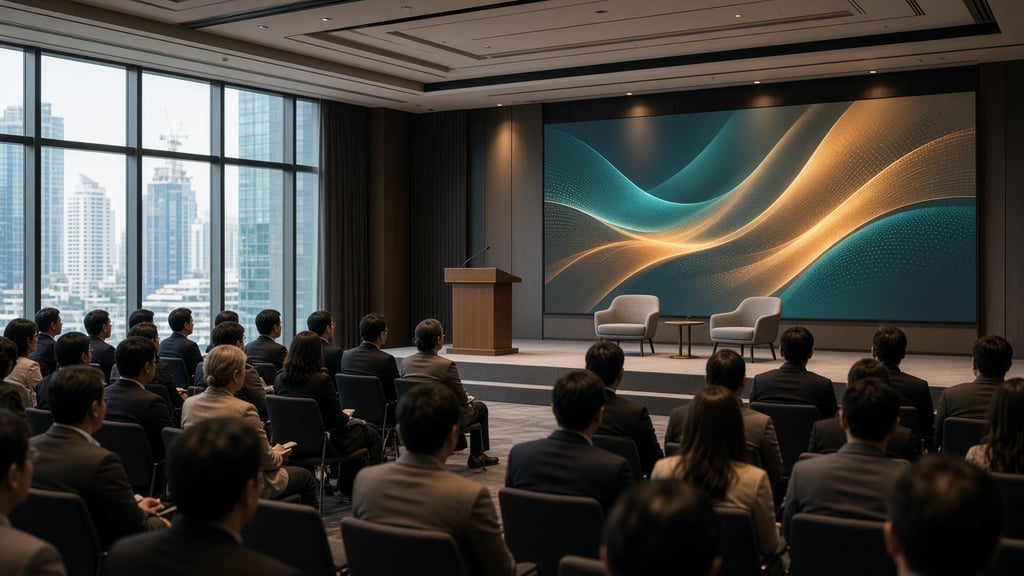
Former Binance chief Changpeng Zhao, better known as CZ, used a Bangkok stage on Friday to treat digital money as industrial policy rather than a trading fad. Speaking at Binance TH's "CZ in Thailand: Digital Assets in SEA" forum, co-hosted with Gulf Energy Development's Gulf Binance joint venture, he urged Thailand to develop a baht-backed stablecoin, speed up tokenisation of real Thai assets, and lean on the Securities and Exchange Commission's comparatively clear digital-asset rulebook to compete as an ASEAN hub.
The visit was work, not a victory lap. Zhao left the Binance chief executive job in November 2023 after a United States criminal case, served a short prison term in 2024, and received a presidential pardon in October 2025. He remains a major shareholder. On 27 November 2026 the Bangkok brief was aimed at Thai regulators, banks, and listed companies.
His baht-coin case was about currency relevance. Dollar-linked tokens already dominate global stablecoin circulation, a stock of roughly US$300 billion, because the United States moved first. Zhao's argument is that a country without a digital form of its own money has almost no presence in blockchain settlement. A baht coin reserved one-to-one, with commercial banks helping hold and audit the cash, could cheapen remittances, settle tokenised Thai securities, and pull reserves into the regulated banking system instead of parking them offshore.
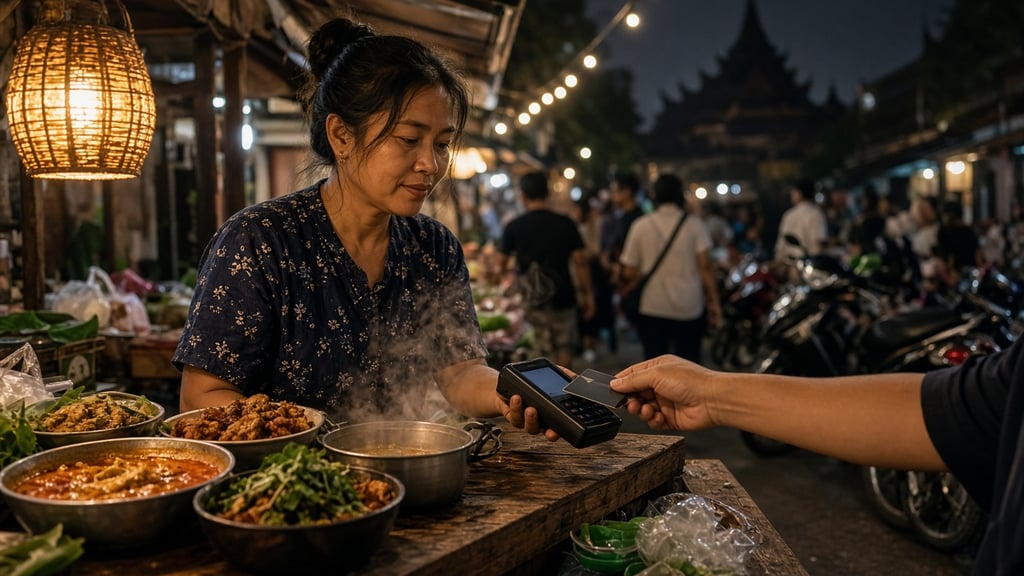
Thailand already has excellent domestic rails and a stubborn last-mile problem. PromptPay is fast for anyone with a Thai bank account. It is far less useful for tourists, remote workers, or companies paying Thai contractors from abroad. Zhao framed cross-border payments as the unsolved piece. A reserved baht stablecoin would not replace PromptPay at the corner shop. It would sit in the gap where dollar coins currently do the work, and where converting those coins back into baht still costs time and spread.
Tokenisation was the other half of the speech. Zhao argued that Thai government bonds and liquid SET shares are the assets most ready to be issued as tokens, because they already have public prices and daily trading. Put them on a chain, subject to regulatory approval, and foreign investors who will never open a Thai brokerage account could still buy a slice outside SET hours. He used Binance's global user base of about 330 million accounts as a rough measure of distribution reach. Thailand's data-centre build-out could in theory be packaged as compute tokens later. Real estate, with sticky prices and thin trading, is a poorer first candidate.
The local politics of the event mattered as much as the product ideas. Binance's Thailand platform is Gulf Binance, a joint venture with Gulf Energy Development under chief executive Sarath Ratanavadi, licensed by the Thai SEC in November 2023 and opened to the public in January 2024 after the partners formed the company in May 2022. Zhao described the Gulf partnership as one of Binance's most successful local collaborations worldwide, crediting an early Dubai meeting with Sarath. He said Binance TH had grown from less than 2 percent market share at launch into the country's leading licensed exchange, with substantial Thai ownership.
Thai regulators are not starting from a blank page. In January 2026 the SEC published its 2026-2028 strategic plan, "Building Trust, Powering Growth," which already names tokenisation and crypto as an investment asset class as core work, including groundwork for crypto exchange-traded funds. The Bank of Thailand has been consulting in parallel on reserved baht stablecoins. The Cabinet in May 2025 approved in principle a government investment token, G-Token, as a digital borrowing tool of about 5 billion baht that is not a cash substitute; the first sale has since been under review. Zhao did not invent that agenda. He told the region that Thailand's existing rulebook is an asset, if the country uses it before neighbours do.
He was less breezy about risk. Several Southeast Asian markets, Thailand included, are still in sandbox or exploratory mode for newer tokenised structures. Binance disclosed a major global breach in late October, after which Binance TH briefly paused crypto deposits and withdrawals while saying Thai-segregated customer funds were safe. Zhao said artificial intelligence is speeding up attacks even as he expects incident frequency to fall over the next six to 12 months. He also treated huge AI listings as a rival for investor cash and reminded the audience that four-year crypto price cycles still look like psychology, not a referendum on whether tokenised bonds are useful.
A regional race Thailand can still lead
Southeast Asia already lives on dollar stablecoins. The friction is the last mile into rupiah, dong, peso, and baht. Zhao's competitive claim was that the first ASEAN market to license transparent, bank-backed local coins and tokenised government paper will capture flows the others will then chase. Singapore has the reputation. Indonesia and Vietnam have the scale. Thailand has a licensed exchange with a SET-listed energy giant as partner, an SEC that has already written digital-asset licences, and a tourist economy that still cannot let a visitor pay as easily as a local. That combination, not a celebrity walk-on, is the actual story of Friday's forum.
What This Means for Expats and Travelers in Thailand
If a reserved baht coin ever clears both the SEC and the Bank of Thailand, the first practical win for foreigners is cheaper settlement for rent, school fees, and invoices that today bounce between a dollar stablecoin, a Thai bank, and a spread. Until a licensed baht token exists, PromptPay, a transfer app, and a Thai current account remain the tools that actually work. Do not confuse a conference talking point with a product you can hold next week.
Tokenised SET stocks and Thai government bonds, if they appear, will still sit inside Thailand's investor-protection perimeter. Expect KYC on a licensed local platform, not an anonymous global ticker. Expats who already hold Binance TH or other SEC-licensed accounts are closer to any eventual product than tourists on a 60-day exemption. Treat G-Token as a savings-and-debt instrument, not a new currency: the Ministry of Finance has been explicit that government tokens are not cash and not a payment rail.
The cybersecurity caveat is the one travelers already feel. After the late-October global incident, licensed Thai platforms showed they can freeze rails while they check wallets. If you keep long-term savings in crypto because Thai banks still ask too many questions, size the position as money you can live without for a week. Zhao's ASEAN-hub pitch only works if the pipes stay up, the reserves stay in banks, and the baht remains the unit of account rather than a meme ticker with a flag on it.
Comment verification
Step 1 of 3
Verify your email once to publish your comment. Your email is never shown publicly.
Enter the 6-digit code sent to .
Choose the display name shown next to your comments.