Thailand BOI ties 2027 tax breaks to local parts
From January 2027, the Board of Investment will cut unearned tax holidays for EV and appliance plants, restoring extra years only if factories meet Thai parts and payroll tests after a USTR transshipment case.
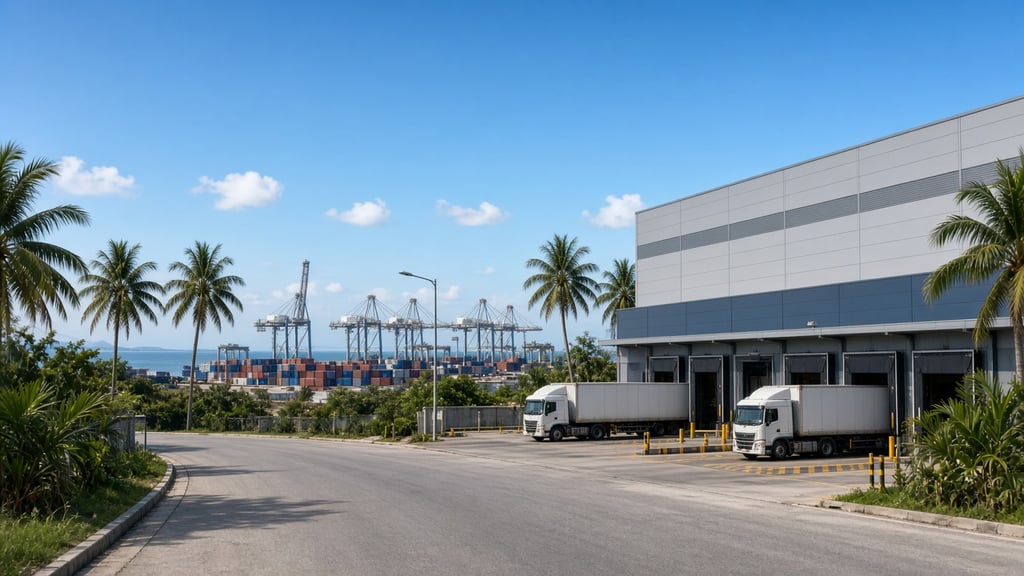
Thailand's Board of Investment will from January 2027 shorten the automatic corporate-income-tax holiday for new electric-vehicle and electrical-appliance plants, and restore extra years of relief only if those factories buy Thai parts and put Thai workers on most of the payroll. The rewrite was approved on 27 November 2026 at a board meeting chaired by Deputy Prime Minister and Finance Minister Ekniti Nitithanprapas, after the U.S. Trade Representative found that Thai industrial policy has helped Chinese surplus production reach American buyers.
USTR pressure and the origin problem
U.S. Trade Representative Jamieson Greer determined under Section 301 of the Trade Act of 1974 that Thailand's industrial plans, market-access barriers, preferential support, labour enforcement, and failure to police non-market-economy imports and investment are unreasonable and burden U.S. commerce. Washington said the harm is sharpest in electronics, automobiles, machinery, and electrical equipment, and proposed additional duties of up to 18 percent on Thai goods, net of existing Section 301 tariffs. Written comments close on 5 January 2027. Hearings are listed for 25 January.
The USTR Thailand report cited the 13th National Economic and Social Development Plan for 2023-2027, including 7 percent annual growth in total exports, 5 percent annual growth in electric-vehicle parts exports, and investment averaging at least 27 percent of GDP. It also pointed to the 2012-2031 industrial master plan, Thailand 4.0, and BOI tools such as import-duty waivers on export inputs, corporate-tax holidays of up to 13 years, and tax pauses of up to 15 years for new technology. A 15 billion baht promotion for Isuzu pickup production in April 2026 was listed among the examples of state support.
BOI Secretary-General Narit Therdsteerasukdi said promotion policy is not designed to inflate output or export volume, and that Thailand does not support using the country as a base to disguise origin and dodge trade remedies. Quality of investment, local jobs, Thai inputs, and skills matter more than the investor's passport. U.S. semiconductor, electronics, auto, and chemicals firms already rely on Thai plants, a point the board wants Washington to weigh against the pass-through charge.
The 2027 local-content and payroll tests
Three measures apply to applications filed from January 2027. The local-content and Thai-payroll pilot covers electric vehicles and their parts, and electrical appliances, equipment, and parts. Base tax holidays will be reduced. One extra year of corporate-income-tax exemption is available if domestic materials meet the floor and the product holds Made in Thailand certification from the Federation of Thai Industries. The floors are 40 to 45 percent of total raw-material value for electric vehicles and electrical appliances, depending on the activity, and 15 percent for qualifying key electronic parts. A separate extra year is available if wages paid to Thai staff are at least 70 percent of the company's total wage bill, met within three years of first revenue. A kit-assembly plant can still apply, but it will sit on a thinner holiday unless it can document Thai steel, wiring, motors, housings, or electronics and a Thai-majority payroll.
The 2027 bars sit on a June 2025 incentive that already offered a 50 percent tax reduction for two extra years at similar 40, 45, and 15 percent ratios. What changes now is the default package: the unearned holiday is being cut, and the extra years are contingent. Electronics, solar, and metals are not named in the January 2027 tax-holiday pilot. They sit in the surrounding net. Thai small and medium firms in electronics, metals and materials, auto parts, machinery, and light industry can apply from 500,000 baht if Thai individuals own at least 51 percent and the firm holds SME One ID, and they receive two extra exemption years. A July 2025 process rule already demanded substantial transformation, including a four-digit Harmonized System code change, in auto parts, electrical appliances, electronics, metal products, textiles, furniture, and bags.
Large manufacturing projects must invest at least 20 million baht. Thai SMEs and service businesses keep the old floor. Over the past decade, applications below 20 million baht were about 13 percent of filings but only 0.38 percent of investment value. A 2027 acceleration bonus gives a 50 percent corporate-tax cut for three extra years to projects that put at least 40 percent of approved capital, and at least 2 billion baht, excluding land and working capital, into the ground within 12 months of the promotion certificate.
What it means for Chinese and other manufacturers
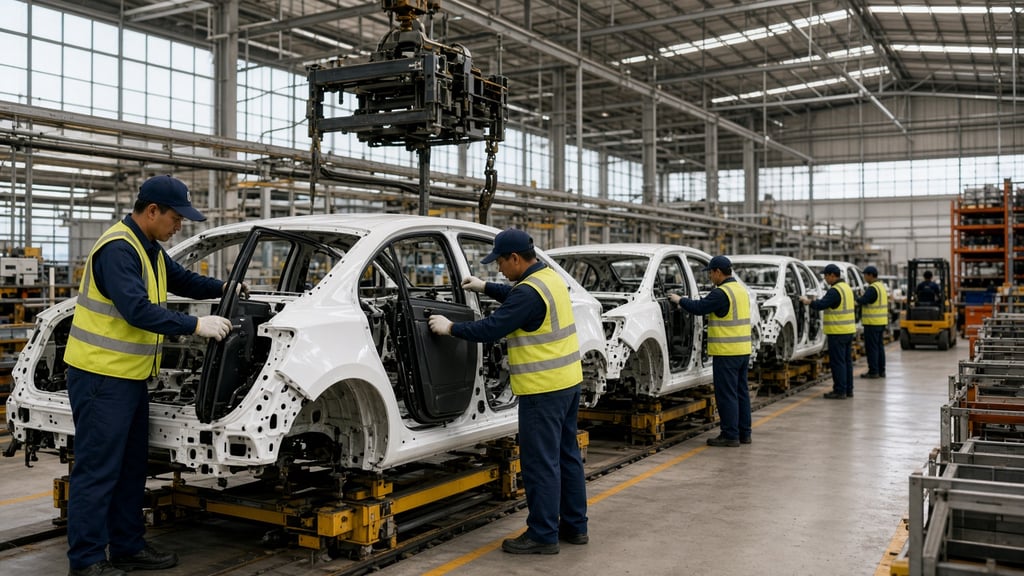
Chinese electric-vehicle groups that have opened Eastern Economic Corridor plants in Rayong and Chonburi now face a documented sourcing test, not only a promise to assemble. Industry debate already holds that Chinese-led lines often source 40 to 60 percent locally, versus 70 to 80 percent in older Japanese pickup and car chains. The new 40-45 percent floor is a threshold some Chinese plants already graze, and a gap Japanese suppliers may clear more easily. Extra tax years also require MiT paperwork from the Federation of Thai Industries, which is harder to game with last-minute invoices.
The BOI still says nationality is not the filter. Japanese, Korean, American, and European groups keep access, and the board expanded Thailand FastPass from eight to 12 agencies, adding the Immigration Bureau, the Department of Employment, the Thai Industrial Standards Institute, and the Food and Drug Administration. Forty-two FastPass projects worth more than 344.8 billion baht are already in the queue, with 51 billion baht actually spent. What the rewrite changes is the economics of a thin-assembly play: import Chinese cells, stamp a Thai origin, and ship to the United States. Bangkok says it will cooperate with Washington to stop origin fraud. USTR has not withdrawn the 18 percent proposal. Two promotions approved the same day underline the preferred model: Thai Kali's 7.64 billion baht potassium-chloride plant in Nakhon Ratchasima, and Cofco Biochemical (Thailand)'s 3.08 billion baht erythritol line in Rayong using Thai cassava and corn starch.
What This Means for Expats and Travelers in Thailand
Factory managers, engineers, and compliance staff at BOI plants should expect tighter local-content audits and more Thai hiring if the firm wants the extra holiday. FastPass now covers visas and work permits, which may shorten waits for specialists the 70 percent Thai-payroll rule still allows. Shoppers may see more Thai-made EV and appliance parts over 2027 and 2028 if the incentive bites. Retirees and remote workers are not the target, but anyone employed by a promoted manufacturer, or shopping for a Thai-assembled electric vehicle, will feel the sourcing rules in hiring plans and sticker prices.
Comment verification
Step 1 of 3
Verify your email once to publish your comment. Your email is never shown publicly.
Enter the 6-digit code sent to .
Choose the display name shown next to your comments.