Thailand Hikes Imported EV Tax to Shield Jobs
Cabinet lifts imported BEV and REEV excise tax to 35 percent from January 2027, aiming to protect 750,000 auto workers as Thailand rebuilds local content rules.
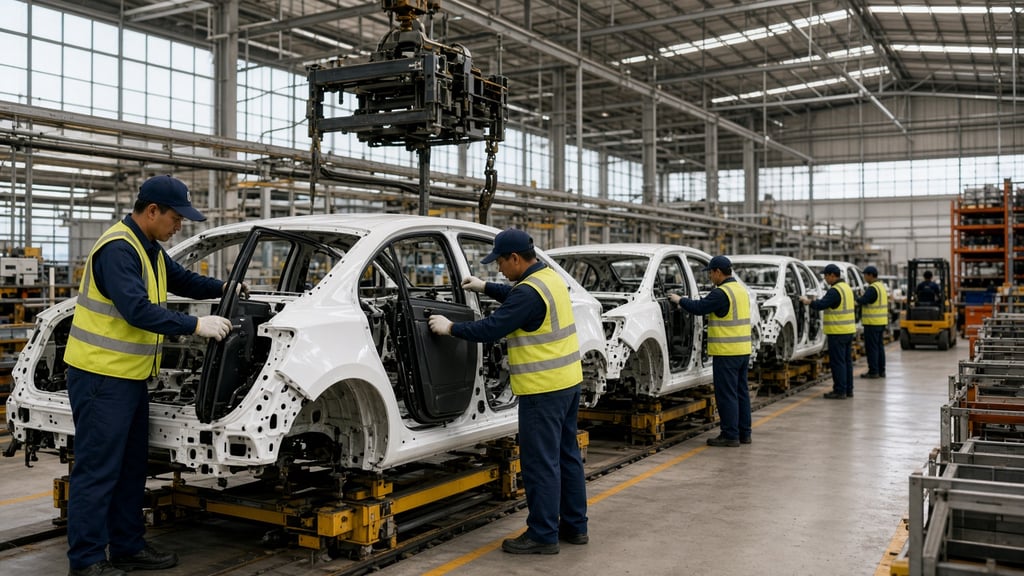
BANGKOK - Prime Minister Anutin Charnvirakul's government is rebuilding Thailand's auto-tax architecture around a simple industrial wager: keep roughly 750,000 manufacturing jobs alive by making fully imported electric cars much more expensive than vehicles assembled on the Eastern Seaboard.
Cabinet approved the first hard lever on 3 November 2026 at an off-site meeting in Udon Thani. From 1 January 2027, completely built-up battery electric vehicles (BEVs) and range-extended electric vehicles (REEVs) will face a 35 percent excise tax, up from 10 percent and 15 percent respectively. Excise officials say that once the duty is folded into retail pricing, sticker prices on those imported models could rise by about 49 percent.
How the tax levers actually work
The 35 percent rate is not a blanket tariff on every car sold in Thailand. It is aimed at completely built-up (CBU) imports that never joined the Board of Investment's EV 3.0 and EV 3.5 localisation programmes, which have already pulled more than eight electric-vehicle assembly plants into the country. Vehicles built here can still qualify for much lower bands, including a 2 percent excise rate for locally assembled EVs that use Thai-made batteries.
Finance Minister Ekniti Nitithanprapas has framed the redesign around three tests. Imports should pull in factories rather than finished cars. Thailand should remain a regional and global export hub for cleaner vehicles. And "local content" should mean high-value hardware made here, not accounting entries for profit, water, or electricity that older customs formulas allowed.
That third test is the next fight. Permanent Secretary Lavaron Sangsnit and Excise Director-General Pornchai Theeravet are drafting a Made in Thailand (MiT) rule with the Federation of Thai Industries. It would count measurable parts such as seats, doors, glass, tyres, drive motors, reduction gears, and high-voltage wiring, and would aim for about 40 percent genuine Thai hardware. A future three-tier schedule, still unofficial, would sit beneath the new CBU ceiling: roughly 10 percent for plants that meet MiT, 15 to 20 percent for Thai assembly that falls short, and 35 percent for full imports. Officials have stressed that the middle and lower rungs are still estimates.
The registration gap explains the haste. From January to September 2026, 166,035 electric passenger cars and pickups were registered. Only 47,516 were made in Thailand. Imports, including more than 102,000 units outside the EV incentive schemes, made up about 70 percent of that market. The Excise Department wants the mix reversed.
The 750,000-worker bet
Thailand remains ASEAN's largest vehicle producer, fifth in Asia and 11th in the world. Japanese plants still dominate, turning out 892,255 vehicles in the first nine months of 2026 against 125,173 from Chinese factories. Overall output slipped 0.4 percent to 1,080,303 units and exports fell 5 percent to 655,009, even as domestic sales rose 16.4 percent. Hybrids, plug-in hybrids, and battery cars together accounted for 55 percent of new-car registrations in the first seven months of 2026, overtaking combustion models for the first time.
Pickup trucks assembled for Isuzu, Mitsubishi, and Toyota still carry 80 to 95 percent Thai parts and rest on more than 300 Toyota Tier-1 suppliers alone. Battery-electric models need cells, drive motors, and electronics that those combustion specialists do not yet make at scale. Keeping a final-assembly hall in Rayong or Chonburi is not enough if the value migrates to imported packs and software.
Anutin used a 23 November meeting with eight Japanese and Chinese groups, and a 25 November session with auto unions, to press for more Thai e-parts purchasing, technology transfer, and reskilling rather than a one-speed jump to battery cars. Combustion makers said they have no current plan to leave. EV makers signalled they would expand capacity if the tax gap between a CBU import and a Thai-built car stays wide.
Japanese makers Toyota, Honda, Isuzu, Mitsubishi, Mazda, and Nissan have outlined about 134 billion baht of Thai investment through 2030. Great Wall Motor has flagged an extra 10 billion baht. BYD already lists more than 35 Thai suppliers covering 529 parts, with battery, motor, and engine operations in Rayong. The Board of Investment had approved 189 EV-related projects worth 151.37 billion baht as of 31 August 2026.
The political wrapper is a multi-pathway transition: keep ICE, hybrid, plug-in hybrid, REEV, and BEV lines alive, and tie pickup engines to domestic E20 and B20 biofuels so sugar cane, cassava, and oil-palm farmers share the industrial shift. Finance officials estimate the CBU tax change could raise about 3.5 billion baht in extra excise revenue, a figure that would shrink if more cars are built here.
What This Means for Expats and Travelers in Thailand
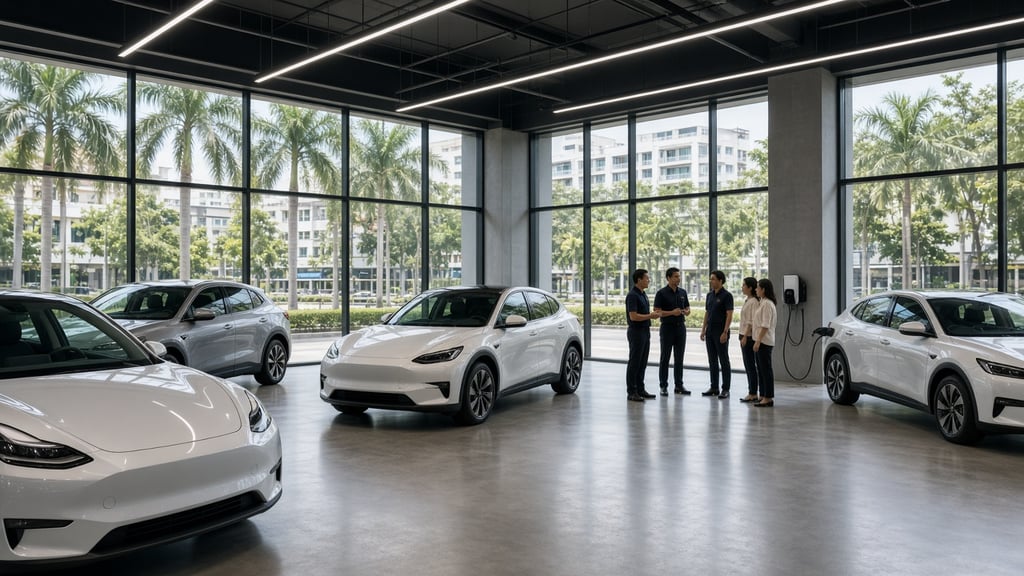
Imported Chinese, European, and other CBU electric models that are not assembled in Thailand are the cars most exposed to the January 2027 jump. Anyone shopping in late 2026 should ask a dealer, in writing, whether a badge is locally assembled or fully imported, and whether it sits inside an EV 3.0 or 3.5 compensation programme. A Rayong-built BYD or a Thai-assembled Japanese hybrid is not in the same tax bucket as a CBU EV brought in only to test the market.
Service and spare parts will matter more as localisation rules tighten. Personally importing a used EV remains tightly restricted, with duties that can exceed the car's value, so a cheap purchase in China or Europe rarely survives Thai customs. Hybrids and locally built ICE pickups are not the target of the 35 percent CBU EV hike, though future MiT rules will still shape prices, residual values, and which workshops can source parts. Buyers who need a car before 2027 should compare the on-the-road price today with the post-hike import maths, then weigh charging access and aftersales support rather than the badge alone.
No comments yet. Be the first to join the conversation.