Official land values rise more than 16 percent from 1 January, lifting fees and tax
Treasury has finished the 2027 to 2030 revaluation of about 37 million plots. Central Bangkok roads are set to pass 1 million baht per square wah, lifting transfer fees and annual land tax.
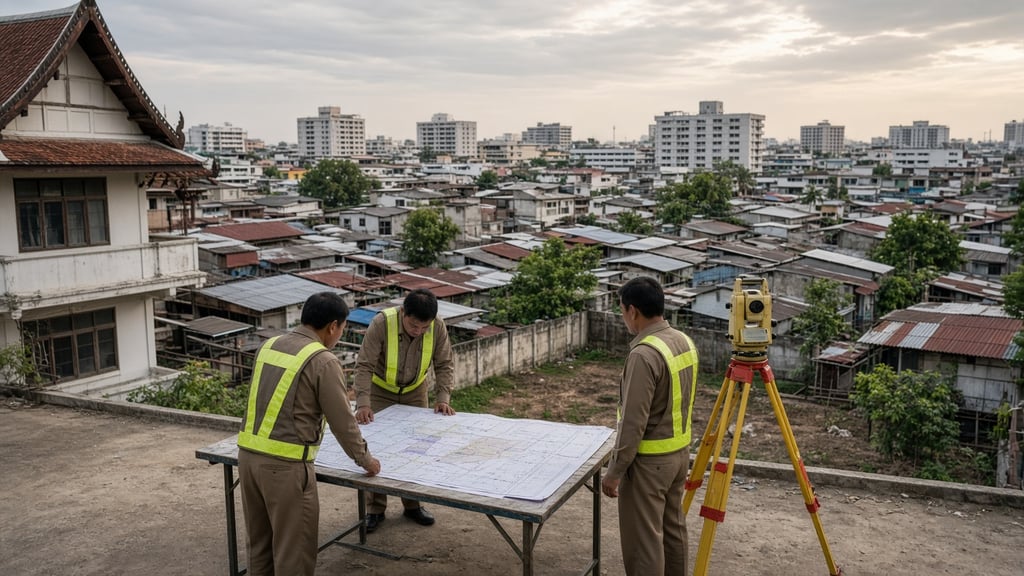
Thailand's Treasury Department has finished revaluing about 37 million land plots for the 2027 to 2030 cycle. Officials say the new tables take effect on 1 January 2027, the morning after the current 2023 to 2026 schedule expires, and that the national average is more than 16 percent higher.
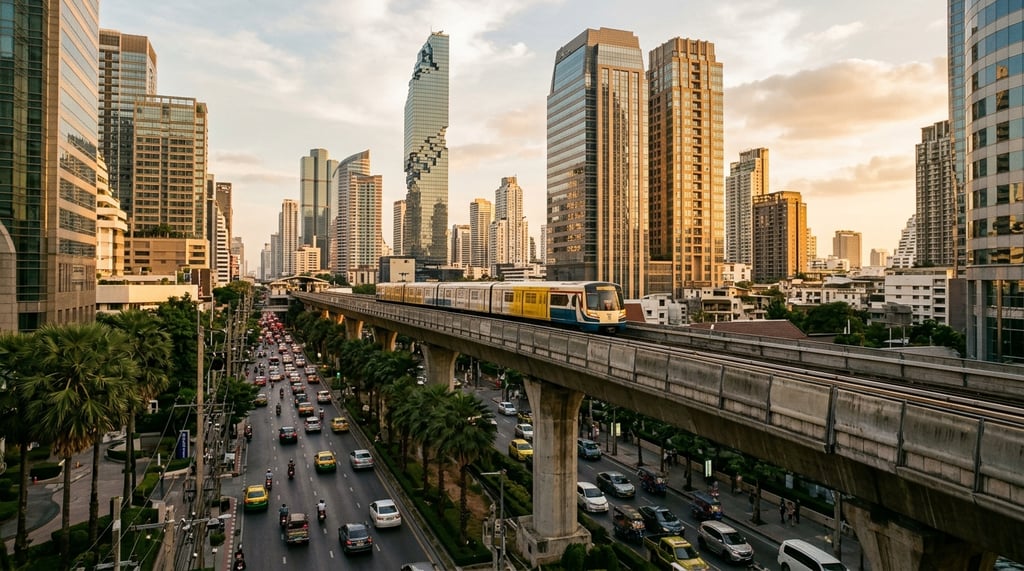
That is a sharper step than the last round. The last published briefing put the national land increase at 8.93 percent and the building increase at 6.21 percent. Bangkok rose about 3 percent then, mainly along electric-train corridors.
The official number is a fee base, not a sale price
The state's figure is not what a buyer pays on Silom. It is the reference used to calculate registration fees, withholding tax, specific business tax, stamp duty, and the annual land and buildings tax. A square wah is four square metres. On Silom, Ploenchit, Wireless Road, and Rama I, the current ceiling is 1 million baht per square wah. Treasury now says those same central roads will pass that mark.
Market prices sit far above it. A private Bangkok survey this year listed Siam, Chidlom, and Ploenchit around 3.95 million baht per square wah, with Wireless Road around 3.15 million. In June, Finance Minister Ekniti Nitithanprapas told the department to shrink the gap: official values still run about 30 to 40 percent below actual sales, while international practice aims for a gap of no more than 15 percent.
Owners can look up a plot by chanote number, province, and survey page on the Treasury's public search at assessprice.treasury.go.th. A website printout is not a court or bank certificate. Those still come from the land office.
How a higher appraisal hits the bill
The 2 percent transfer fee is charged on the appraised value, not the contract price. A 16 percent lift in the base raises that fee by the same proportion even if the buyer and seller do not change their deal. Stamp duty of 0.5 percent, or specific business tax of 3.3 percent when it applies, uses the higher of the sale price or the appraisal.
Annual tax follows the Land and Buildings Tax Act B.E. 2562 (2019). The tax base is the official appraisal. Agricultural use is capped at 0.15 percent, residential use at 0.30 percent, and commercial or vacant land at 1.20 percent. Vacant land unused for three consecutive years adds 0.3 percentage points every three years, up to 3 percent.
Developers holding unsold houses or condominiums past three years can see the charge shift from a residential-style rate of about 200 baht per million baht of value to an other-use rate of about 3,000 baht per million. Housing groups have flagged a three-way cost: a higher transfer fee, land tax at the full rate after earlier relief ended, and that vacant-stock surcharge on leftover inventory.
A Cabinet cut that drops transfer and mortgage fees to 0.01 percent remains in force until 30 June 2027, but only for Thai nationals buying homes with an appraised value of no more than 7 million baht. Foreign condominium buyers sit outside that cut.
Local committees, national tables
Some provincial valuation committees have been meeting through November on whether to use a one-year statutory extension of the current tables. The Asset Valuation for State Benefit Act allows that when needed. Treasury's national message is that the new cycle is finished and 1 January is the date that matters for most plots. Check the published schedule for the province, then the chanote lookup, before assuming either a freeze or a 16 percent jump on a specific title.
Industry groups expect some owners to list land before the new values bind, or to lease plots and plant crops so the land can claim the agricultural rate. Local tax offices apply use tests. A token vegetable patch on a Sukhumvit infill site is unlikely to survive an inspection.
What This Means for Expats and Travelers in Thailand
Foreigners who buy freehold condominium units pay the 2 percent transfer fee on the unit's appraised value. A second home is taxed from the first baht at the additional-residence rate, about 0.02 percent a year on value up to 50 million baht. Both bills move with the new tables. Foreigners still cannot hold freehold land in their own names.
Leasehold villas and houses sit on land the Thai owner holds. The annual land tax is the landowner's, but many leases pass it through. Ask what the 2027 assessment will be before you sign a January transfer, and get the figure in writing from the lessor or the local municipality.
If you are mid-purchase, completing registration in December 2026 locks the old appraisal for the transfer fee. Tax for 2027 is assessed on whoever owns the property on 1 January. Short-stay visitors are not on the hook. Anyone comparing advertised sale prices should remember the official wah price is a floor for fees, not a market quote.
Comment verification
Step 1 of 3
Verify your email once to publish your comment. Your email is never shown publicly.
Enter the 6-digit code sent to .
Choose the display name shown next to your comments.