Suvarnabhumi Caps Peak Immigration at 45 Min
Immigration Division 2 says Suvarnabhumi's peak passport wait stayed near 45 minutes last month. First-time visitors still go to a staffed booth before ABC e-gates.
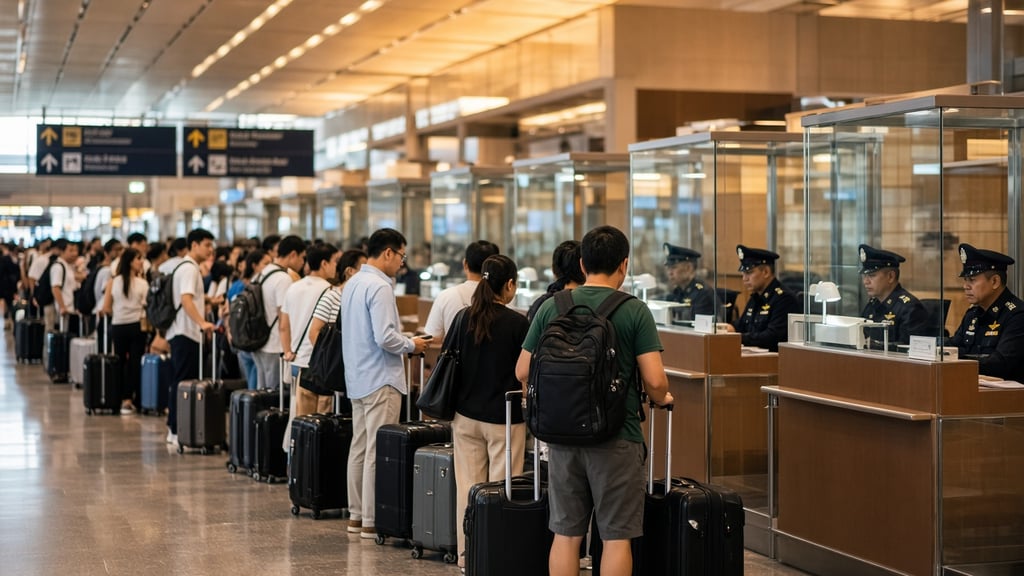
A Japanese traveler's social post put a six-hour clock on Suvarnabhumi: landed at 14:00, out the doors at 20:00. Immigration Division 2 spent 27 November answering a narrower question, after the clip also asked why Japanese passengers could not use automated gates even though Japan sits on the 33-nationality ABC list.
Over the previous month of peak arrivals, officers said, nobody sat in the passport line for six hours. The longest stretch they logged at the desks was about 45 minutes. Pol. Col. Pongthorn Pongratchatanan, deputy commander and spokesman for the division that covers the airport, drew a hard line around what that clock includes.
Door-to-kerb time includes the walk from the aircraft, the bottleneck at the hall entrance, a first-visit biometric enrolment, anyone bounced for a missing Thailand Digital Arrival Card, baggage belts, and the taxi rank. The bureau is not measuring those minutes. Travellers who treat the two clocks as one will keep posting six-hour stories into high season, and the official rebuttal will keep sounding like a denial of something nobody in the hall actually felt.
The e-gate list is not a first-visit lane
First entry still goes to a staffed booth so facial images and fingerprints enter the system. Later trips can use the ABC lane. That is enrolment, not a secret ban on Japanese passports, and it is the detail the viral post treated as a broken gate.
Division 2 said Japanese travellers already do: 9,538 used the gates between 18 September and 31 October 2026, fourth among foreign users, from a foreign ABC total of 94,760. Eligibility shows up in the TDAC confirmation email. Officers in the hall can point first-timers away from the ABC corridor before they join a line that will only send them back.
The paperwork bounce is the real queue killer
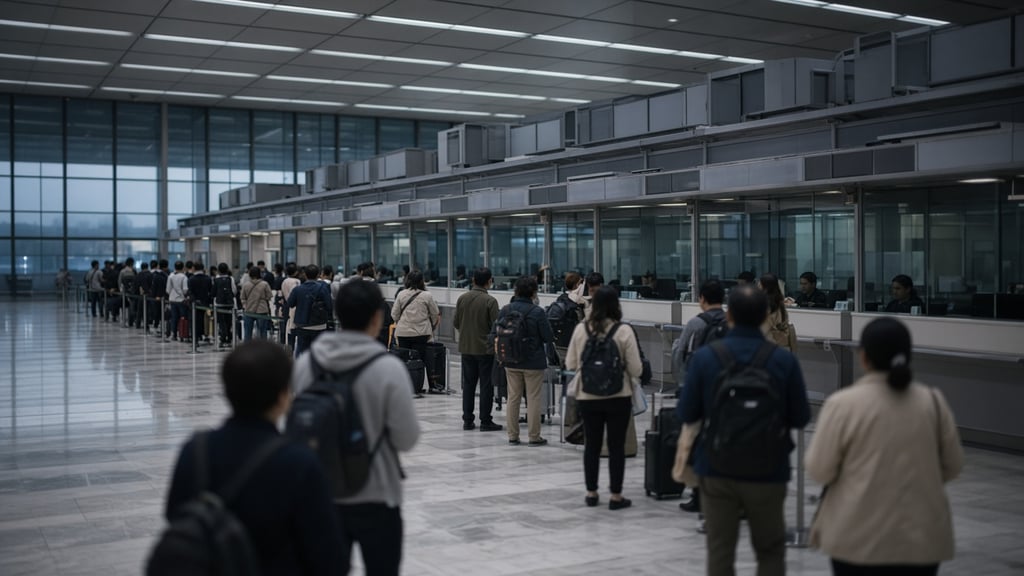
Officers pull passengers without a completed TDAC out of the queue to finish the form, then those travellers rejoin. On a quiet morning that is an inconvenience. On an evening bank, with a handful of counters facing several hundred people, it is how a 45-minute desk wait becomes an hour and a half in the building. The card is the electronic TM.6 that every non-Thai national must file, including children, under Immigration Bureau Order 106/2568, in force since 1 May 2025. The official FAQ says to submit within three days of arrival, up to 72 hours ahead. It is free, takes about three to five minutes if passport, flight number, and a Thailand address are ready, and is valid for one arrival date. Paid lookalike sites are not the bureau. The confirmation QR lives in email, on the phone, or printed.
Why the hall still looks jammed
When several long-haul flights dock together, people pile up in the constrained walkway into the hall even if every booth is open. Division 2 said it is staffing all counters across Zones 1, 2, and 3 and working with Airports of Thailand to peel passengers from crowded zones toward quieter ones. Police Lt. Gen. Noppasin Poolsawat, the Immigration Bureau commissioner, walked that flow himself on 16 November, with high season already on the calendar. Suvarnabhumi, in Bang Phli, Samut Prakan, has been Thailand's main international gateway since 2006. Capacity arguments at the country's busiest arrivals hall are not new.
What This Means for Expats and Travelers in Thailand
If you have never entered Thailand, budget a staffed-counter wait even if your passport is on the ABC list. Returning visitors who have already given face and fingerprints can check the TDAC email before walking to the gates. File the card on the Immigration Bureau portal, not a paid lookalike, and do it before you land. In January, after a New Year crush, the bureau talked about a general 30-minute processing figure. Travellers answered with snakes out into the walkway and waits they timed above an hour, TDAC already done. The November briefing uses a clearer unit, peak desk time last month, and a higher number, about 45 minutes. The credibility gap is the same: people remember the whole airport, and the bureau publishes the booth.
Do not treat a 10pm Chiang Mai train, a Phuket hotel transfer, or a same-day ferry as if the immigration hall were a 20-minute constant. Evening banks at Suvarnabhumi, and the same arrival-cluster pattern at Phuket on heavy charter days, still punish tight connections. If you later tell friends you spent six hours in immigration, separate the desk from the walk, the bags, and the taxi queue. The bureau is measuring one of those clocks. Travellers are measuring another.
Comment verification
Step 1 of 3
Verify your email once to publish your comment. Your email is never shown publicly.
Enter the 6-digit code sent to .
Choose the display name shown next to your comments.