Immigration invites evidence after Chinese travellers allege 18,000 yuan demand at Suvarnabhumi
Chinese passengers refused at Suvarnabhumi on 12 November alleged a broker asked 18,000 yuan to clear immigration. Thai Immigration says the claim is unproven and warns travellers never to pay fixers.
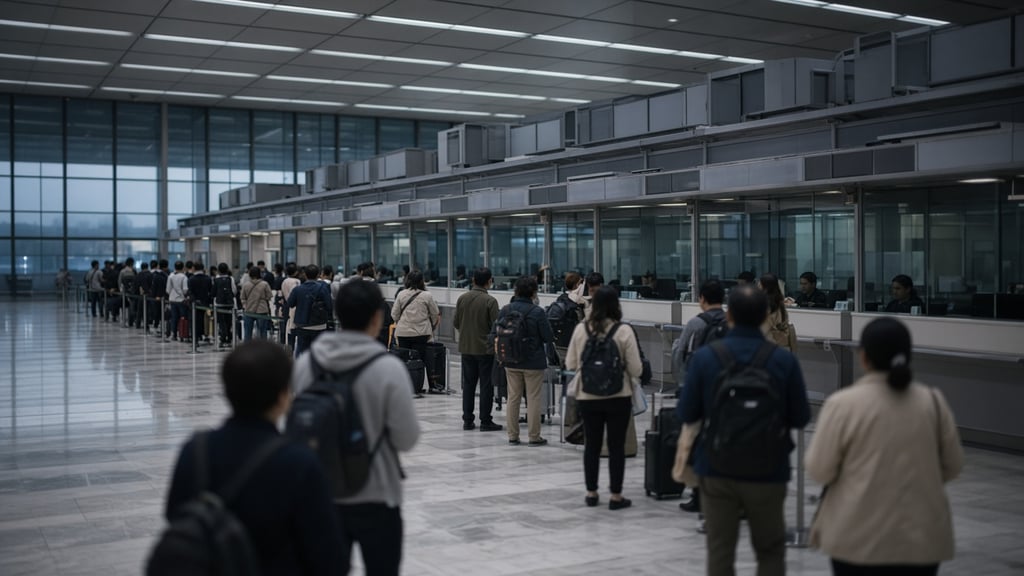
Chinese travellers refused at Suvarnabhumi Airport on 12 November have alleged that a broker demanded 18,000 yuan, more than 90,000 baht, to help them pass Thai immigration. The claim spread on Chinese social media with videos from a crowded holding room. Thai Immigration has treated the payment story as an allegation, not a proven fact, and has asked anyone with evidence to hand it over.
On 14 November, Immigration Bureau spokesman Pol Maj Gen Choengron Rimphadee said the bureau had no supporting proof of an 18,000 yuan demand. Commissioner Pol Lt Gen Nopasilp Poolsawat ordered Pol Maj Gen Khathathon Khamthiang, commander of Immigration Division 2, to examine the complaints. Checkpoints had already been told to look harder at travellers whose story suggested scam-network relocation, refuge, or money laundering rather than a holiday.
A visa exemption is not a guaranteed stamp
Bureau figures for that Thursday show 92 foreign passengers of mixed nationalities were refused entry at Suvarnabhumi. Forty-five were Chinese nationals. Officials said those Chinese passengers were treated as high-risk arrivals who presented themselves as tourists but could not confirm a real itinerary. All 45 were later placed on return flights.
That outcome sits inside Thai law, not a special China rule. The Immigration Bureau visa page and the Ministry of Foreign Affairs general guidance both state the same split of authority. Embassies issue visas. The officer at the port of entry decides whether a foreigner may enter. A visa, or a visa exemption, can still be refused under the Immigration Act B.E. 2522 (1979).
Section 12 lists the usual grounds: no genuine passport or required visa, no adequate means of living, intent to work without permission, public-order or security concerns, and prior deportation. Officers at Suvarnabhumi are applying those tests more tightly to people whose story at the booth does not match a short tourist visit.
The Chinese Embassy in Thailand warned its own citizens of that gap on 9 June 2026. Visa-free travel is not unconditional entry. Bring a passport with at least six months' validity, a return or onward ticket, a real hotel booking, and proof of funds, usually at least 10,000 baht per person or 20,000 baht per family. From 1 May 2025 every foreign arrival must complete the Thailand Digital Arrival Card, free, only at tdac.immigration.go.th.
The holding room is not a jail cell
Videos from the waiting area prompted complaints of crowding and a bad smell. Immigration described the space as a short-term room for people already refused entry, managed by the airlines that must fly them out, not a criminal detention cell. Occupants may use their phones, which is how the clips were filmed. Passengers with an immediate outbound flight go to a separate waiting area that Airports of Thailand built at the bureau's request. AOT still lists Immigration Police on 0-2134-0320 and airport Tourist Police on 0-2132-1155.
Suvarnabhumi (BKK) opened on 28 September 2006 in Bang Phli, Samut Prakan, and remains Bangkok's main international gateway under AOT. It handled more than 62 million passengers in 2025. It is the booth most Chinese visitors meet first, which is why one day's refusals travel so far on Chinese platforms.
Fixer ads followed tighter screening
The 18,000 yuan story did not appear in a vacuum. After Thailand tightened arrival screening, Chinese-language pages began advertising paid easy entry through supposed contacts inside Thai Immigration, with money taken in advance. The bureau has already warned the public about scammers, often of the same nationality as the traveller, who sell a service no officer is authorised to sell. As of 14 November the 18,000 yuan demand remained unsubstantiated. Officials said they would prosecute if real evidence arrived.
The wider numbers undercut claims of a closed door. From 1 January 2026 to the November briefing, 4,879,002 Chinese passengers entered Thailand and 12,880 were refused, about 0.26 percent. The same tests apply to other nationalities. China remains Thailand's largest source market. Genuine tourists with a hotel, a return ticket, a completed TDAC, and a straight answer at the booth are still the overwhelming majority who walk through.
What This Means for Expats and Travelers in Thailand
A paid fixer cannot rewrite Section 12. Handing cash to a stranger in arrivals, or transferring yuan on WeChat before the flight, does not create a right to enter. It can add a fraud loss on top of a refused stamp, and it can look like an attempt to corrupt a checkpoint. Travellers of every nationality, including long-stay expats flying back through BKK, should treat "I can get you through" as a scam pitch.
- Complete TDAC only at tdac.immigration.go.th. Do not pay a helper to fill it.
- Carry a return or onward ticket, the first-night hotel confirmation, and accessible proof of funds.
- Answer the purpose of visit in one sentence that matches the stamp you want. Tourism exemption is not a work permit.
- Repeated short trips with thin ties outside Thailand invite extra questions. That is policy, not a personal insult.
- If you are refused, do not pay anyone in the waiting room. Contact your embassy, keep your phone on, and wait for the airline's return booking. Tourist Police 1155 offers Chinese-language help.
- Report fixer ads and payment demands to Immigration with screenshots, names, and transfer records. Anecdotes without evidence close nothing.



Comment verification
Step 1 of 3
Verify your email once to publish your comment. Your email is never shown publicly.
Enter the 6-digit code sent to .
Choose the display name shown next to your comments.