Phuket Targets 46 Million Baht in Unpaid Public Hospital Bills
Phuket's governor sat public health, labour, Social Security, and immigration officers down after public hospitals logged 46.46 million baht in unpaid bills and nearly half of registered migrant workers showed no health cover.
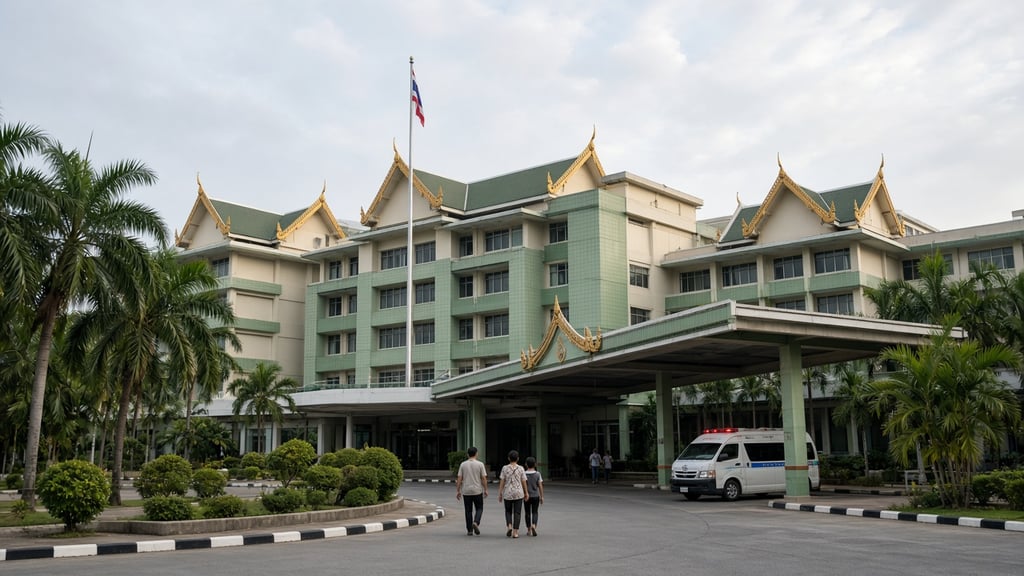
Phuket provincial officials opened a drive this week to recover more than 46 million baht in unpaid public-hospital bills and to move tens of thousands of registered migrant workers onto real health cover. The 10 November 2026 session at Phuket Provincial Hall included public health, labour, Social Security, Immigration, and hospital managers.
Governor Chotinarin Kerdsom chaired, with Vice Governor Romdon Hayiawae present, after weeks of complaint about crowding at government clinics. Radio Thailand Phuket, a PRD station, posted the same official figures that evening.
Phuket is Thailand's largest island and among its smallest provinces, 547 square kilometres off the Andaman coast. Tourism now dominates, and more than 100,000 foreigners are estimated to live there, beside a large migrant workforce.
Nearly Half of Registered Migrant Workers Have No Cover
The Phuket Provincial Public Health Office said 97,611 migrant workers from Myanmar, Laos, Vietnam, and Cambodia are on the provincial register. Of that group, 28,795 people, or 29.50 percent, sit inside Social Security. Another 20,464, or 20.96 percent, hold Ministry of Public Health migrant insurance. The remaining 48,352 workers, 49.54 percent, have no comprehensive health cover at all.
Unpaid medical charges at public facilities from 2022 to 2026 add up to 46,462,729.91 baht. Vachira Phuket Hospital, the island's main Ministry of Public Health regional hospital, accounts for 75.30 percent of that arrears pile. The same five-year window recorded 5,399 births by migrant women in public hospitals and 5,369 birth certificates, most issued to Myanmar nationals.
Why Vachira Carries the Weight
Vachira Phuket Hospital sits on Yaowarat Road in Talat Yai, Mueang Phuket. The Ministry of Public Health classes it as the provincial regional hospital, with 551 beds. It is the default public emergency stop for residents who cannot pay private rates. Uninsured emergencies still get treated. The bill often does not follow.
National rules already split migrant cover into two tracks. Eligible private-sector staff should be enrolled by the employer in Social Security Section 33 within 30 days of starting work. Sickness benefits then open after three months of contributions in the previous 15 months. Everyone else is steered to Ministry of Public Health insurance sold at public hospitals: 1,600 baht for one year, plus a 500 baht health check. General foreigners who buy the ministry card pay 2,200 baht a year.
That card is a fallback, not a substitute, for workers who should be on Social Security. Domestic staff, some seasonal farm workers, and people still waiting for Section 33 rights typically use it. When employers skip enrolment and workers skip the card, the public hospital becomes the insurer of last resort.
Three Moves: Enrol, Reprice, Recover
The 10 November session set three lines of work. Labour and Social Security officers are to press employers to register eligible staff so treatment bills the fund instead of the hospital. Officials also reviewed lifting the ministry premium from 1,600 baht to 3,856.08 baht a year, tied to projected 2025 treatment costs. No decision was taken. Hospitals are to track invoices, confirm cover at the door, and chase unpaid accounts, including through employers.
The province also wants labour, public health, Social Security, and local-government databases linked, so immigration status, work registration, and health rights can be checked in one pass. The aim is to cut unrecoverable costs and keep wards open for Thai residents already squeezed in waiting rooms.
What This Means for Expats and Travelers in Thailand
Foreign residents and visitors are not the source of this 46 million baht ledger, which the province tied to uninsured migrant workers. They still feel the side effects. Public queues at Vachira lengthen when unpaid emergency and maternity cases consume beds. Private hospitals, which already ask uninsured foreigners for cash deposits before scans, surgery, or overnight stays, have little reason to soften those demands if the public system looks strained.
Carry proof of cover that Thai hospitals will honour, not only a home-country card that reimburses later. Expect a Phuket private hospital to hold a deposit until an insurer issues a guarantee of payment. If that letter never comes, the deposit is the bill. Public hospitals remain far cheaper, but non-emergency specialist waits of several hours are common.
Long-stay residents on retirement, DTV, or other visas should keep private policies current and ask in writing whether the insurer offers direct billing in Phuket. Anyone employing household or small-business staff should confirm Social Security registration rather than assuming a cheap ministry card is enough. A later rise in the 1,600 baht product would hit employers and workers on that scheme, not tourists, but it shows Thailand is repricing public care.
Comment verification
Step 1 of 3
Verify your email once to publish your comment. Your email is never shown publicly.
Enter the 6-digit code sent to .
Choose the display name shown next to your comments.