Four Thai cannabis bills lock in medical-first rules
Four competing Cannabis Control Bills would keep Thailand on a medical-first path, tightening shop licences, tourist prescriptions and home growing.
Four competing Cannabis Control Bills now sit in front of Thailand's parliament, and they no longer argue about whether recreational shopfronts should survive. The fight is over how tightly a medical-first frame is locked into statute. Cabinet approved the ministry draft on 22 September 2026. That text would confine cannabis to medical and research use only, with three-year licences issued by the Department of Thai Traditional and Alternative Medicine. It still has to clear the House, plus more than 15 supporting regulations, before the tougher penalties take effect.
On 27 November a Bangkok forum compared four texts: the ministry bill, a People's Party Track and Trace proposal, a Democrat draft with heavier jail terms, and a Prachachat bill that would treat non-medical use as a narcotics offence. Bhumjaithai was invited but did not attend. The Youth Network Against Cannabis hosted the session with the Thai Society for Addiction Psychiatry at the Miracle Grand Convention Hotel.
How the four drafts diverge
The ministry text has the procedural lead. Public Health Minister Pattana Promphat's Cabinet bill would create a national cannabis committee chaired by the health minister. Cultivation, production, import, export and sale would need a three-year licence, with cultivation plots registered as small, medium or large. The draft bans advertising and sales to anyone under 20, pregnant or breastfeeding, and bars sales at temples, schools and parks. Unlicensed production or sale would bring jail, a fine, or both. Off-label use would be a fine.
The People's Party draft, still under internal review, centres on Track and Trace, labels and digital licensing. Party-list MP Ekkapop Sittiwanthana wants every lot followed from farm to export, fixed clocks on licence decisions, public complaint channels, and remedies for operators who invested after 2022.
The Democrat draft is the penalty text. Captain Dr Pichayasak Boonmas wants a 3-year ban after licence revocation, and no ministerial power to keep operating during appeal. Unlicensed export would rise from a 50,000 baht fine to up to five years in prison or 30,000 baht per kilogram. A cannabis DUI causing death could bring up to 10 years.
Prachachat Party leader Police Colonel Twee Sodsong wrapped his bill in three principles: medical treatment must be accessible, recreation must be controlled, and illegal businesses face asset seizure, with non-medical use treated as narcotics. Cannabis used outside government, patient care or science would fall under the Narcotics Code, with illegal import or export treated as a money-laundering predicate.
Bhumjaithai, the party that removed cannabis from the narcotics list in 2022 and now leads the government under Prime Minister Anutin Charnvirakul, was invited to the 27 November forum and did not attend. Researchers said their draft is looser on home growing, focusing controls on commercial plots rather than household plants. Party figures have separately told parliament they now back medical use only.
Shops, home growers and the grey street market
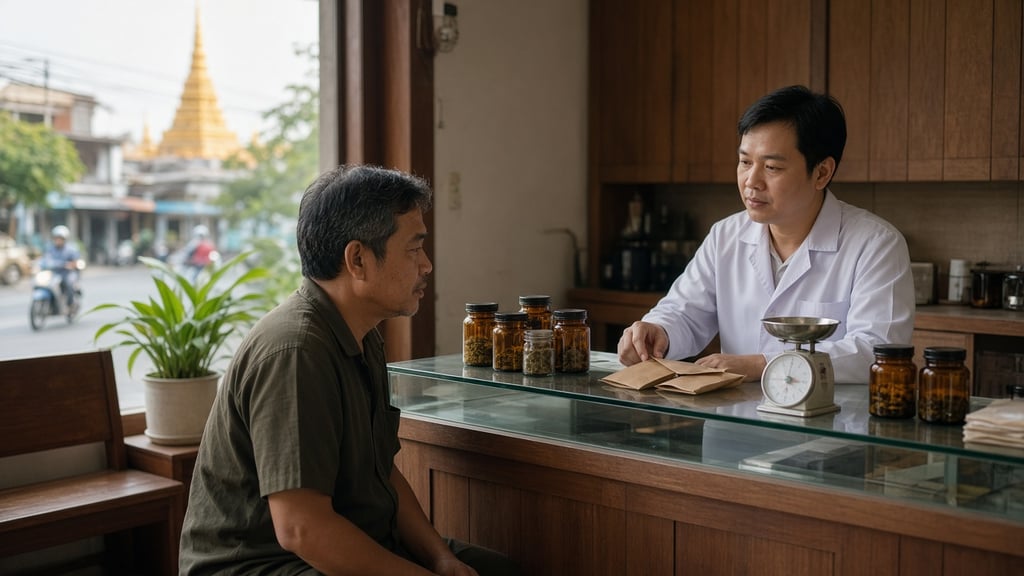
More than 10,000 outlets still operating sit on three-year licences that expire between 2026 and 2028. Shops must become medical facilities with a doctor on site if they want to renew. Recreational lounges and shops missing from the Department of Thai Traditional and Alternative Medicine map would have no path back. The new Act is meant to cover cultivation, which the herb law never fully governed. In fiscal 2026 the department revoked 24 cannabis licences and suspended 105 more. If this bill stalls, as earlier versions did under the Prayut and Paetongtarn governments, the street will keep running on overlapping herb and pharmacy rules.
Home growers occupy the widest grey zone. Households were encouraged to register plants after 2022, and researchers say the Bhumjaithai draft still treats those plots more lightly than commercial farms. The other three texts would pull cultivation into the same licence machinery as shops. The Youth Network Against Cannabis wants cannabis returned to Category 5 of the narcotics list, with medical exceptions, rather than wait for a statute that has already failed twice.
What This Means for Expats and Travelers in Thailand
Current rules already require a Thai-issued PT33 prescription for cannabis flower. A foreign clinic letter is not enough. The prescription is limited to medical need and a maximum 30-day supply. Buyers must be 20 or older. Pregnant and breastfeeding customers are barred. Online sales, vending machines and flower advertising are already prohibited under the 23 June 2025 Ministry of Public Health notification, available in English through the Thai Visa Centre legal library.
Tourists cannot take cannabis out of Thailand. Flower remains a controlled herb at home and a narcotic in the United Kingdom, the European Union and most other destinations. Airport seizures of departing travellers have run into the tonnes. Expect licensed shops in Sukhumvit, Old Town Phuket and Chiang Mai to log a Thai prescription. Long-stay residents who grow at home should assume household plants will not stay outside the licensing net if parliament adopts the ministry, Democrat or People's Party drafts. Until a final vote, treat flower as a prescribed medicine, not a holiday souvenir.
Comment verification
Step 1 of 3
Verify your email once to publish your comment. Your email is never shown publicly.
Enter the 6-digit code sent to .
Choose the display name shown next to your comments.