Unlicensed Cannabis Shop Raided in Phuket Town, Over 120,000 Baht Seized
Phuket officers raided an unlicensed cannabis shop on Ratsada Road on 4 November 2026, arresting the owner and seizing 123,290 baht. Expats still need a real licence and a medical order, not a tourist visa.
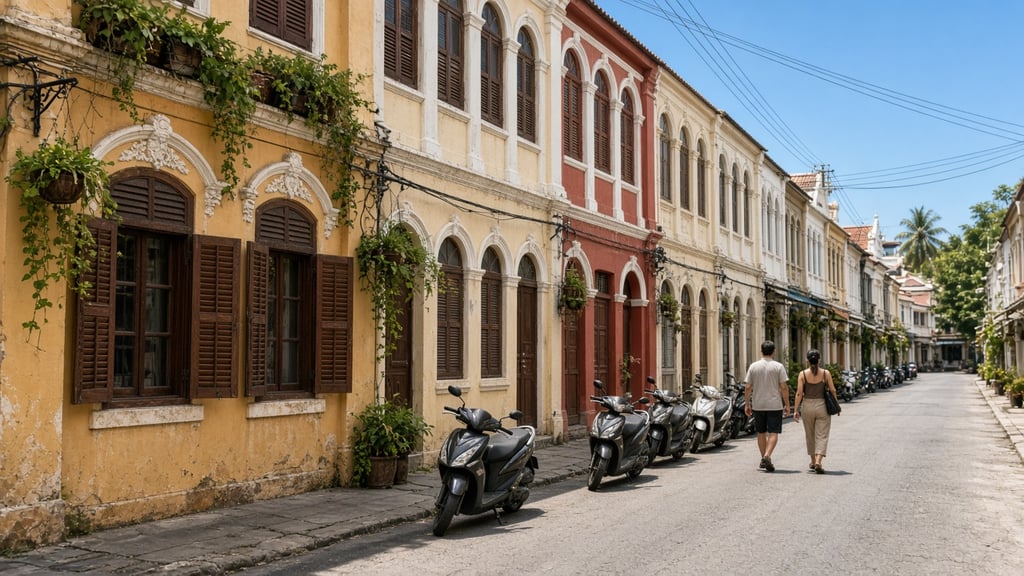
Phuket administrative officers and district public health staff raided an unlicensed cannabis shop on Ratsada Road in Talat Nuea, in the heart of Phuket Town, at about 3:15 p.m. on 4 November 2026. The inspection followed orders from Phuket Governor Chotinarin Kerdsom. Deputy Governor Romdon Hayi-awa and Mueang Phuket District Chief Siwat Rawangkul coordinated the joint team.
District security official Apichat Chantarawong led officers into the premises. They found no valid licence to sell cannabis flower, which Thai law now treats as a controlled herb rather than a walk-in tourist product. Officers arrested the 41-year-old woman identified as the shop owner. They seized 36 cannabis products, seven other items of evidence, and 123,290 baht in cash. The woman and the seized goods were taken to Phuket City Police Station, where an arrest report was filed before investigators took over the case.
Medical-only rules, not a tourist counter
The raid is not a one-off local stunt. On 26 June 2025 the Ministry of Public Health designated cannabis flower as a controlled herb under the Protection and Promotion of Traditional Thai Medicine Wisdom Act B.E. 2542. A 2026 ministerial regulation then limited commercial research, export, sale, and processing to licensed medical facilities, pharmacies, and registered herbal-product shops. Flower sales require a practitioner order on form PorTor 33, usually capped at 30 days, and shops must keep those records for a year.
The Department of Thai Traditional and Alternative Medicine has spelled out where operators must apply. In Bangkok, applications go to the department itself. In Phuket, they go to the Phuket Provincial Public Health Office. There is no district-level tourist shortcut and no visa category that doubles as a shop permit. Flower that is sold or exported must come from a source certified for good agricultural and collection practices. Advertising is banned. Online and vending-machine sales are banned. Smoking sales on the premises are tightly limited to listed practitioners treating their own patients.
Licence papers and the real penalties
Selling a controlled herb without a section 46 licence can bring up to one year in prison, a fine of up to 20,000 baht, or both. That penalty sits in the 1999 Act, not in a provincial leaflet. The May 2026 ministerial regulation also narrowed who may even apply: registered medical facilities, pharmacies, or herbal-product shops, with trained staff on duty during opening hours.
Foreigners cannot hold a cannabis sales licence as majority owners. Thai company rules already keep most controlled-herb licences with Thai-majority companies, and the 2026 regulation further requires the premises to be a registered medical facility, pharmacy, or herbal-product shop. Typical application papers include copies of the applicant's ID and house registration, a location plan and shop photos, proof of product source, form PorTor 12, lease or ownership documents, and a 20 baht application fee. The licence itself costs 3,000 baht and runs until 31 December of the third year after it is issued.
Staff on duty must have completed the department's basic medical-cannabis training. Flower must be stored off the floor, in a separate area, with odour control that does not leak into the street. Monthly source and usage reports go to the provincial office. A prior suspension can weigh against renewal.
What This Means for Expats and Travelers in Thailand
A tourist visa, retirement visa, or work permit does not authorise you to open or staff a cannabis shop. Buying flower as a visitor still needs a qualifying medical order from a listed practitioner: a physician, dentist, pharmacist, Thai traditional medicine doctor, applied Thai traditional practitioner, Chinese medicine practitioner, or registered folk healer. An open neon sign on Ratsada Road is not proof of a licence. Paying cash at an unlicensed counter can put your purchase in the same evidence bag as the till.
Public smoking remains a nuisance offence under the Public Health Act. Do not assume Phuket Old Town, Patong, or Kata lounges are exempt because a street is busy. If you already hold a legitimate prescription, keep the paper with the product, especially on a motorbike. If you are considering a Thai-majority herbal shop as a business, start at the Phuket Provincial Public Health Office and DTAM guidance, not at a lease agent who promises a tourist licence. The Ratsada Road case is a reminder that district officers and public health inspectors now work the same afternoon shift.



Comment verification
Step 1 of 3
Verify your email once to publish your comment. Your email is never shown publicly.
Enter the 6-digit code sent to .
Choose the display name shown next to your comments.