Phuket orders 3,000-site illegal business sweep
Phuket has seven days to inspect 3,000 hotels and businesses after Interior Ministry orders on licences, land, and foreign nominee ownership.
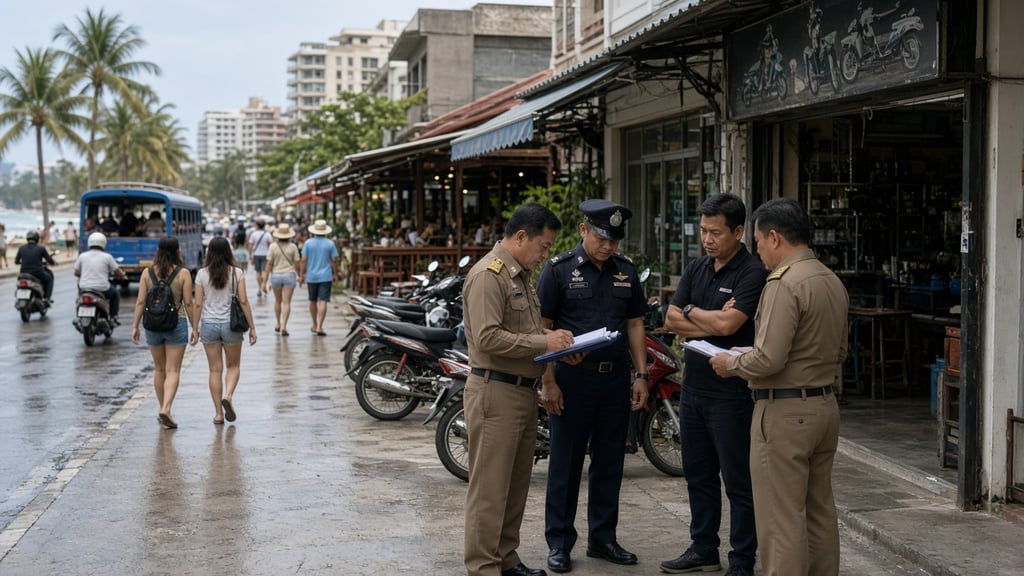
Phuket now has seven days to turn a year of nominee-company probes into a site-by-site audit of more than 3,000 hotels and other businesses. Deputy Interior Minister Polapee Suwunchwee (พลพีร์ สุวรรณฉวี) set that clock at Phuket Provincial Hall on 27 November 2026, with Governor Chotinarin Kerdsom, Department of Provincial Administration officers, district administrators, and provincial police in the room.
The list is not a mass-closure order. Officials were told to sort each site by suspected problem: no licence, activity that does not match the licence it holds, unauthorised building work, land papers that do not match the ground, or shareholding that appears to put a foreigner in control of a Thai-restricted business. Field teams are to log location, title deeds, operating and construction permits, and legal status before anyone talks about penalties.
Marine tourism and fire safety were pulled into the same plan. Provincial officers have three days to map 13 to 14 jet-ski firms that together run about 386 machines, including insurance, collision complaints, and alleged damage shakedowns. Tourist boats and diving shops sit on the same list, with vessel papers and passenger volumes checked against who actually controls the company. After the 16 November Patong fire that killed 11 people, about 200 other buildings with similar conversions or fuel equipment were marked for urgent safety inspections.
Ownership, capital, and jobs reserved for Thais
Interior officials want company files, not only shopfront licences. Teams are to compare registered capital with the real scale of hotels, villas, restaurants, tour desks, and vehicle-rental yards. Where the assets dwarf the paperwork, investigators are to identify shareholders, the person who actually controls the firm, and the source of the money. Employment checks sit beside that work: foreigners in occupations reserved for Thai nationals can be pulled in even when the company looks properly registered.
Thai government briefings say visitors and lawful investors remain welcome. The target is operators who use Thai names to hold shares, occupy land they cannot own, or take work the law keeps for Thai citizens. That distinction matters on an island where compliant hotels, Board of Investment projects, and registered leaseholds sit next to nominee structures that have been an open secret for years.
The legal lines inspectors will use
Thailand's Foreign Business Act B.E. 2542 (1999) treats a company as foreign if foreigners hold half or more of its capital. Most hotels, restaurants, tour services, and land trading sit on restricted lists. Using a Thai national as a dummy majority shareholder is a criminal offence. Sections 36 and 37 allow up to three years in prison, a fine of 100,000 to 1,000,000 baht, or both, plus daily fines of 10,000 to 50,000 baht if a court dissolution order is ignored.
Land is a separate statute. Chapter 8 of the Land Code B.E. 2497 generally bars foreigners from owning land. Thai Visa Centre's English legal library notes the narrow exceptions, including statutory-heir inheritance with permission, and records that nominee companies used to hold land for foreigners violate both the Land Code and the Foreign Business Act. The Department of Lands' 2026 LAND ACTION screening has flagged 1,397 suspected nominee landholdings nationwide, valued at about 14.01 billion baht, with forced-disposal orders available where the paper owner is a stand-in.
Legal routes still exist. Foreigners may hold freehold condominium units up to 49 percent of a building's saleable area when purchase funds are remitted in foreign currency. Residential leases can be registered for up to 30 years. Board of Investment promotion can lawfully permit forms of foreign ownership that a normal Thai company cannot. Earlier in 2026, Phuket investigators sent 353 companies to the BOI; only eight held relevant privileges. Holding no BOI certificate is not a conviction. It does mean the firm has to fit the ordinary Foreign Business Act and Land Code rules.
A campaign, not a one-morning raid
The 3,000-site list sits on months of earlier work. In June, Interior officials said they were scanning more than 10,000 registered Phuket companies, with over 400 potentially in the nominee net. A first batch of 159 firms went to a review committee; legal proceedings started against 39, and 34 were ordered to halt operations. By July the working list had grown to 391 companies. In November the Department of Business Development flagged 77 Phuket firms among 1,932 high-risk companies nationwide. Phuket ranked second among tourist provinces, behind Chon Buri.
Those numbers explain why this week's order reaches past hotels into villas, tour companies, car and motorbike rentals, restaurants, and marine operators. They also explain the scepticism on Phuket forums: residents have watched announcement cycles before and still see foreign-only signage, nominee villas, and unlicensed rooms in plain sight. The seven-day plan is the test of whether this round produces inspections and case files, or another press conference.
What This Means for Expats and Travelers in Thailand
If you run a Phuket company, have registration papers, shareholder lists, proof of who paid in the capital, land titles or leases, hotel or tour licences, and work permits ready. Inspectors have been told to match the file to the building.
- A 30-year registered lease, a superficies, a BOI certificate, or a foreign-quota condo with FET evidence is not the same as a Thai company whose majority shareholders cannot explain the money.
- Travellers should not expect island-wide shutdowns this week. Isolated closures are more likely where licences are missing, buildings were converted without permits, or jet-ski and boat operators fail insurance and registration checks.
- Thai staff in reserved occupations, and Thai shareholders who lent their names, sit inside the same enforcement net as the foreign partner.



Comment verification
Step 1 of 3
Verify your email once to publish your comment. Your email is never shown publicly.
Enter the 6-digit code sent to .
Choose the display name shown next to your comments.