Bangkok Extends Red, Purple 40-Baht Day Pass
Cabinet kept the 40-baht daily cap on Bangkok's Red and Purple Lines through 31 Dec 2027. From January, riders must pick that pass or 17-45 baht fares.
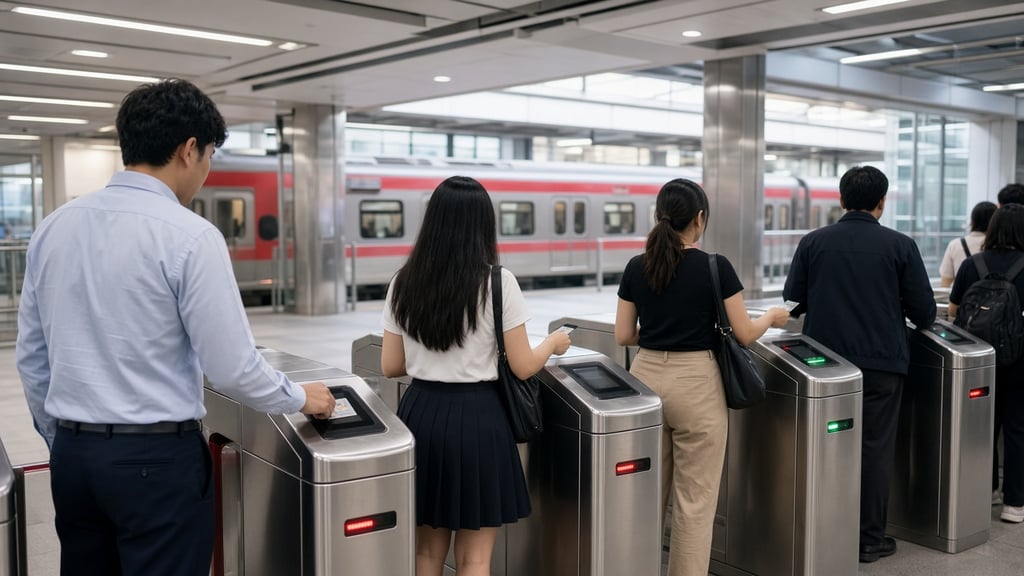
Thailand's Cabinet on 24 November 2026 kept the 40-baht daily fare cap on Bangkok's SRT Red Line and MRT Purple Line running through 31 December 2027. The scheme had been due to lapse on 30 November. Riders who tap the same EMV contactless card all day on those corridors still stop at 40 baht for general passengers and 30 baht for students, if they stay on the Red and Purple lines.
From 1 January 2027 the bargain tightens. Anyone who wants a discounted fare must register an EMV card on Krungthai Bank's Paotang app from 15 December and pick only one benefit: the Red-Purple daily cap, or the new 17-45 baht per-trip fare on every urban rail line in Bangkok and nearby provinces. Switching is allowed once. Refunds that now return to the bank card will move into the Paotang wallet, usually within three working days.
Which lines, which cards, which month
The extension covers three corridors: the Red Line's Thani Ratthaya route from Krung Thep Aphiwat Central Station to Rangsit, including Don Mueang Airport; the Nakhon Withee route from Krung Thep Aphiwat to Taling Chan; and the Purple Line's Chalong Ratchatham route from Tao Poon to Khlong Bang Phai in Nonthaburi. A transfer onto the Blue Line beyond Tao Poon is billed at the ordinary Blue Line rate and does not count toward the daily cap.
Through 31 December 2026 nothing new is required at the gate. Holders of an EMV contactless Visa, Mastercard, or UnionPay card, including MRTA's Mangmoom EMV card, tap in and out with the same plastic all day. The system bills the ordinary distance fare, then refunds anything above 40 baht (30 baht for students) within three working days. If the day's taps never reach the cap, the lower amount stands. Tokens, counter tickets, and Rabbit cards do not qualify, and a missed tap-out typically voids the cap for that calendar day. Student Mangmoom cards keep a 10 percent Purple Line discount under the 30-baht ceiling.
The January fork: one benefit, one switch
From 1 January 2027 a rider who wants either discount must register the EMV card on Paotang and choose one scheme. The daily cap stays limited to the Red and Purple lines. The alternative is the common-fare policy Cabinet approved on 3 November 2026: a first-entry charge of no more than 17 baht, no second entry fee when changing lines, and a ceiling of 45 baht per journey across the Green, Blue, Purple, Red, Yellow, Pink, and Gold lines and the Airport Rail Link. That network fare is budgeted at about 5.8 billion baht for 2027 and is limited to Thai nationals.
Transport Minister Phiphat Ratchakitprakarn said the Office of Transport and Traffic Policy and Planning, SRT, MRTA, the Department of Rail Transport, and Krungthai Bank would sign a memorandum on 25 November to stand up a central clearing house. Registration has no published closing date. After 1 January the state will send fare differences to the rider's Paotang account on a T+3 timetable, not back onto the EMV card.
Ridership, cost, and why the cap survived
The government used EMV traffic, not total boardings, to justify keeping the cap. Through August 2026, average EMV trips were 9,460 a day on the Red Line, up 89 percent, and 27,653 a day on the Purple Line, up 135 percent. Combined, that is 37,113 EMV trips a day, more than double the level before the daily cap began on 1 December 2025. Whole-line boardings are larger: Department of Rail Transport counts for October 2026 put the Purple Line at about 60,667 trips a day and the Red Line at about 35,484, still far below BTS and the MRT Blue Line, which is why a Red-Purple-only cap is cheaper than a 20-baht ceiling on every colour.
MRTA will cover an estimated 52 million baht Purple Line shortfall from its own revenue. SRT will ask the budget for about 38.43 million baht on the Red Line under the State Fiscal and Financial Discipline Act. The Transport Ministry must review passenger numbers, fare income, compensation costs, and commuter savings every year before deciding whether the cap outlives 2027.
What This Means for Expats and Travelers in Thailand
Until 31 December 2026, a foreign-issued contactless bank card still works for the 40-baht daily cap on the Red and Purple lines. No Thai ID and no app are required. That helps anyone commuting Rangsit or Don Mueang to Bang Sue, or Nonthaburi to Tao Poon, several times in one day. It does not help on BTS, and it does not cap a Blue Line ride after Tao Poon.
From 1 January 2027 the picture hardens. Both discounted schemes require Paotang registration, and the 17-45 baht network fare is reserved for Thai nationals. Officials have not said clearly whether a foreign-issued EMV card can stay on the Red-Purple daily cap after that date. Previous subsidies have excluded non-Thai riders, so expats should budget ordinary distance fares (about 12-42 baht on the Red Line, 14-42 baht on the Purple Line) unless MRTA or SRT later say otherwise. Keep a physical contactless card: phone wallets are still rejected at many of these gates.

No comments yet. Be the first to join the conversation.