Thai economist warns GDP lift masks weakness
Rangsit economist Ath Pisalvanich says NESDC manufacturing-index revisions lifted Thai GDP while household spending and factory use stay weak.
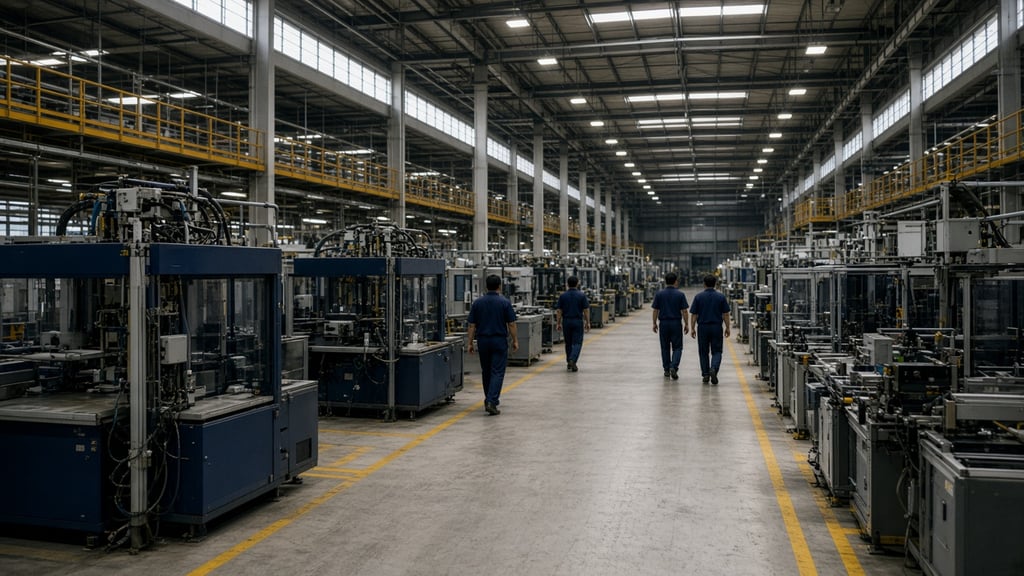
Bangkok's latest growth print looks stronger on paper than many households and factory floors would recognise. On 16 November 2026 the National Economic and Social Development Council said Thailand expanded 2.9 percent in the third quarter and then lifted earlier 2026 readings after the Ministry of Industry rebuilt the Manufacturing Production Index that feeds the accounts. Two days later, Rangsit University's Assoc. Prof. Ath Pisalvanich argued that the restatement risks overstating domestic value, confusing investors, and aiming policy at a recovery that weaker household consumption and idle plants have not confirmed.
NESDC Secretary-General Danucha Pichayanan called the MPI work a technical revision, not a political rewrite of national accounts. Officials kept the same chain-volume GDP framework used for about a decade. Compilers added plants the old 2021 fixed-weight sample missed, then moved to a chain-linked formula so fast-growing electronics lines carry more weight. GDP methodology is unchanged.
How the factory index lifted the headline
Danucha said agencies spent five to six months reconciling export invoices with factory licences. Several large electronics export groups, together worth around 800 billion baht, had been poorly captured. Krungthai COMPASS later found that electronics and computers drove most of the MPI lift, about 97.4% of the upward revision.
NESDC then folded the new series into GDP. First-quarter growth was restated from 2.4 percent to 3.1 percent. Second-quarter growth was restated from 1.9 percent to 2.4 percent. Seasonally adjusted, the economy was flat between the first and second quarters and rose only 0.3% from the second to the third. NESDC now puts full-year growth at 2.5 percent after the restatements, still a little below its 2.7-2.8% estimate of potential. Ath put the MPI-driven addition to the annual rate at about 0.25 percentage points and said Q3 would have been nearer 1.7 percent under the previous industrial measure.
Where the Rangsit critique bites
Ath does not claim that updating a stale factory sample is illegitimate. MPI tracks the volume of goods leaving plants. GDP on the production side measures domestic value-added after imported parts are stripped out. In electronics assembly a large export invoice can sit on a thin slice of Thai value. Without a clear bridge from extra factory volume to extra local value, he said, the new formula can inflate GDP. That volume versus domestic value-added gap is the core of his 18 November note, which asked whether the MPI change was producing an economic mirage.
A second risk is possible double counting. New product lines may already appear in quarterly production surveys, so an expanded MPI could add the same activity twice unless overlap is published. Capacity utilisation across manufacturing remains below 60 percent. Factory technicians describe electronics overtime beside auto-plant cuts in the same industrial estates, which can raise a chain-weighted index even while a typical Thai factory still feels quiet.
The Office of the United States Trade Representative has already determined that Thai industrial policy contributes to structural excess manufacturing capacity and has proposed Section 301 tariffs of up to 18%, or 25% if talks fail. Ath warned that a fatter factory index paired with unused plant could feed that file. US Section 301 excess-capacity scrutiny is no longer hypothetical. US Section 301 tariff risk remains a live threat for Thai exporters. Official third-quarter growth printed at 2.9 percent after the MPI revision just as Washington's case moved toward proposed remedies.
Household spending and SME cashflow remain weak even as the headline rate improved. Figures Ath cited showed SME closures up 16% in January-September 2026 and up 78.48% in the third quarter versus the previous three months. If officials treat the restated path as a broad recovery, rate and stimulus decisions could miss the squeeze still felt in domestic demand. Ath warned that the restated path still leaves the economy vulnerable to a slower fourth quarter.
What officials say the revision is not
Danucha Pichayanan said the revision was technical, not political, and the GDP method was unchanged. He rejected claims that the government had ordered a prettier growth rate. Industry is only about a quarter of the economy, with services more than 60%. Ath still wants a published split: how much of the extra GDP is newly captured real output, and how much is the mechanical effect of new weights. Until that split exists, the credibility of Thai statistics, not only the latest percentage, is what investors will price.
What This Means for Expats and Travelers in Thailand
Do not read 2.9% as a signal that restaurants, rentals, and high-street shops have suddenly filled. The growth that moved the needle is concentrated in export electronics, which does not automatically fill restaurants or raise Chiang Mai rents. SME stress can show up as shorter hours and stickier prices.
For residents living on foreign pensions or remote salaries, the policy risk is the interest-rate and baht channel. Stronger headline GDP can argue against extra stimulus or rate cuts even if the street economy still feels soft. US tariff proposals could also hit export payrolls and the baht. Treat NESDC's 2.5% year as a restatement plus an electronics boom, then watch factory capacity utilisation and mall traffic before assuming the street economy has caught up.

Comment verification
Step 1 of 3
Verify your email once to publish your comment. Your email is never shown publicly.
Enter the 6-digit code sent to .
Choose the display name shown next to your comments.