ASEAN+3 Kyoto Talks Recast Thai QR Payments
Kyoto deputies created an AMRO working group on cross-border QR payments and digital-asset rules. PromptPay links and Thai stablecoin caps are already in the mix.
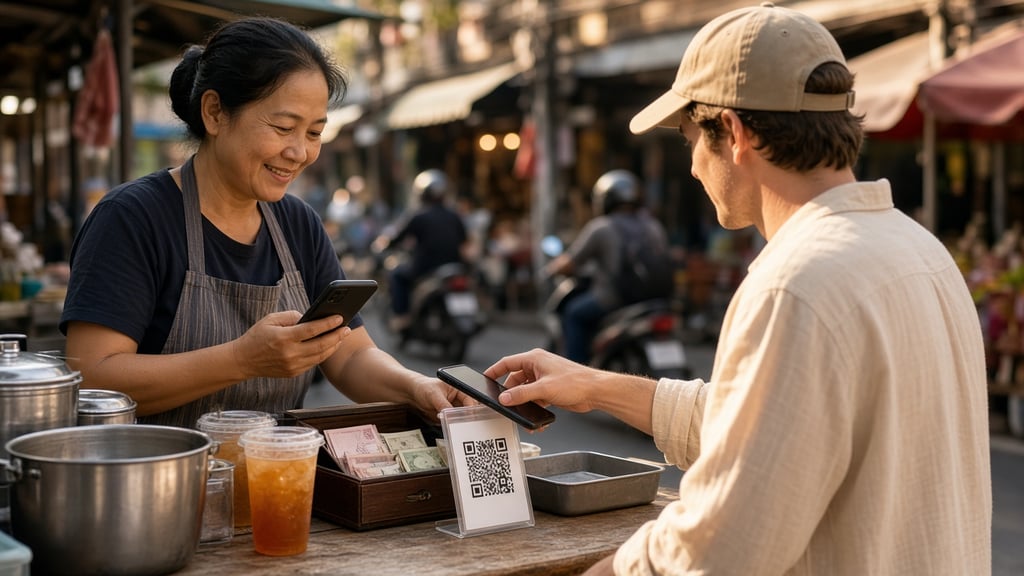
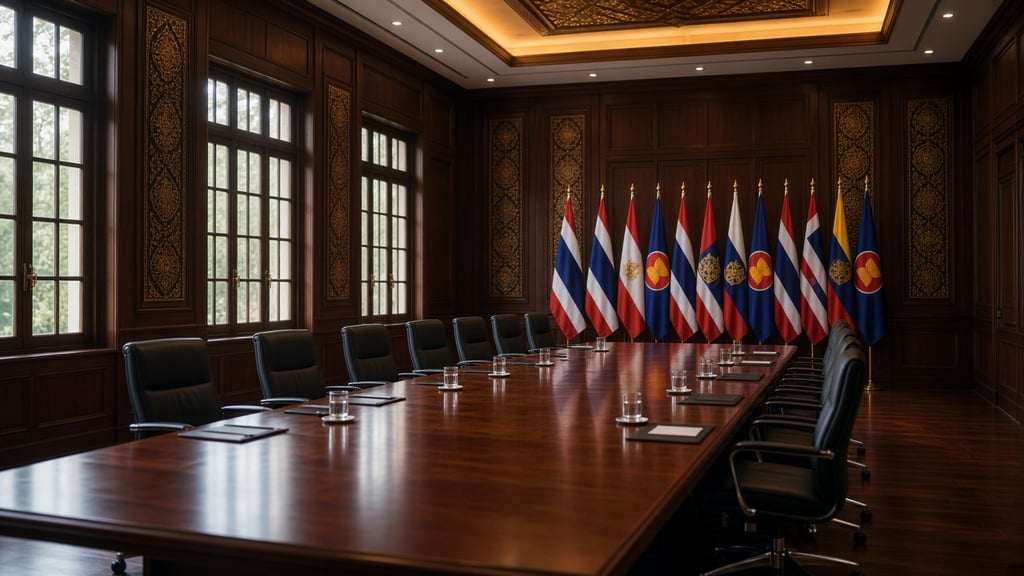
Finance and central-bank deputies from China, Japan, South Korea, and the 11 ASEAN member states closed two days of talks in Kyoto on 26 November 2026 by creating a dedicated programme on cross-border digital payments. The AMRO Cross-Border Digital Payments Program, and a working group under it, will compare how national QR and fast-payment systems connect, and how members treat digital assets, including stablecoins.
The session finished a task set on 3 May 2026 in Samarkand, when ASEAN+3 finance ministers and central-bank governors named cross-border digital payments a new area of cooperation and told deputies to lock in a work format by year-end. Japan and the Philippines co-chaired in Kyoto. South Korea and Singapore will co-chair the ministers' meeting in Nagoya in May 2027, where the findings are due to be tabled.
For Thailand the live questions are already on the street: which PromptPay QR corridors actually clear for travellers, and how Bangkok's split stablecoin rulebook will sit inside a regional conversation that still cannot write a joint statute.
What Kyoto actually decided
Japan's Ministry of Finance, publishing for the Japan-Philippines co-chairship, described a modality for policy dialogue on retail and wholesale payment connectivity and on regulatory approaches to digital assets. AMRO, the Singapore-based ASEAN+3 Macroeconomic Research Office, will host the programme. Deputies also noted that an amended Chiang Mai Initiative Multilateralisation agreement, including a Rapid Financing Facility, had entered into force on 11 November 2026. That swap network is a crisis backstop, not a payments rail.
The working group is a study and dialogue forum, not a joint crypto law. It cannot license exchanges or force China, Japan, and Thailand onto one token statute. China still bars private crypto trading while it develops the e-CNY. Japan already allows a legally recognised yen-backed stablecoin. South Korea is still drafting a Digital Asset Basic Act. Those mismatches are why the group exists, and why social posts that frame Kyoto as instant crypto clarity oversell the communique.
AMRO had already started the homework. On 18 November 2026 it advertised for a retail-payments consultant to map bilateral and multilateral links and flag legal, operational, AML, and technical gaps. Priority use cases are person-to-person and person-to-merchant payments, tourism spending, cross-border e-commerce, and remittances. The assignment is sketched at about six months, which lands the first analytical cut around the Nagoya meeting.
Thailand's PromptPay already sits on the rails
The Bank of Thailand has spent years stitching PromptPay into the ASEAN Payment Connectivity map, and beyond it. As of May 2026, Thai QR or fast-payment links cover Cambodia, Malaysia's DuitNow, Vietnam's VietQR, Indonesia's QRIS, Lao PDR, Singapore (PromptPay-PayNow phone-number transfers and PromptPay-NETS QR), Japan (MyPromptQR for outbound Thai tourists), Hong Kong's FPS, inbound Korean Paybooc scans, and inbound Chinese UnionPay, Alipay, and WeChat Pay scans of Thai merchant QR codes.
The Singapore corridor remains the most complete money-transfer link: customers of participating banks can send up to 1,000 Singapore dollars or 25,000 baht a day using a mobile number, in minutes rather than a SWIFT cycle. BOT's May 2026 payments directional paper also designated PromptPay a systemically important retail payment system and called for a cleaner split between transfers and merchant payments, plus standard merchant category codes, before more corridors are added.
On 23 October 2026, BOT joined the Monetary Authority of Singapore and Bank Negara Malaysia as a policymaker in BLOOM, a public-private track on how tokenised deposits and regulated stablecoins might settle across institutions. Kyoto does not replace those bilateral deals. It asks whether a patchwork of one-off QR treaties can be compared, gap-mapped, and made less brittle for tourism and remittances.
Stablecoins, AML, and the split Thai rulebook
Bangkok is not waiting for Nagoya to police tokens. On 3 September 2026 the Thai SEC board approved principles for stablecoin flows through licensed digital-asset operators: only the customer's own verified wallet in and out, Travel Rule and mule-account screening, blockchain analytics, and a 5 million baht daily cap on inbound and outbound stablecoin transfers per person per operator. Transfers between two SEC-supervised operator accounts sit outside that cap, provided Travel Rule duties still apply.
In parallel, BOT put a THB stablecoin framework out to hearing in October 2026, with comments due by 17 November. The sketch is a 1:1, fully reserved payment instrument under the Payment System Act, with a limited number of issuer licences at first and use confined to domestic transactions so a baht token cannot be used to dodge foreign-exchange controls. Wallet providers would whitelist KYC-checked wallets. Issuers would need the technical ability to freeze or burn tokens used outside that perimeter, and they would not be allowed to pay interest on holdings.
That split, SEC on exchange-traded dollar stablecoins and BOT on a domestic baht unit, is the kind of national mismatch AMRO's working group is being asked to catalogue. It is not something Kyoto can overwrite.
What This Means for Expats and Travelers in Thailand
Do not expect a single ASEAN+3 QR app this year. The Kyoto group reports in May 2027, and even then ministers may only endorse more study. Day to day, travellers should keep using the corridors that already work, and expect the same failure modes that already show up in public threads: a Malaysian DuitNow scan that succeeds at BTS but dies on a personal stall QR, a Bangkok Bank app that pays in Kuala Lumpur when another Thai bank does not, and PromptPay-PayNow that is a phone-number send, not a scan of every Singapore PayNow code.
Tourists hoping to spend USDT or USDC at Thai stalls still need a licensed off-ramp into baht, inside SEC wallet rules and BOT sandbox limits. There is no regional crypto passport. Chinese visitors already scanning Alipay or WeChat onto Thai merchant QR will notice little change. Thai residents sending money to family in Laos, Malaysia, or Vietnam should check which banks actually enable that corridor, and keep a SWIFT backup when the QR path rejects a personal account code.
If Nagoya produces anything operational, the first visible shift for foreigners in Thailand is more likely to be standard merchant-category codes and tighter PromptPay risk splits than a sudden ability to pay any stall in the region from any wallet. Until then, the regional story is coordination on paper. The local story is still which Thai bank app, which merchant QR, and which daily cap you are standing under.

Comment verification
Step 1 of 3
Verify your email once to publish your comment. Your email is never shown publicly.
Enter the 6-digit code sent to .
Choose the display name shown next to your comments.