Thailand Says US Tariff Principles Agreed, Manila Joint Statement Due 17 November
Foreign Minister Sihasak Phuangketkeow says the main principles of the US reciprocal-trade talks are settled, with Prime Minister Anutin and President Trump due to sign a joint statement at the ASEAN-US summit in Manila on 17 November 2026.
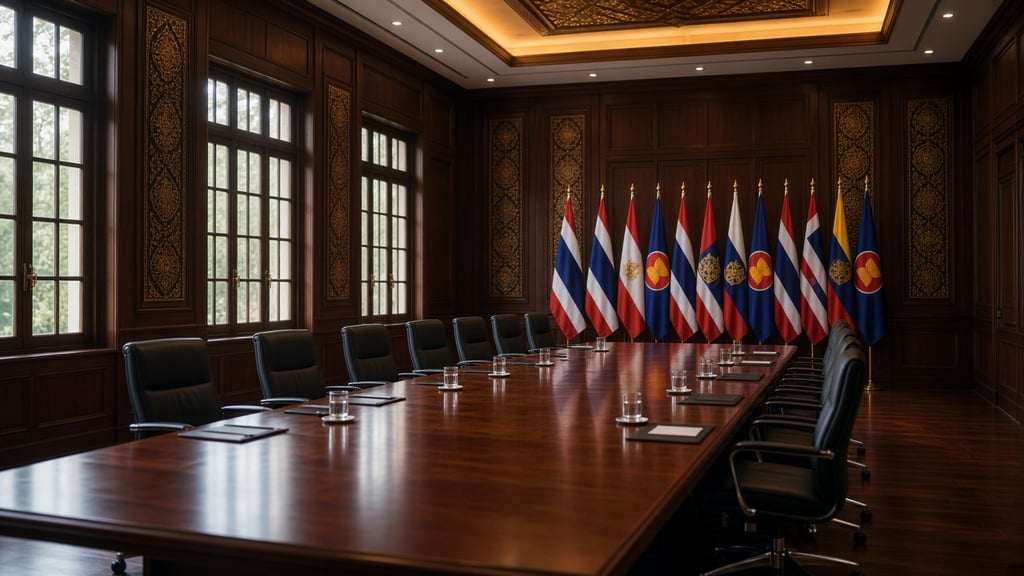
Thailand and the United States have settled the main principles of a reciprocal-trade package, Deputy Prime Minister and Foreign Minister Sihasak Phuangketkeow told reporters on 15 November 2026, with Prime Minister Anutin Charnvirakul and US President Donald Trump due to sign a joint statement in Manila on 17 November. The ceremony sits around the special ASEAN-United States summit at the 49th ASEAN Summit.
Sihasak, who joined Anutin at the Manila plenary on 15 November, said remaining work was on the wording of that joint statement rather than on the core bargain. He dismissed speculation that the US president would reopen tariff talks in Manila, saying both sides had already reached a point they found satisfactory.
A political signature, not a new customs code
The paper Cabinet has already cleared is a political confirmation that talks on the Agreement on Reciprocal Trade, or ART, are done in principle. It is not the legal text of the ART itself. Both capitals still have to run domestic steps, including legal review and, on the Thai side, public consultation, before a full agreement can be signed. Until then, the tariff schedule now applied to Thai goods in the United States stays in place.
Team Thailand, led by Deputy Prime Minister and Commerce Minister Supajee Suthumpun, has carried the file with the Ministry of Foreign Affairs since Anutin ordered an acceleration in June. Commerce worked the brief with the Office of the US Trade Representative in Washington in May and September. The United States is Thailand's largest export market.
The 19 percent framework and the 12.5 percent now in force
The political ceiling Thai leaders still cite is the October 2025 framework. Thailand undertook to remove tariffs on about 99 percent of US industrial and agricultural goods, while Washington said it would keep a 19 percent reciprocal tariff on originating Thai goods. The same list covered non-tariff work on US-standard vehicles, FDA certificates for medical devices, and ethanol import permits. Anutin told reporters in Bangkok on 5 November that Thailand still expected a US rate around 19 percent under the eventual ART, and that existing arrangements would continue until the main agreement is signed.
What exporters actually pay today is different. Washington applied a 12.5 percent additional duty under Section 301 from 24 July 2026, up 2.5 points from a 10 percent base. Deputy government spokesperson Lalida Persvivatana said about 2,120 Thai product lines, more than half of export value to the United States, including integrated circuits, natural rubber, and tapioca starch, sit outside that extra levy. The ART talks are how Bangkok wants a competitive headline rate against Vietnam and China in the same 12.5 percent band.
Market access, purchases, and services
Sihasak said the long middle of the negotiation was market access: Thailand buying more American goods, Thai firms investing in the United States, and the opening of service sectors. Last year's framework also noted commercial tracks on agriculture, energy, and aircraft, including estimated annual US farm purchases around 2.6 billion dollars and energy purchases around 5.4 billion dollars, plus procurement of 80 US aircraft. None of that is live, because the ART is not yet in force. Thai officials have stressed that a 99 percent tariff-cut headline from 2025 is not an immediate open door for every US farm product.
Bangkok's public case has been blunt. The US market is large, Thailand runs a substantial surplus there, and the aim of a year of talks was to keep that market and push the extra tariff as low as possible. What Manila will show on 17 November is a signature on a joint statement, not a new rate. The 1966 Treaty of Amity and the 2002 Trade and Investment Framework Agreement remain the legal base.
What This Means for Expats and Travelers in Thailand
Shoppers should not expect American grocery, ethanol, or Detroit-badge prices to move on 17 November. Any Thai tariff cuts on US goods wait for the full ART, domestic legal steps, and a published schedule. The 12.5 percent extra US duty on many Thai exports also stays until Washington publishes a change. If you export from a Thai factory, check your HS code against the 2,120-line exemption list rather than assuming a 19 percent or 12.5 percent sticker applies to every box.
Residents who buy imported cars, wine, or medical devices should treat "99 percent" as a negotiating headline, not a clearance sale. Tourists and visa holders are not taxed at the airport under this file. It is a goods-and-services trade negotiation, not a change to TM30, retirement visas, or the tourist fee. Factories on the Eastern Seaboard should plan on continuity through year-end, then watch Commerce and USTR notices after Manila. The rate that hits a container is the one in the US tariff database on the day the box lands.
Comment verification
Step 1 of 3
Verify your email once to publish your comment. Your email is never shown publicly.
Enter the 6-digit code sent to .
Choose the display name shown next to your comments.