Thailand GPS mandate for foreign trucks 2027
Transport Minister Phiphat backed a 1 January 2027 GPS rule for foreign fleets, plus quarterly DLT reviews of routes and Thai-operator impact.
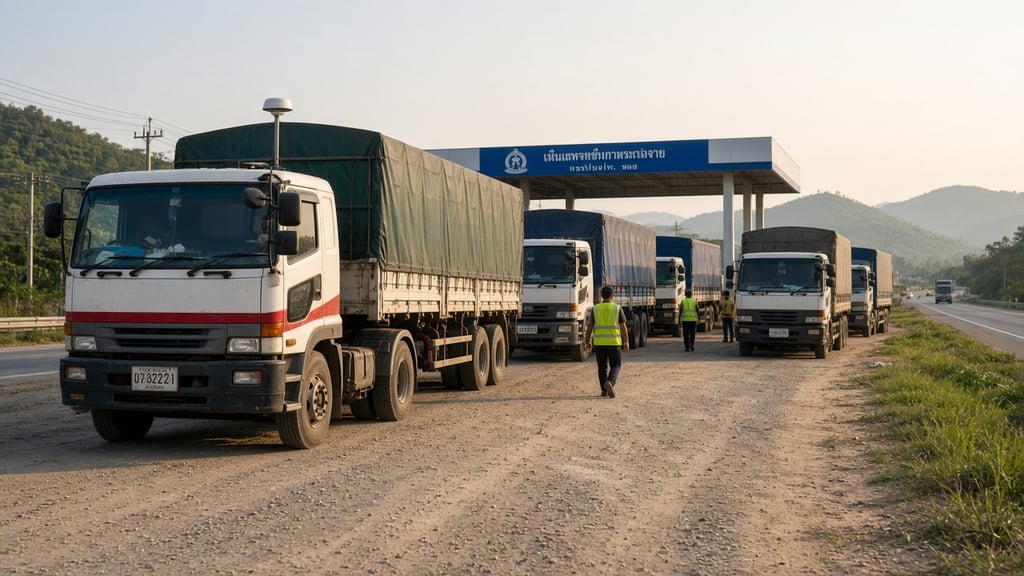
Deputy Prime Minister and Transport Minister Phiphat Ratchakitprakarn left a working session with the Land Transport Federation of Thailand with a date attached. From 1 January 2027, designated foreign freight and passenger vehicles that enter Thailand must run the same journey-recording GPS already required of Thai commercial fleets. The Department of Land Transport will then score the results every three months.
The 27 November meeting was about market share as much as safety. Federation members have spent the year arguing that Chinese trucks entering via Laos under the GMS CBTA have been leaving approved routes, hunting domestic loads, and competing on price while Thai operators stay wired to a live DLT feed. Phiphat's answer is to put visiting rigs on that same map, then publish the numbers.
What the DLT notice actually requires
Director-general Sorapong Paitoonphong has already issued the department notification covering foreign goods and passenger transport vehicles on Thai roads. The boxes are meant to log location, corridor, speed and driver hours for the whole time a visiting truck is in the kingdom. Thai fleets have fed that data into the DLT GPS operations centre for years. The new notice simply stops treating a foreign plate as an exemption.
Officials also want tools around the box: AI plate checks, locked route maps, and joint work with Customs, the Department of Highways and police. The enforcement list is specific. Duplicate use of the same permit, nominee companies that park foreign capital behind a Thai name, and visiting trucks that take paid domestic jobs they are not licensed to perform.
Growing agricultural and e-commerce hauls from GMS partners have put more foreign cabs on Mittraphap, the East-West corridor through Mukdahan, and the northern road toward Chiang Khong. A GPS trail is how inspectors intend to see whether a truck stays on its Protocol 1 corridor or drifts into Isaan and the South as a freelance haulier.
Federation pressure and the Laos door
Federation representatives have pushed three tests: stay on the permitted road, roll through weigh stations, and carry insurance that actually pays a Thai victim. An earlier 9 September session with the federation and the Land Transport Association of Thailand already logged complaints about Chinese trucks moving through Laos, skipping listed routes, and showing up far beyond the border belt, including southern provinces on the Malaysia-bound logistics chain.
Phiphat has been consistent since that sitting. Foreign trucks on Thai tarmac sit under Thai law. GMS paperwork is not a discount on speed, weight or insurance. Bangkok is not trying to shut the border. Cross-border trade still matters for Thai farms and exporters. The argument is equal rules, not a closed road.
On the Laos file the ministry is still asking Vientiane to let Thai trucks operate on the terms already written into the bilateral road-transport pact. If that access does not appear, officials are prepared to designate transshipment yards at the Thai frontier so Lao and through-Laos fleets drop cargo instead of running deep inland. Reciprocity is the lever.
The DLT's quarterly scorecard is meant to keep that fight in public view. Vehicle counts, trip numbers, operating costs, margins, and the measured squeeze on Thai fleets will be reported every three months. Extra operator hearings are scheduled for early December, before the GPS switch turns on.
Why Bangkok wants one more year, not three
The Greater Mekong Subregion ties Cambodia, China (Yunnan and Guangxi), Laos, Myanmar, Thailand and Vietnam into a corridor programme the Asian Development Bank helped launch in 1992. Its Cross-Border Transport Facilitation Agreement is the legal shell for trucks that want to cross without unloading at every booth. The Early Harvest memorandum, relaunched after Covid, lets each member issue up to 500 multi-journey road permits. A visiting truck may make unlimited trips but cannot stay more than 30 days in a host country, and it must keep to Protocol 1 routes and approved checkpoints.
That Early Harvest window currently closes on 31 December 2026. Regional talks had floated a three-year rollover, in some drafts out to 2029. Thailand's National Transport Facilitation Committee, meeting on 20 November, instead backed a one-year extension so Bangkok can watch the GPS package work in 2027 before it signs a longer opening. That position is due at the December ministerial round.
GMS monitoring notes that Early Harvest traffic has been uneven, with a large share of movements still run by operators from China. GPS will not rewrite the permit quota. It will show whether a Chinese, Lao, Cambodian or other visiting cab that entered at Nong Khai, Mukdahan or Chiang Khong is still on the listed corridor when it appears on a southern motorway two days later.
What This Means for Expats and Travelers in Thailand
Drivers on the Friendship Highway, the Mukdahan East-West run, or the Chiang Khong north road should expect more visible tracking gear on foreign cabs from New Year 2027, and possibly slower first-week processing at land borders while boxes are checked. Tour coaches on GMS permits sit under the same notice as freight trucks.
If enforcement is real, visiting rigs should be less likely to roam off-corridor through towns that were never on the permit. Crash victims have had a hard time tracing insurance on a foreign fleet; the DLT says cover documents will be checked more tightly alongside the GPS feed. Households waiting on China-Laos e-commerce parcels should budget for a possible delay or a higher haulage cost if foreign operators must fit GPS, stay mapped, or hand cargo to Thai trucks at the border.
Night highways remain high-risk either way. A recorder logs speed and hours. It does not replace rest, working lights on a parked 18-wheeler, or a driver who is not on a 20-hour clock. GPS is a map for inspectors. It is not a substitute for how the truck in the next lane is actually driven.

Comment verification
Step 1 of 3
Verify your email once to publish your comment. Your email is never shown publicly.
Enter the 6-digit code sent to .
Choose the display name shown next to your comments.