Pholphi Sets Mid-December Foundation Audit Deadline
Pholphi Suwannachawee sets a mid-December deadline for a nationwide foundation audit, warning Interior officials will be replaced if they miss it.
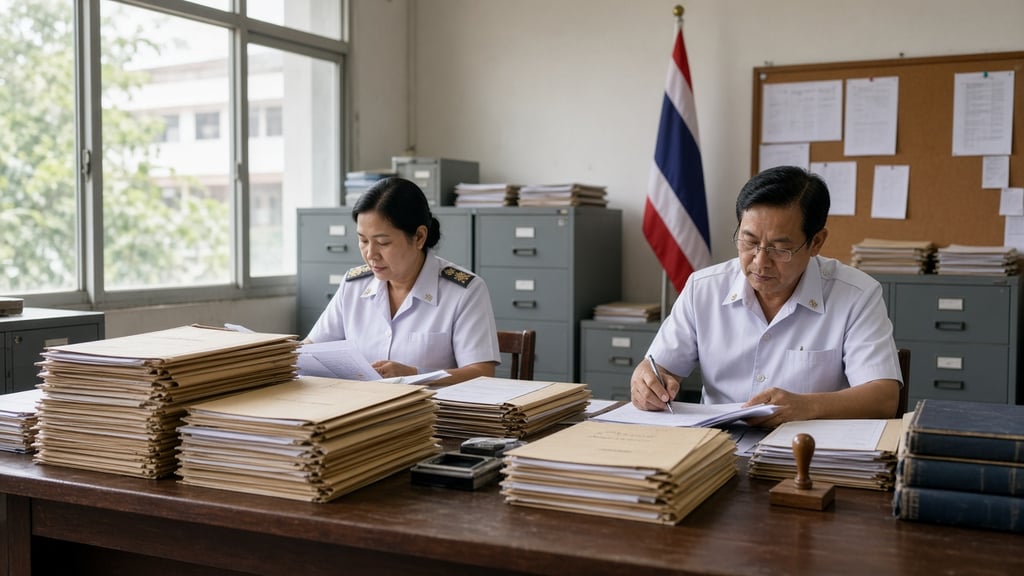
BANGKOK: Deputy Interior Minister Pholphi Suwannachawee (พลพีร์ สุวรรณฉวี) on Saturday 28 November 2026 set a strict mid-December deadline for provincial registrars under the Department of Provincial Administration to finish a nationwide audit of foundations, associations, and Chinese shrines, warning that officials who miss the deadline will be replaced.
Speaking at 7:10 a.m. at Wing 6's military airfield at Don Mueang, Pholphi said the original target had been the end of November. That timetable slipped after province-by-province registers failed to agree on a basic headcount, mixing paper files in some districts with computer records in others.
A Registry That Still Cannot Agree on Itself
Interior's first count listed 14,300 foundations. A second pass rose to 17,500. A third round, after Bangkok trimmed its figures, settled near about 15,000 after a Bangkok revision. Pholphi told registrars they must lock those provincial totals, and say whether each file has been checked, before any deeper review can be taken seriously.
District chiefs and provincial governors rotate often. That turnover helps explain why some files look inactive for two to three years. In provinces where the numbers have already settled, the ministry will press ahead with a full check of every listed group, not only foundations.
Groups that have been inactive for two to three years may be struck off in a process modelled on the Department of Business Development's dormant-company treatment at the Commerce Ministry. If the legal steps hold, Interior would then have those entities petitioned in court for revocation.
What Interior Can See, and What It Cannot
The ministry can inspect income and expense reports, meeting minutes, and whether boards and bylaws match the licence. It cannot trace bank money trails. Suspicious figures are meant to go to the Royal Thai Police. Files with donations over 300 million baht can be sent to DSI. The Department of Provincial Administration decides which agency receives each referral.
Pholphi argued that this split leaves the licensing ministry with too little reach. A draft ministerial regulation is nearly complete, with two or three clauses still being simplified. DOPA is expected to post a notice this week that the rules will be amended, then run public hearings of about 30 days, revise the draft, and hear comments again. Officials said the package could take effect within about 60 days of the last hearing, adding inspection powers so DOPA can look deeper than the annual paper file.
Earlier this month the same office outlined a shift from yearly accounts toward quarterly income and spending reports, plus a more central, realtime register. That work sits alongside the mid-December file sweep rather than replacing it.
Police and DSI Already Handling Mule-Account Files
Asked about mule-account links tied to the Kan Jom Palang Chuai Su foundation (มูลนิธิกัน จอมพลัง ช่วยสู้), associated with Kanthat Phongphaibulvej, known as Kan Jom Palang, Pholphi said criminal work already sits with police and DSI. The foundation has filed annual reports, but those filings do not name originating accounts, transferors, or cash splits. Interior will open a follow-up file if someone lodges a complaint.
That handoff matches work already in motion. On 27 November, DSI investigators said they had questioned Kanthat about how the foundation was set up, asked him to return with bank and business records, and issued a summons for the owner of a Chonburi gold shop to appear on 1 December after transfers from the foundation's account in 2025 and 2026. A separate witness, Ms Pimpimol, whose bank account was used in 2024 to receive donations through a Line group, had been called for 30 November.
A related question, whether singer Akkaradet Yodjampa, known as Kong Huay Rai, could demand a donation refund after giving money and later asking for it back, was left to each foundation's bylaws. Some refunds have already gone out. Anyone who believes a refund broke the rules can file a case. Interior is not sitting as a private arbiter of those transfers.
What This Means for Expats and Travelers in Thailand
Foreign residents who give to Thai charities, temple funds, or disaster drives should treat the mid-December deadline as a reminder to donate only to named legal entities. Ask for the foundation's registered Thai name, the province of registration, and the official bank account printed in its filings, then compare those details with DOPA district or Bangkok district-office records. Street solicitations without a registration number remain a common tourist-area risk.
People who have opened Thai bank accounts should also watch for mule-account flags. Police have previously put more than 200,000 mule accounts in the same enforcement bucket as online fraud, and banks can freeze downstream accounts after a complaint. Do not return unexpected deposits on a stranger's instructions, and do not lend an account to a charity collector. If a group you support is struck off or taken to court after the audit, keep transfer slips. A complaint to the registrar, police, or DSI is the path Interior itself described, because the ministry still cannot follow the money past the paper report.


Comment verification
Step 1 of 3
Verify your email once to publish your comment. Your email is never shown publicly.
Enter the 6-digit code sent to .
Choose the display name shown next to your comments.