Thailand-EU Pact Talks Enter the Final Stage
Thailand and the European Union have put their free trade talks in the final stage, with a shared aim to conclude in 2026. Farm and fishery exports, European cars and cheese, and public procurement are still unresolved.
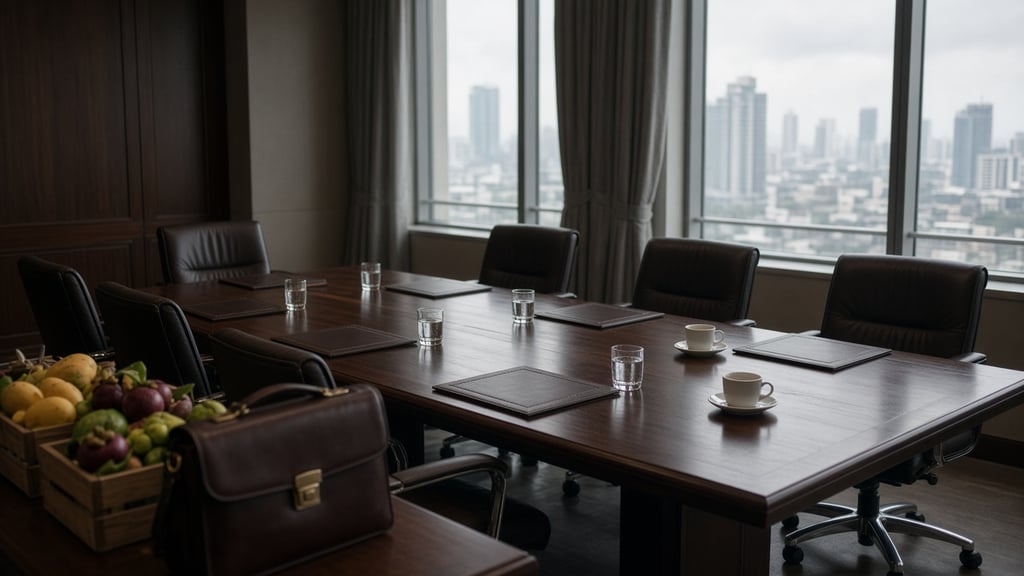
Thailand and the European Union pushed their free trade talks into the last phase on Friday, when Deputy Prime Minister and Commerce Minister Suphajee Suthumpun received European Commissioner for Trade and Economic Security Maroš Šefčovič at the Ministry of Commerce in Bangkok. Thai Trade Representative Werapong Prapha joined the meeting. Both sides restated a shared aim to conclude the Thailand-EU free trade agreement before the end of 2026.
The session was a political push rather than a fresh negotiating round. The legal chapters are now largely settled. What remains is which goods receive tariff cuts, how far services and investment open, and whether European firms may bid on public contracts. Government procurement would be a first for Thailand inside any free trade agreement, so Bangkok is treating it as a policy choice rather than a technical footnote.
Where the text is done, and where it is not
The tenth formal round, held in Phuket from 28 September to 6 October 2026, closed ground on sanitary and phytosanitary rules, energy, raw materials, and rules of origin. Market-access schedules were left open. Friday's meeting was meant to give negotiators cover to settle them before the year runs out.
In 2025, goods trade between Thailand and the EU reached $45.08 billion, up 3.55 percent from 2024. The bloc is Thailand's fourth-largest partner, after China, the United States, and Japan, and it accounts for more than 7 percent of Thai trade. Thai exports to the EU were $26.49 billion, up 9.45 percent. Imports from the EU were $18.59 billion, down 3.83 percent. Thailand's surplus stood at $7.90 billion.
Computers and parts, gems and jewelry, air conditioners, rubber products, and electrical transformers already lead Thai sales, and many face low European duties or none. The agreement matters more for agriculture, fisheries, and processed food, where tariffs and sanitary checks still decide whether a shipment clears. Lower duties do not help a cannery or a frozen-seafood plant if the European food-safety chapter stays out of reach.
The European request runs the other way. Brussels wants space in services and investment, plus a procurement chapter for specified government contracts. Thai negotiators have tied any opening to the development gap and to room for local small firms. Agreed legal text still does not name the tariff lines.
Cars, cheese, wine, and machinery
A single free-trade label misleads shoppers, because the tariff map is uneven. A draft sustainability assessment prepared for the talks finds Thai duties on motor vehicles still extremely high, with a weighted average above 70 percent and peaks up to 80 percent. Many vehicle parts sit above 25 percent. Pharmaceuticals face a milder weighted average near 8 to 9 percent, but registration and hospital purchasing often matter more than the customs line. Machinery and scientific instruments already lead EU sales into Thailand, and much of that capital equipment enters at a low rate or at zero.
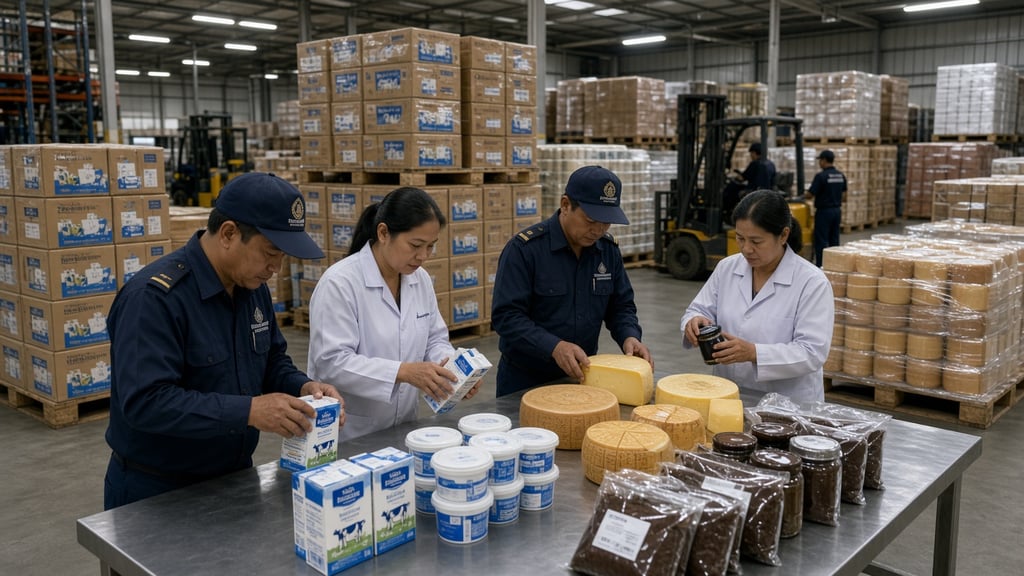
Dairy is the sensitive import. European cheese, butter, and milk powder are what EU producers most want to expand, and that assessment points to pressure on Thai dairy if tariffs fall. Since 23 February 2024, import duty on grape wine and sparkling wine has been zero, down from 54 to 60 percent. Excise remains: 5 percent of value plus 1,000 baht per litre of pure alcohol, before local tax and VAT. A pact will not by itself make a European bottle cheap.
What This Means for Expats and Travelers in Thailand
European residents will feel a finished agreement slowly, and not in every aisle. A lower customs duty on cars would narrow the gap between a German list price and a Bangkok one, but excise keyed to engine size would still apply. Anyone hoping for cheaper imported cheese should watch the dairy schedule, which is not public line by line. Wine buyers should not budget for a second collapse in price. Restaurants and grocers gain only on lines that are actually liberalised, and only after origin and food-safety paperwork is clear.
For EU firms already here, services, investment, and public tenders matter more than one tariff code. Engineering firms, pharmaceutical suppliers, and machinery vendors want to know whether they can own more of a local operation, station technicians, and bid when a ministry buys equipment. A narrow procurement chapter changes a few contracts. A wide one changes how hospitals and utilities buy European kit. None of that starts on the day a text is initialled. Ratification in Bangkok and in European capitals still sits between a political deal and a lower invoice.
Small Thai exporters should read the same caution in reverse. A final-stretch headline is not a purchase order from a buyer in Rotterdam. Farm and fishery access will depend on the tariff lines Thailand actually wins, and on whether shipments meet European sanitary rules that are largely drafted but not yet in force. The case for speed is the 2025 surplus with a partner that already takes more than 7 percent of Thai trade, at a moment when relying on any single large market looks less safe.
Comment verification
Step 1 of 3
Verify your email once to publish your comment. Your email is never shown publicly.
Enter the 6-digit code sent to .
Choose the display name shown next to your comments.