Thailand Arrivals Fall 12% Before Peak Season
October foreign arrivals fell 12% to 2.27 million, and the ten-month total is down 4.59%, even as electronics exports kept Thailand's factories busy.

Foreign arrivals into Thailand fell 12% in October from a year earlier, to 2.27 million people, while merchandise exports jumped 27.5% to US$36.86 billion. The Ministry of Tourism and Sports' preliminary count for January through October is 25,464,306 international visitors, 4.59% below the same ten months of 2025. Visitor spending slipped 2.85% to 1.241 trillion baht.
The Fiscal Policy Office reported a 28th straight month of export growth. Video and audio equipment and components surged 1,050.9%. Telephones and components rose 120.6%. Shipments of computers, related equipment and integrated circuits rose 56.8%. Goods to the United States rose 42.9%.
On 28 October the Bank of Thailand held the policy rate at 1.00% and projected 2026 growth of 2.4%. Foreign tourist arrivals are expected to decline while oil prices stay high.
Why October was the steep month
October was the weakest month of 2026 by the year-on-year percentage, at about 2.265 million foreign arrivals. Thais made 23.3 million trips in October, up 0.4% on the year.
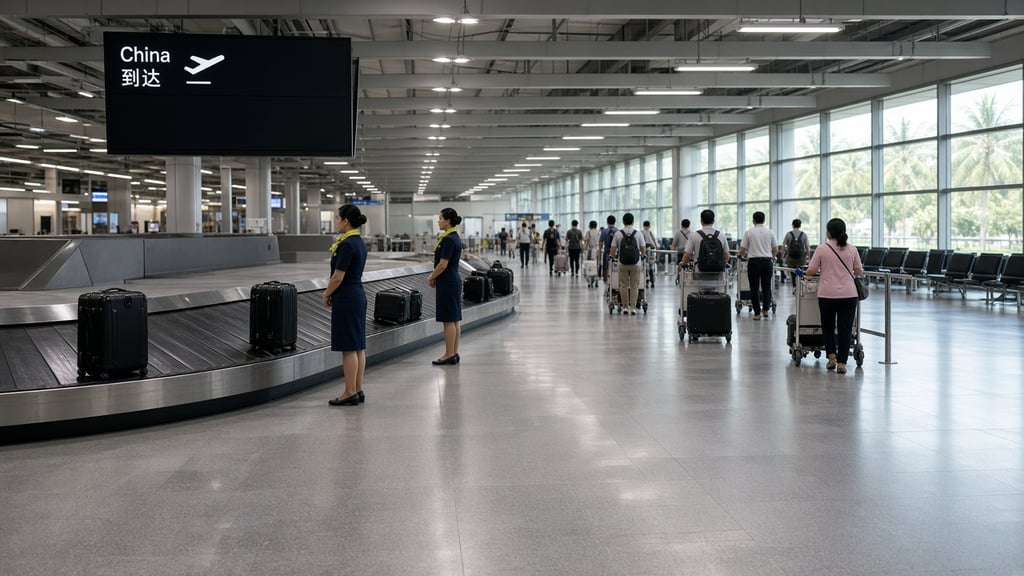
China is still the largest market over ten months, at 4,244,376 arrivals, up 12.44%. Chinese arrivals fell 13.57% to 308,942, the first year-on-year drop since February, during National Day, Bangkok flooding, and an embassy advisory on recruitment scams. Malaysia fell to 276,157 in the month, down 26.97%. South Korea is down 26.86% over ten months, to 932,066.
October's exchange rate is the wrong single cause. Bank of Thailand figures put the average selling rate at 33.80 baht per dollar, 1.29% weaker than September, as markets priced tighter US rates and dearer oil. Travelers still meet prices set when the baht was firmer: the 2025 average was 33.04 per dollar after a 7.3% appreciation. Airfares, not the bureau rate at Suvarnabhumi, are what travelers compare with Vietnam and a cheap yen in Japan.
A narrower path into high season
The last week of October looked late, not cancelled. From 25 to 31 October the ministry counted 538,661 international arrivals, up 7.31% on the prior week, about 76,952 a day. Long-haul arrivals rose 13.6% to 227,153, a fifth straight weekly gain, helped by Russia and the United States. The consumer confidence index fell to 50.9 from 52.1.
What This Means for Expats and Travelers in Thailand
A December or January beach booking should treat the sticker as provisional. Pricing tools have been lifting the last rooms on Phuket and Ao Nang until a few nights look like Europe, while provincial cities still show rooms around 700 to 1,000 baht.
Expats paid from abroad are not meeting a new October high in the baht. At 33.80 per dollar it is softer than September and softer than the near-31 stretches earlier this year. For anyone flying in, the binding constraint is the ticket, not the headline arrival count. A softer tally can loosen a midweek room in Pattaya, Chiang Mai or Hua Hin. Peak season is arriving on a narrower base: fewer Malaysians and Koreans, a Chinese market that stalled in October, and long-haul traffic improving week by week.

Comment verification
Step 1 of 3
Verify your email once to publish your comment. Your email is never shown publicly.
Enter the 6-digit code sent to .
Choose the display name shown next to your comments.