Anutin presses Putin in Shenzhen for fuel, fertiliser and a Eurasian trade track
On the APEC sidelines in Shenzhen, Thailand asked Russia to keep oil, gas and LNG flowing, weigh fertiliser shipments, and open talks on a free trade pact with the Eurasian Economic Union. No supply contracts were signed on the spot.
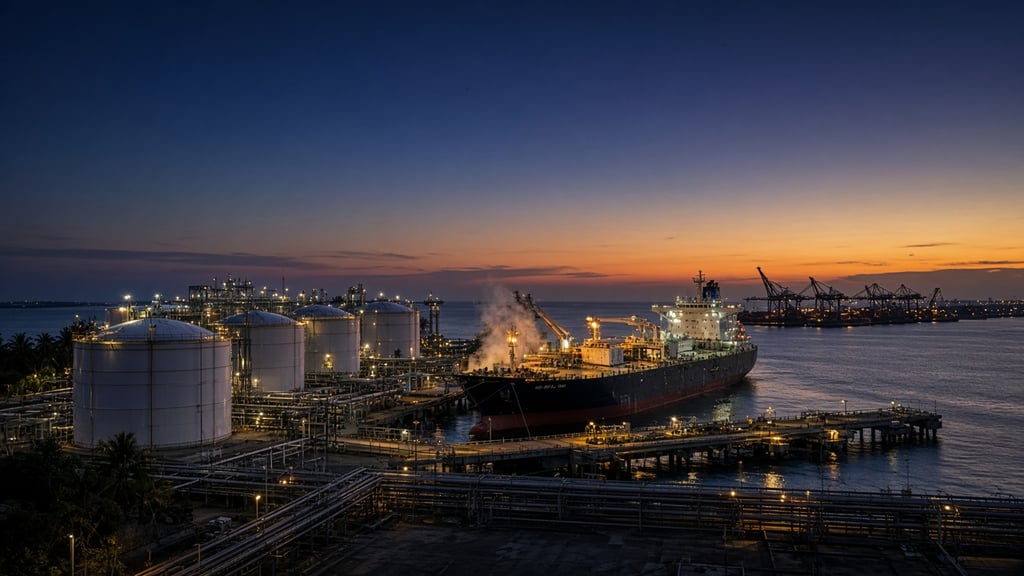
Prime Minister Anutin Charnvirakul used a late sideline session in Shenzhen on 18 November 2026 to ask Russia for steadier fuel and fertiliser supplies and to push a free trade track with the Eurasian Economic Union, according to briefings issued the next morning by Government House and Thailand's Ministry of Foreign Affairs.
The meeting sat on the margins of the 33rd APEC Economic Leaders Week. It was the second Anutin-Putin encounter of the year, following the ASEAN-Russia commemorative summit in Kazan in June. Deputy Prime Minister and Foreign Minister Sihasak Phuangketkeow joined the Thai delegation. A Kremlin readout listed a dense economic bench on the Russian side, including the energy minister, the finance minister, and the co-chair of the joint Russia-Thailand commission.
Neither capital announced a signed offtake contract, a nuclear memorandum, or a launch date for formal FTA talks. What Shenzhen produced was a political steer: keep commodities moving, keep business forums busy, and treat 2027's 130th anniversary of diplomatic ties as a deadline to show commercial results.
Energy security first, nuclear later
Government spokesperson Ekkapob Pianpises said the two leaders agreed to promote sustainable energy cooperation, including possible trilateral projects with a third country and work on small modular reactors. The Russian side restated that it was ready to keep supplying Thailand with crude oil, natural gas and liquefied natural gas. Bangkok, in turn, asked Moscow to consider fertiliser shipments for Thai agriculture.
Thailand remains a net importer of both transport fuels and farm nutrients. A tight LNG market shows up in industrial tariffs and in the cost of rice, rubber and fruit. Russian fertiliser has been a recurring ask since Kazan and during Russian Deputy Prime Minister Alexei Overchuk's mid-October call on Anutin at Government House.
Small modular reactors sit further out. Overchuk's October visit already floated technology sharing. The Shenzhen talks kept SMRs on the agenda without a site, a regulator timeline, or a financing envelope. They signal that Bangkok will discuss nuclear options while it still shops for LNG cargoes.
A Eurasian FTA that has not yet opened
Anutin proposed accelerating a Thailand-EAEU free trade agreement so Thai goods can reach a five-member customs bloc of Russia, Belarus, Kazakhstan, Armenia and Kyrgyzstan. The Ministry of Foreign Affairs described the aim as wider market access and fewer trade barriers. That is still a request to start talks, not a concluded text.
The prime minister pointed to the second Russian-Thai Investment Forum in October, where private firms and national chambers mapped investment opportunities worth more than US$4.6 billion. A Kremlin briefing said bilateral turnover rose 2.3 percent in 2025, then jumped 37.4 percent in January to August 2026 against the same months a year earlier, while still treating overall trade as too small.
Payment rails remain the bottleneck. Sanctions on Russian banks have complicated letters of credit, dollar clearing and marine insurance for energy and fertiliser cargoes. Thai commercial banks still treat Russian counterparties as high-friction. An FTA can cut tariffs once goods actually clear. It cannot magic the banking problem away.
Tourism, scholarships and a 2035 APEC nod
People-to-people traffic already dwarfs merchandise trade. The Kremlin said almost 2 million Russians visited Thailand in 2025 and 1.3 million in the first nine months of 2026. Both leaders agreed to promote two-way tourism and hotel investment. Thailand also confirmed support for Russia to host the APEC Economic Leaders Meeting in 2035.
Education was listed alongside energy and agriculture. Russia allocated 50 state scholarships for Thai students in the 2026-2027 academic year, with about 109 young Thais already studying there. Those files will matter more as the 2027 anniversary calendar fills.
What This Means for Expats and Travelers in Thailand
Cheaper Russian molecules, if they actually arrive, would show up first on the Ft electricity charge and at the diesel pump, not in a communique. Until cargoes, insurers and banks line up, households and factories should assume LNG price swings will keep feeding into bills. Fertiliser supply, if it materialises, would matter for food prices in 2027 more than for this tourist season.
Russian visitor flows already shape Phuket, Pattaya, Samui and parts of Bangkok. A two-way tourism push could mean more winter arrivals, but visa, flight and payment frictions still sit between the slogan and the airport. Travellers paying with cards issued by sanctioned banks should keep backup payment methods. There is no new visa rule in the Shenzhen readout.
The proposed EAEU FTA is a multi-year project. Importers of Thai food, auto parts and rubber should not price in tariff cuts yet. Anyone watching Thailand's energy mix should treat SMRs as a talking point, not a plant. The practical watchpoints are fertiliser tenders, LNG cargo nominations, and whether Thai and EAEU officials actually open a negotiating round.
Comment verification
Step 1 of 3
Verify your email once to publish your comment. Your email is never shown publicly.
Enter the 6-digit code sent to .
Choose the display name shown next to your comments.