Thailand Moves Closer to Free Trade With Four European Nations
Thailand's Cabinet approved draft import rules for European dairy products and instant coffee as Bangkok prepares to implement its first FTA with EFTA members Iceland, Liechtenstein, Norway and Switzerland, targeted for 1 January 2027.
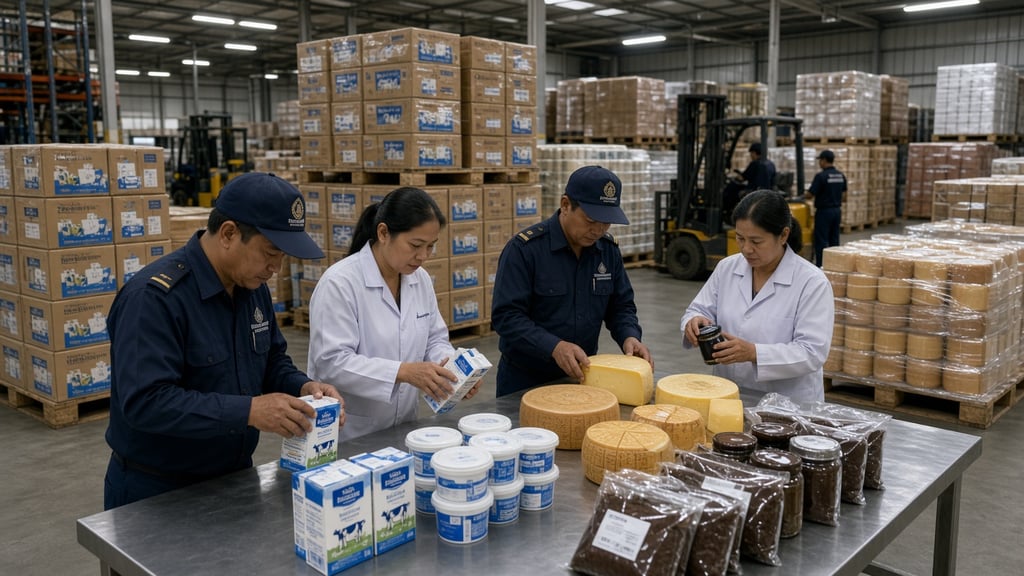
Thailand's Cabinet on 24 November 2026 approved in principle a draft Commerce Ministry notification that would let selected European dairy products and instant coffee enter the country duty-free and without an import licence. The step is homework before Bangkok's first free trade agreement with a European grouping, the European Free Trade Association, can start operating.
EFTA's four members are Iceland, Liechtenstein, Norway and Switzerland. Thailand signed the pact with those governments on 23 January 2025 on the sidelines of the World Economic Forum in Davos. Officials now want the treaty, and the matching import notice, to take effect on 1 January 2027. That date is still a target. The legal start depends on remaining domestic procedures on both sides.
What Cabinet Actually Approved
Deputy government spokesperson Lalida Persvivatana said the draft notice sets the method for bringing in three agricultural groups that Thailand has committed to treat preferentially under the FTA, against its World Trade Organization agriculture obligations.
The first group is milk and cream, including flavoured milk drinks, that originate in and are shipped directly from any of the four EFTA states. The second is skimmed milk powder, with the same four-country origin test. The third is instant coffee, limited to product that originates in and is shipped directly from Switzerland or Liechtenstein only.
Duty relief is not automatic at the port. Importers must present a declaration of origin, which can sit on an invoice or another commercial document, plus a certificate of entitlement issued by the Department of Foreign Trade or an authorised agency. Those papers go to Thai Customs when the preference is claimed. After the in-principle Cabinet vote, the draft goes to the government's legal-review committee on an urgent track.
How the Wider Deal Is Built
This is not a pact with the European Union. EFTA is a smaller, high-income club whose exports to Thailand have long featured watches, fish, pharmaceuticals and machinery. Thai shipments the other way have included electrical equipment, watch parts, vehicles and steel products. Talks first opened in 2005, stalled, then restarted in June 2022 in Borgarnes, Iceland. Ten rounds later the text closed on 29 November 2024.
Cabinet endorsed the finished agreement on 2 June 2026. The National Assembly approved it on 17 June 2026. EFTA's council was still reviewing ratification files as recently as 3 November 2026. The treaty starts on the first day of the third month after Thailand and at least one EFTA member notify each other that internal procedures are done.
On goods, EFTA members will eliminate customs duties on about 90 percent of tariff lines covering Thai products. Thailand will eliminate duties on about 83.59 percent of lines covering EFTA goods. Leftover cuts can be phased in over as long as 15 years. The agreement also reaches services, investment, intellectual property, government procurement, competition, small firms, and trade and sustainable development.
EFTA put 2023 two-way merchandise trade at about USD 3.2 billion, with Thai exports near USD 1.8 billion. Thailand's Government Public Relations Department reported 2024 two-way trade of USD 11.79 billion, a much larger figure that includes gold and precious-metals flows through Switzerland. The Ministry of Commerce separately put Swiss-Thai trade at USD 14.24 billion in 2025.
Bangkok is selling the deal as a door into high-income shops for Thai rice, noodles, processed foods, pet food, seafood and canned fish, plus gems and jewellery, garments, medical goods and vehicles. The Department of Foreign Trade has already taken SME missions to Switzerland and Norway so firms can practise origin rules before any preference is switched on.
What This Means for Expats and Travelers in Thailand
Supermarket prices for Swiss cheese, Nordic milk powder or Swiss instant coffee will not reset at midnight on New Year's Eve. The draft notice is written for commercial importers who can show origin and a DFT entitlement certificate. Cold-chain costs, food-safety checks and retailer margins will still shape the shelf price more than the tariff heading. Personal quantities of dairy or coffee in a suitcase remain under ordinary passenger and agricultural-inspection limits, not this FTA paperwork.
Cafe owners, bakeries and specialty grocers should watch Customs and DFT guidance through December rather than social posts claiming European milk becomes free on 1 January. If the treaty starts on time, wholesale costs for qualifying milk, cream, skimmed powder and Swiss or Liechtenstein instant coffee could ease during 2027, first in food-service recipes, then in retail.
The quieter household effect may be on the way out of Thailand. Thai rice, noodles, canned tuna, jewellery and auto parts should face lower tariffs into Switzerland and Norway if origin rules are met. Watch and medicine prices inside Thailand are a slower story, because some industrial cuts can be staged for years. Until completion notices are lodged, 1 January 2027 remains a government calendar entry, not a confirmed Customs switch.
Comment verification
Step 1 of 3
Verify your email once to publish your comment. Your email is never shown publicly.
Enter the 6-digit code sent to .
Choose the display name shown next to your comments.