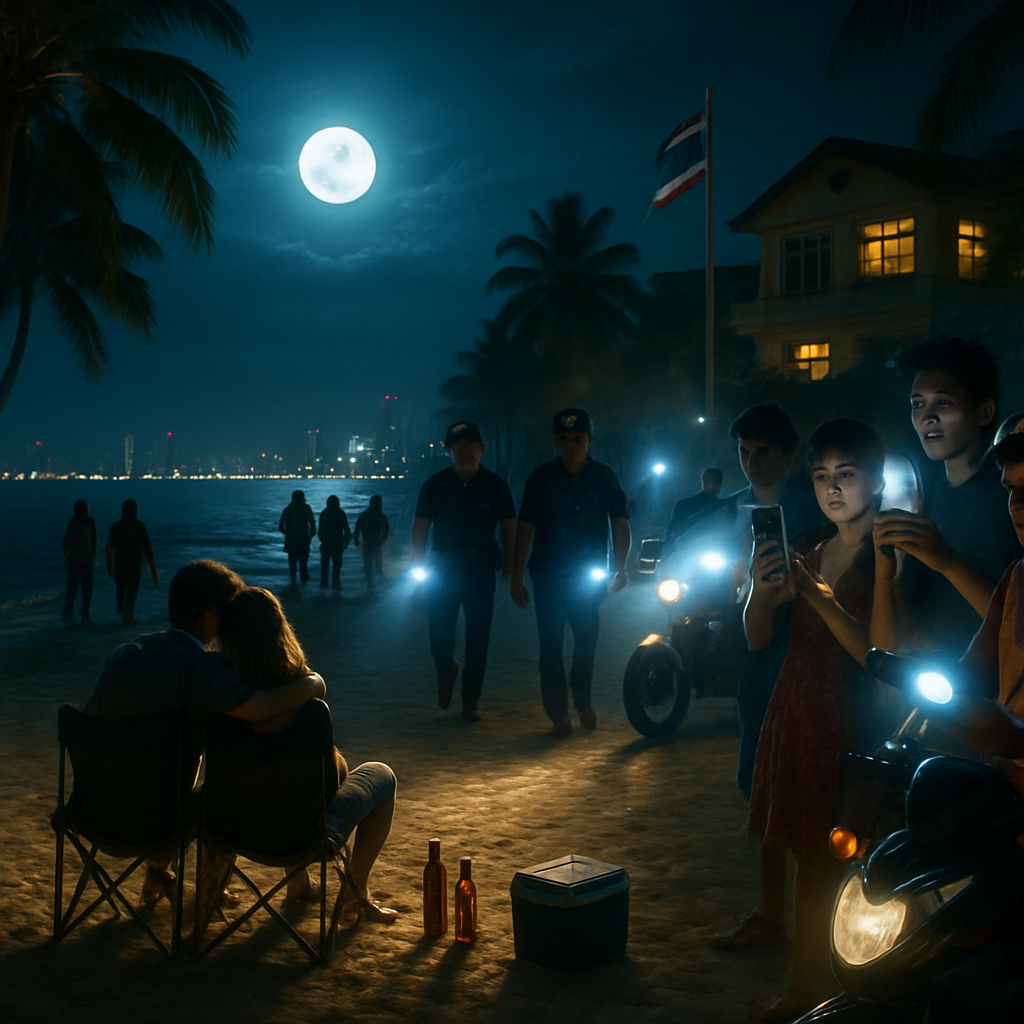
In the sort of seaside scene that makes for awkward small talk and viral social-media fodder, a Russian couple found themselves at the center of a late-night commotion on Jomtien Beach, Pattaya. What began as a boozy reunion among friends turned into a public spectacle when, in the early hours of December 24, the pair were spotted engaging in sexual activity while seated on camping chairs — an act that drew quick attention, a police complaint and an online storm.
Police at Mueang Pattaya Police Station received the first call around 2:00 a.m. from a concerned Thai witness who said the couple’s behavior was not only inappropriate but made nearby residents and tourists uncomfortable. By the time officers arrived the couple had left the immediate scene, but a clutch of eyewitnesses — and a now-viral video clipped by bystanders — left little doubt about what had taken place on the sands of Jomtien.
One eyewitness, a 22-year-old motorcycle taxi rider who gave his name as Josh, told officers he and colleagues were waiting for customers when they noticed the couple. “At first they looked affectionate, like any couple enjoying a night out,” Josh said. “Then the woman sat on the man’s lap and things quickly escalated. It was out in the open — right there on camping chairs.” Another witness, 42-year-old Placraf, said the pair had arrived earlier with a group of about six to seven friends and spent time drinking on the beach. Once the friends departed, leaving the two alone, the behavior turned explicit.
In an age where smartphone cameras are never far away, several onlookers filmed the episode and shared clips on Facebook and other platforms. The footage spread rapidly, drawing both amusement and criticism from social-media users and prompting swift action from local authorities.
Officers tracked down the Russian couple outside a nearby hotel not far from where the incident unfolded. During questioning at the station the pair admitted what had happened and attributed their lapse in judgment to alcohol. According to their statements to police, the couple had a history: previously married, later divorced, they claim fate reunited them while traveling with friends in Pattaya. The man said he attempted to rekindle the relationship and even proposed again during the trip — a romantic gesture that, according to investigators, was unfortunately followed by poor decision-making in public.
Mueang Pattaya Police charged both individuals with committing an indecent act in a public place, a criminal offense in Thailand that can carry a fine of up to 5,000 baht. After issuing a formal warning and advising them not to repeat the conduct, officers allowed the couple to leave the station. Whether the case proceeds to a formal fine appears to rest on how authorities choose to pursue the matter following their initial report and public attention.
The incident has sparked more than just legal consequences; it’s ignited debate about behavior, responsibility and the responsibilities of tourists. Pattaya and Jomtien Beach are popular destinations for international visitors, and local law enforcement regularly reminds beachgoers that Thailand’s public-decency standards are stricter than those in some travelers’ home countries. The episode is a reminder that what might be dismissed as a drunken indiscretion at home can have legal repercussions abroad.
Social media commentary has ranged from ribald jokes to serious discussions about respecting local customs. Some users mocked the couple’s choice of seating for their romantic reunion — camping chairs, not exactly the stuff of grand gestures — while others emphasized the discomfort caused to families and fellow tourists who encounter such behavior unexpectedly in public spaces.
From a legal perspective, the charge of an indecent act in public is straightforward: Thai law protects public spaces from acts considered obscene or offensive, and enforcement is particularly sensitive in tourist-heavy areas. The fine ceiling of 5,000 baht is modest compared to some penalties worldwide, but the reputational cost and the viral nature of the footage can be long-lasting.
For locals and visitors alike, the Jomtien Beach episode is a useful cautionary tale. Enjoying Pattaya’s nightlife and beachfront atmosphere is part of the allure, but so is maintaining a level of decorum that keeps public spaces comfortable for everyone. Whether the couple’s reunion and the impulsive proposal were driven by romance, alcohol, or both, the consequences were predictably public and unmistakable.
As travel seasons continue and beaches buzz with international guests, authorities will likely continue to remind tourists to respect local laws and sensibilities. For the Russian couple at the center of this December 24 incident, the memory of a beach proposal gone wrong will now include a police interview, a formal warning, and the knowledge that certain personal moments are best kept private — preferably off the camping chairs and away from the tide line.


















This was mortifying to watch and also so avoidable; public decency laws exist for a reason. They were clearly intoxicated, but that doesn’t erase the disrespect to families on the beach.
Totally agree — I was at the beach last summer and the last thing you want is to explain that to your kids. People need to act like adults in public spaces.
I think it’s more complicated; alcohol, emotions, and a rekindled relationship can impair judgment, but criminalizing a dumb mistake feels harsh to me.
A dumb mistake is one thing, Samantha, but doing it where children and tourists are present crosses a line; a warning and a small fine seem reasonable.
Why is everyone acting shocked? People make out on beaches all the time, this is just a prurient social media witch hunt. Shame the locals want to flex the law to shame tourists.
Not a witch hunt — locals pay for cleaning and maintain family-friendly zones. There’s a difference between holding hands and miming a porn scene on camping chairs.
As a frequent traveler, I agree with beach_bum78 to a point but public sex is objectively crossing a boundary no matter where you are.
I get boundaries, but the viral clips and comments are brutal. It feels like people waiting to pounce on foreigners to boost engagement.
Legally this is straightforward under Thai law: indecent acts in public are prohibited and enforcement is common in tourist districts. The maximum fine is minor, but reputational damage and possible deportation risks are more significant.
Good point about reputational risk, Dr. Karpov; viral shaming can outpace legal consequences and have long-term effects on employment and travel opportunities.
Exactly — the social penalty can be greater than the legal one, especially if clips spread internationally and employers or families see them.
Honestly this made me laugh, people are so dramatic about natural things. What’s the big deal if they were consenting adults?
Because public spaces include children and families, Mike; consent between two people doesn’t give them the right to perform sexual acts where others can’t avoid seeing them.
Fair point, I didn’t think about kids being around. Still seems extreme to criminalize, but I get the discomfort argument.
The human story intrigues me: divorced, reunited, proposal — a romance gone wrong and captured on camera. Feels tragic and humiliating.
Tragic or not, they made poor choices in public while drunk. Romantic or not, it’s not the place to act out private moments.
I don’t disagree, but maybe punishment should consider motive and past behavior, not just a viral clip and moral outrage.
As someone who brings tourists to Pattaya, I always tell groups about local laws and etiquette. This is the kind of story that makes my job harder because it fuels stereotypes.
Guides are important, but tourists also have to do their own homework. Cultural literacy isn’t the guide’s only responsibility.
True, Nina — but many travelers ignore advice until something bad happens. Prevention matters because cleanup costs and policing are tangible issues here.
Social media is the real villain here — people filming instead of intervening then sharing to shame. The mob mentality is uglier than the act.
People film first for safety and later to create accountability; sometimes that footage is the only evidence authorities get. Mob mentality is a risk, but so is impunity.
Accountability is fine, but selective outrage and viral piling-on ruin lives over moments that could be handled privately with a polite ask or a report to police.
This is gross. My teacher said public places are for everyone and this is not okay.
Sofia has a good baseline view rooted in respect for shared spaces, but I’d add that differing cultural norms can complicate perceptions of what is acceptable.
I get cultural differences, but kids and families should be respected everywhere, that part is simple.
Consider the sociological element: tourism economies often experience clashes between transient behaviors and local norms, and enforcement becomes a tool to preserve public order. The economic stakes in tourist hotspots shape legal enforcement priorities.
I agree; local governments sometimes amplify enforcement in visible tourist areas to maintain a marketable image, balancing between hospitality and regulatory control.
And viral incidents accelerate policy responses, whether through increased fines, signage, or police presence, because perception drives tourist flows.
We enforce public decency laws for the comfort and safety of all visitors. Warnings were issued and the case will proceed according to law.
As a fellow Russian, I feel embarrassed, but please don’t stereotype all tourists for the mistakes of a few. People screw up everywhere.
Maria, you’re right — national stereotypes are unfair, but individuals still must face local rules when abroad; it’s a balance of empathy and accountability.