2025 Sappaya-Sapasathan Renovations: Paradorn Prissanananthakul's Vision to Enhance Bangkok's Iconic Parliament Building
Once a beacon of ambition and political prowess, the Sappaya-Sapasathan building in Bangkok has been the talk of the town since the momentous decision to erect its foundation back in 2013. Initially, this grand…
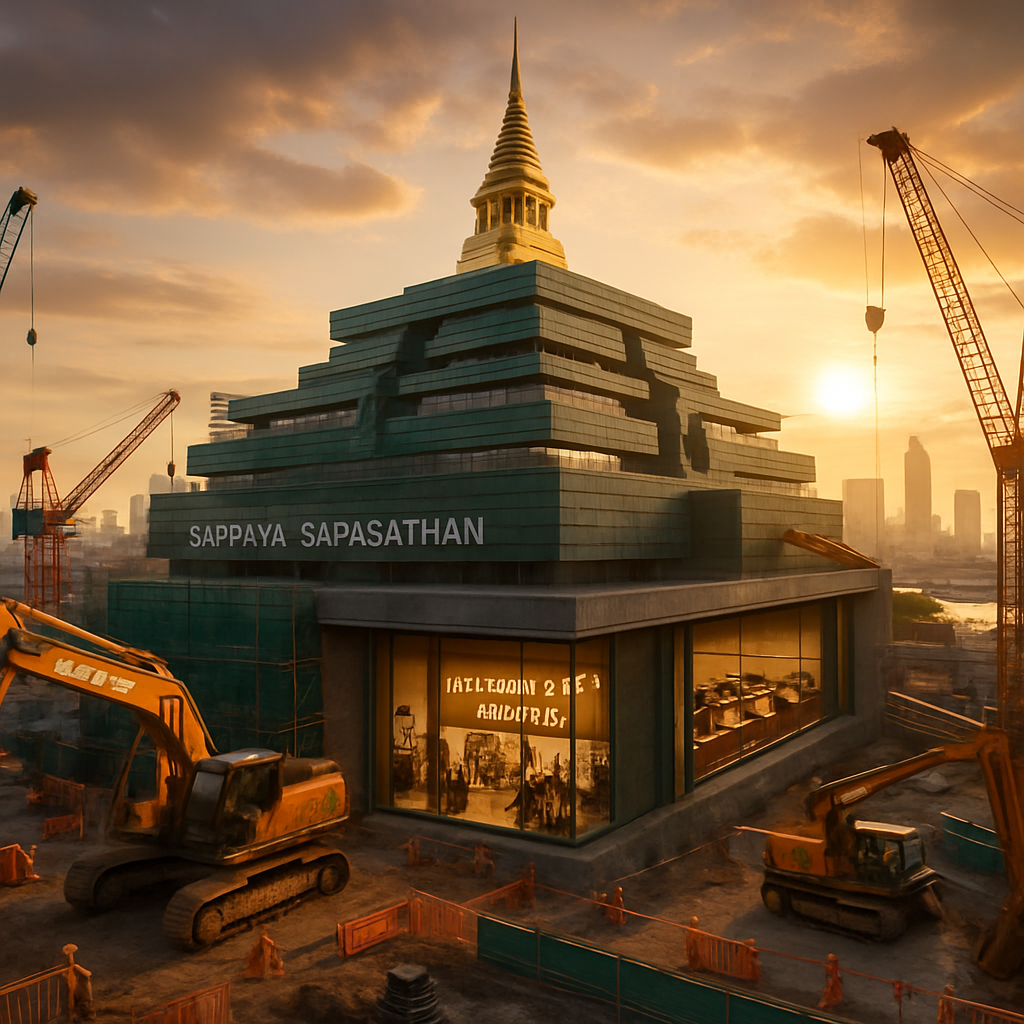
Once a beacon of ambition and political prowess, the Sappaya-Sapasathan building in Bangkok has been the talk of the town since the momentous decision to erect its foundation back in 2013. Initially, this grand architectural project was poised to crown the cityscape by late 2015. However, much like an unpredictable plot twist in a thrilling novel, the actual completion lagged until July 2019, with costs escalating from an anticipated 13 billion baht to a staggering 24 billion baht. (Thank you, Nittaya Nattayai, for the visual insight!)
Fast forward to today, as the sun rises over 2025, the conversation buzzes around the quite necessary renovations of this parliamentary giant. According to Paradorn Prissanananthakul, a deputy House speaker with perhaps the longest last name in parliamentary history, these renovations target more than just aesthetics—they aim to plug the fiscal leaks caused by our committees' current practice of renting hotel rooms for seminars.
Among the key renovation projects under Mr. Paradorn's vigilant eye are the transformation of the library and the enhancement of the parliamentary museum—a venture pegged at 120 million baht. Then there’s the ambitious overhaul of the 1,500-seat conference room’s sound system, ringing in at a hefty 99 million baht. “A worthy expenditure,” Mr. Paradorn insists, as he vows personal oversight over these expenditures.
And the museum? Ah, there lies a tale in itself. Critics have dubbed the proposed space a "burial chamber" lying ominously under the building—hardly a place to inspire legislative glory. But Mr. Paradorn is on a mission to shirk such haunting metaphors, envisioning instead a lively and educational gallery of parliamentary history sprawled out across 5,000 to 6,000 square meters. "No one wants a tomb in parliament," he quips, with an earnest promise to revolutionize the space into a beacon of knowledge rather than obscurity.
The much-needed revamp of the conference hall also comes into sharp focus. While it was part of the original blueprint, it never quite materialized. Naturally, this calls for much discussion (and budgeting), with committees currently roaming the city for seminar venues. Initial budget outlines suggested a cost of 160–170 million baht, but it has since been tightened to a snugger 99 million baht.
With the fiscal cogs of 2026 grinding into motion, the budget bill remains only in draft form, pending the suspenseful reveal in a forthcoming parliamentary session. A discerning committee of MPs and external experts is set to dive into the molehills and mountains of the proposal, ready to snip any futile expenditures at the root. Rest assured, Mr. Paradorn asserts, this budget is still fluid, not yet etched in stone.
In response to whispers of discontent over the necessity of such extensive makeovers on a five-year-old edifice, Mr. Paradorn clarifies that some areas await completion per the original design, such as the conference hall itself. And when probed about the construction warranty, rest easy; this budget is all about the shiny new extensions, not mundane repairs.
Enter Deputy Prime Minister Anutin Charnvirakul, championing the renovation cause, citing the well-worn state of the building with all its daily foot traffic. Constructed by none other than Sino-Thai Engineering and Construction Plc, a company with historic ties to Charnvirakul's family (albeit Anutin himself has long since disconnected from it), the development saga began in earnest in 2013 with a harsh awakening to the need for deadline extensions and unforeseen budget inflation.
Despite finally opening its doors in August 2019—albeit only formally handed over to the government in a 2024 ceremony—the Sappaya-Sapasathan building has not been without its critics. There have been gripes galore, from leaking roofs to leaky pipes, and even some materials mysteriously straying from contractual specs. Yet, like all remarkable endeavors, the path is never purely smooth but is an evolving narrative full of learning and progress, a testament to Bangkok’s evolving political landscape.



Comment verification
Step 1 of 3
Verify your email once to publish your comment. Your email is never shown publicly.
Enter the 6-digit code sent to .
Choose the display name shown next to your comments.