Abhisit Vejjajiva and Julapun Amornvivat Discuss Thailand's Casino Bill: A Crucial Senate Debate in 2025
As the sun rises on another riveting day in political circles, Thursday promises to be no ordinary day for Thailand's Senate committee. Former Prime Minister Abhisit Vejjajiva, a man known for his eloquence and sharp…
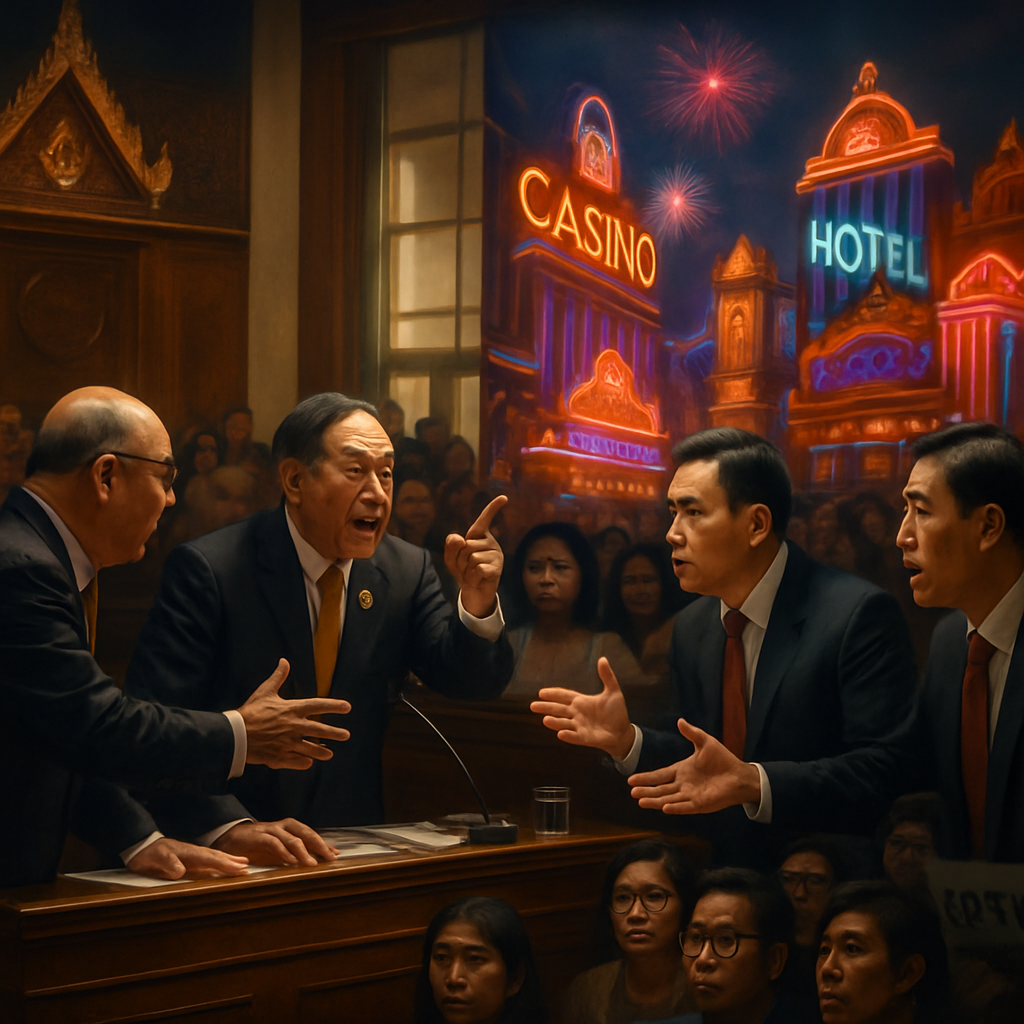
As the sun rises on another riveting day in political circles, Thursday promises to be no ordinary day for Thailand's Senate committee. Former Prime Minister Abhisit Vejjajiva, a man known for his eloquence and sharp political insights, joins forces with the astute Deputy Finance Minister Julapun Amornvivat to cast their expert analysis on a topic sparking fiery debates across the nation: the controversial entertainment complex plan. This proposal, which includes the establishment of casinos, sits at the heart of a bill currently under the discerning eyes of the Senate.
Led by the esteemed Sen Veerapun Suvannamai, the committee is convening its fifth installment of rigorous discourse and deliberation. Abhisit and Julapun, with their wealth of experience and political acumen, have been invited to provide their perspectives. While they prepare to dissect the intricacies of the plan, journalists and political analysts alike hang on their every word, eager to gauge the public sentiment that their opinions might sway.
This isn't Julapun's first rodeo. With a second appearance lined up, the Deputy Finance Minister is gearing to once again articulate the government's stance, a task he is all too familiar with. The bill, having already earned its place in the hallowed halls of parliamentary discussion, blends notions of economic upliftment with the shadows of moral debate.
The last session, which took place on the brisk day of May 29, was graced by intellectual giants like Chidtawan Chanakul from Kasetsart University's Faculty of Economics. Alongside him stood the voices of youthful resistance, Sornsit Krimjai and Thanaphat Chaloemrat, representing a network of young advocates staunchly opposed to gambling. Their presence added a vibrant yet critical energy to the discussion.
From a purely economic standpoint, Mr. Chidtawan laid out a compelling argument—integrated entertainment complexes, while job-creating harbors, tend to crave the muscle of low-skilled workers. This reality, he argued, does little to elevate the socio-economic status of the marginalized, painting a harsh picture of selective social mobility.
In a world where they expect Hollywood-like vigor, the fact remains that even the most developed countries aren't completely immune to the allure of illicit gambling dens. The uncompromising hammer of law enforcement in the United States and Singapore stands testament to this persistent illicit shadow. Yet, it is this commitment to law that simultaneously bridges the gap between legality and order.
Turning pages back to the local scene, the youth network echoes their collective anxiety that these entertainment complexes, with their flashy casinos, may act as Pied Pipers, luring young minds away from academia and into the dazzling, albeit risky, world of gambling. They passionately warn that such enterprises might kindle a fire of vice that could engulf the dreams of many, casting aside education for the illusory sweet fruits of quick wealth.
As the meeting looms near, anticipation builds in the air like a tempest ready to unfurl. Thursday's session won't merely be a ceremony of rhetoric but a battleground of ideology and pragmatism. How Abhisit and Julapun sway the course could hold profound implications, not just for the future of this bill, but also for the very fabric of societal values. With bated breath, the nation watches.



Comment verification
Step 1 of 3
Verify your email once to publish your comment. Your email is never shown publicly.
Enter the 6-digit code sent to .
Choose the display name shown next to your comments.