Thailand

Ammonia Leak at Siam Pyramid Factory Triggers Evacuation in Nakhon Pathom

The morning of December 15 gave the sleepy Tha Talat neighbourhood in Sam Phran district an unwelcome jolt when an ammonia leak at the Siam Pyramid Company ice factory sent a sharp, irritating scent winding through the…
Ammonia Leak at Siam Pyramid Factory Triggers Evacuation in Nakhon Pathom

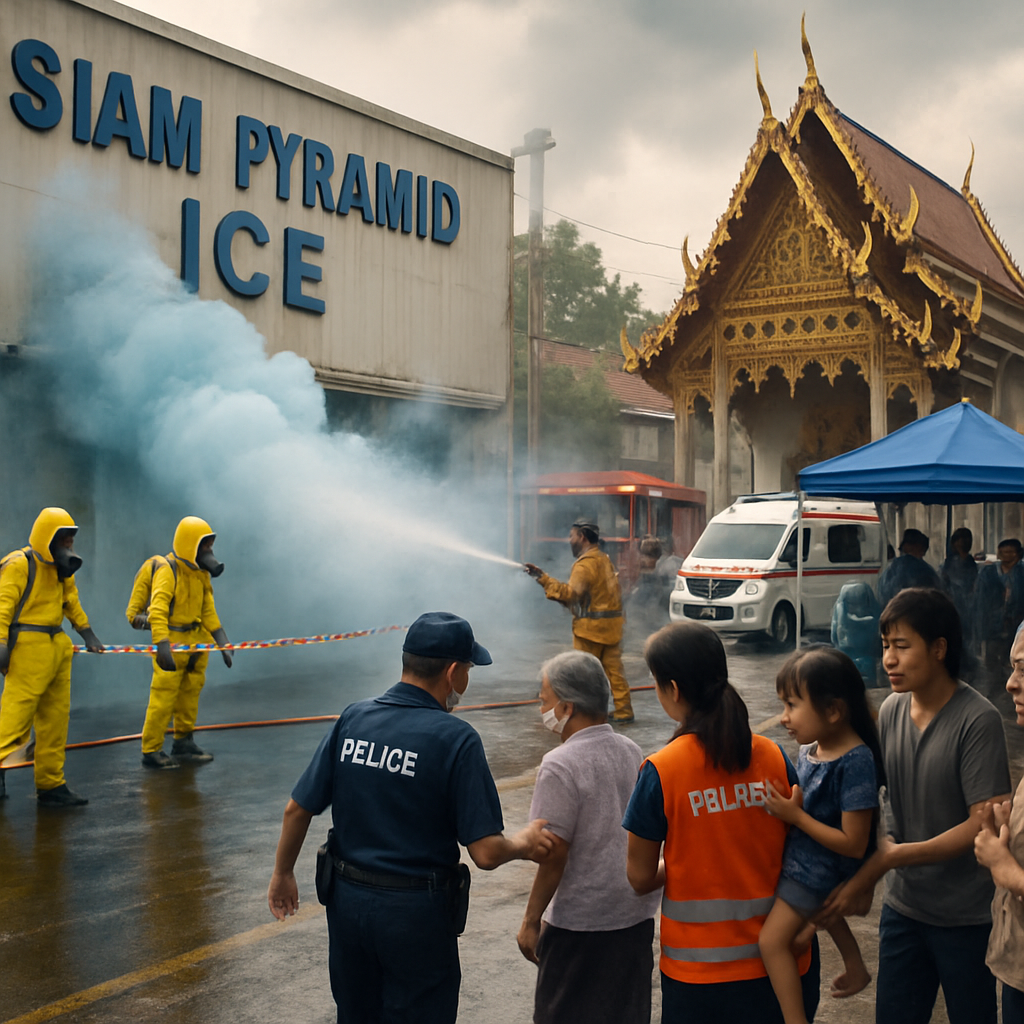
The morning of December 15 gave the sleepy Tha Talat neighbourhood in Sam Phran district an unwelcome jolt when an ammonia leak at the Siam Pyramid Company ice factory sent a sharp, irritating scent winding through the streets of Nakhon Pathom. What began as a whiff quickly became a full-blown safety operation: more than 100 nearby residents were evacuated, a temporary command centre sprang up at Wat Rai Khing Royal Temple, and emergency teams scrambled to contain a chemical scare that had everyone holding their breath — literally.

Ammonia, commonly used in industrial refrigeration systems, is a powerful refrigerant but also a potent irritant when it escapes. The chemical’s pungent odor and ability to inflame airways made the leak especially alarming for households close to the factory. Pho Kaew Police Station, medical staff from Sam Phran Hospital, and volunteers from the Por Teck Tung Foundation were among the first responders on scene, joined by fire units from the Tha Talat and Bang Toei sub-district administrative organisations and officers from Rai Khing Municipality.

Precautionary measures were immediate and thorough. Officials ordered an evacuation within a one-kilometre radius of the factory, setting up a temporary shelter and command post at the local temple so people could register, get assessed, and stay warm and informed. Rescue teams went door to door, urging families—many with elderly relatives and young children—to leave their homes until the situation was secured.

“The smell was extremely strong and burned my nose,” one evacuated resident told reporters. “People were coughing and some were dizzy. Officials came around and told us to leave right away. I’m glad they did.”

Most residents reported merely inhaling the acrid fumes without severe harm, but nine people developed clear symptoms of ammonia exposure: chest tightness, breathing difficulties, nausea, dizziness, vomiting and even nosebleeds. Seven were taken to Sam Phran Hospital, while two were transferred to Metta Pracharak Hospital for further care. Emergency teams worked under strict safety protocols; anyone entering the factory wore full chemical protection suits.

Containment efforts paid off relatively quickly. Within about an hour, responders traced the source to a damaged valve and managed to shut it off, stopping additional ammonia from escaping. Crews then sprayed water around the area to dilute lingering vapors and reduce the odor, a standard measure to prevent the gas from traveling further into residential zones.

The factory owner, who preferred not to be named, told media outlets that assistance would be provided to those affected. Local police said a formal inspection of the Siam Pyramid Company site was scheduled for December 16, with relevant agencies joining officers from Pho Kaew Police Station to determine exactly what went wrong and whether legal action should follow.

While the technical investigation will focus on equipment integrity, maintenance records, and safety procedures, the human side of the story is already clear: a community rattled, neighbours helping neighbours, and emergency services responding efficiently under pressure. The Wat Rai Khing shelter functioned as a practical hub for both comfort and coordination, and volunteers played a key role in making sure vulnerable residents—children and the elderly—were evacuated safely.

Incidents like this are a pointed reminder of the risks that come with industrial operations located near residential areas. Ammonia is efficient and widely used, but any release demands fast, coordinated action to protect public health. The quick source shutdown and water-spraying measures likely prevented a worse outcome, but the planned inspections will be crucial to preventing a repeat.

Residents will be watching closely as authorities review the factory’s safety practices and decide on any penalties or mandated fixes. In the meantime, local hospitals and volunteers remain on alert for any late-onset symptoms, and officials have encouraged anyone who smelled ammonia or is experiencing respiratory irritation to seek medical attention promptly.

For a neighbourhood that started the day like any other, December 15 was a sharp lesson in emergency preparedness. Credit is due to the rapid coordinated response — police, fire units, hospital teams and volunteers — that turned a potentially dangerous chemical leak into a well-managed evacuation and mitigation operation. As inspections proceed and the air clears, the hope is that lessons learned from this scare will lead to stronger safeguards and peace of mind for the people of Tha Talat and the wider Sam Phran community.


35Comments
Sort by:
SRSiam Reporter··1 pts · 5 replies
SR
Siam Reporter
An ammonia leak rattled Tha Talat this morning and forced more than 100 residents to evacuate; emergency crews acted fast but people are rightly furious about a factory so close to homes. The source was a damaged valve and crews sealed it within an hour, but nine people were hurt and several hospitalized. Authorities say inspections are coming, and residents want accountability now.
1
NLNong Lek··1 pts
NL
Nong Lek
I live two streets away and the smell burned my throat for hours; why are these factories allowed next to where families sleep? Evacuation was chaotic and my elderly mother still feels dizzy.
1
DADr. Anan··1 pts
DA
Dr. Anan
Ammonia is effective as a refrigerant but highly caustic in vapor form; emergency response seems on point, yet the incident suggests maintenance or safety management failures. A full risk assessment and health monitoring for exposed residents should be mandatory.
1
SRSiam Reporter·1 pts
SR
Siam Reporter
Thanks for the expert context — residents will want to know what monitoring looks like and whether long-term screening will be offered, since symptoms can appear later. We'll follow up on inspection results tomorrow.
1
LDLarry D·1 pts
LD
Larry D
Sounds like bureaucratic talk — we've heard 'inspections' before and nothing changes until someone sues or dies. Local politics protect businesses too often.
1
Ggrower134··1 pts
G
grower134
If the owner preferred not to be named, that's a red flag. Compensation and relocation talks should start now, not after a 'formal inspection' drags on for weeks.
1
NNicha··1 pts · 3 replies
N
Nicha
This is why zoning laws exist — industrial plants shouldn't sit inside communities. Officials need to enforce buffer zones and penalize violators harshly.
1
PPreecha··1 pts
P
Preecha
Agreed, but zoning enforcement in the province is flimsy; political donations and local employment excuses keep risky operations close by.
1
NNicha·1 pts
N
Nicha
Then we need public pressure and petitions. Silence lets them bury the issue.
1
MMaya··1 pts
M
Maya
I don't understand zoning fully, but moving a factory sounds expensive — who pays for that, the company or taxpayers?
1
JJoe··1 pts · 1 reply
J
Joe
My cousin was evacuated and said volunteers were the real heroes; hospitals did their job but volunteers calmed people. The factory owner owes an explanation and real help to victims.
1
LDLarry Davis··1 pts
LD
Larry Davis
Community response is often faster than official channels; give those volunteers credit and funding for training.
1
DPDr. Premsak··1 pts · 2 replies
DP
Dr. Premsak
From a toxicology standpoint, short ammonia exposures causing nosebleeds and respiratory distress indicate concentrations were significant near the source. Even if most symptoms were mild, follow-up pulmonary function tests are prudent for those exposed.
1
AAnna··1 pts
A
Anna
So should we expect long-term problems? My child was at the shelter and now coughs more at night, I'm really worried.
1
DPDr. Premsak··1 pts
DP
Dr. Premsak
Short-term irritant exposure typically resolves, but children and the elderly have higher risk for complications; get a medical check and document everything for possible claims.
1
Ggrower134··1 pts · 3 replies
G
grower134
I run a business nearby and we've had small leaks before that management brushed off. This was predictable and preventable, so don't let them off with a slap on the wrist.
1
SSomsri··1 pts
S
Somsri
If leaks happened before, why didn't you report them? Companies often respond if complaints stack up, not to lone voices.
1
Ggrower134··1 pts
G
grower134
We complained to the factory manager twice and were told maintenance was scheduled; obviously it wasn't handled properly.
1
UUser123··1 pts
U
User123
This pattern is exactly why stricter third-party audits are necessary, not just internal logs controlled by the company.
1
SSomchai··1 pts · 1 reply
S
Somchai
I am old and I was frightened — the volunteers were kind but I'm upset at the factory for risking lives. They should move or upgrade equipment immediately.
1
MVMetta Volunteer··1 pts
MV
Metta Volunteer
We did our best to help elders like you; please visit the clinic for a checkup even if you feel fine.
1
LLegalEagle··1 pts · 2 replies
L
LegalEagle
Legally, if negligence is proven (poor maintenance, lack of safety protocols), criminal charges and civil liability are both possible. Authorities must secure maintenance records, training logs, and incident reports promptly.
1
CCherry··1 pts
C
Cherry
How long do legal processes take? People need quick relief for hospital bills, not multi-year court cases.
1
LLegalEagle··1 pts
L
LegalEagle
Interim remedies like urgent injunctions or administrative fines can be faster, and victims can pursue expedited compensation under emergency statutes in some jurisdictions.
1
PP'Kam··1 pts · 1 reply
P
P'Kam
Kudos to the temple for hosting the command centre — local institutions stepped up when it mattered. That's community spirit in action.
1
SSakda··1 pts
S
Sakda
Faith groups often provide crucial space and trust; officials should have formalized partnerships before disaster struck.
1
AAnna··1 pts · 1 reply
A
Anna
My toddler was coughing after the evacuation and clinic was busy; hospitals must be resourced better for chemical exposures. Parents are scared and need clear guidance on aftercare.
1
DADr. Anan··1 pts
DA
Dr. Anan
Clinics should provide leaflets on symptoms to watch for and follow-up contact info; confusion increases anxiety and delays treatment.
1
LLin··1 pts · 1 reply
L
Lin
Conspiracy theory time: what if the plant lied about safety to keep profits up and the local council covered it up for jobs? I don't trust the 'owner preferred not to be named' line.
1
TTeacher··1 pts
T
Teacher
That sounds dramatic and scary to a kid, but accusing people without proof can hurt honest workers who had nothing to do with it.
1
TTeacher··1 pts · 1 reply
T
Teacher
My sixth-graders asked why factories are near homes; I explained job needs and zoning but also how citizens can demand safety. They were worried, and I think schools should teach disaster preparedness more.
1
SRSiam Reporter··1 pts
SR
Siam Reporter
Good point about education — preparedness in schools could reduce panic and improve outcomes. We'll try to include that angle in follow-up coverage.
1
MVMetta Volunteer··1 pts · 2 replies
MV
Metta Volunteer
We assisted at the shelter and saw many shaken families; volunteers need training and PPE for chemical incidents, not just first aid. Funding for volunteer training should be prioritized.
1
VVol1··1 pts
V
Vol1
Training helps, but real protective gear is expensive; where will small foundations get the budget?
1
MVMetta Volunteer··1 pts
MV
Metta Volunteer
We rely on donations and coordination with local agencies; official support would make a big difference, especially for chemical incidents.
1
