Assoc Prof Alongkorn Parivudhiphongs: Revolutionizing Crisis Communication After Myanmar's Earthquake
Imagine a sunlit Thursday afternoon when the intellectual giants of Chulalongkorn University gather to ponder the mysteries and mishaps of communication during crises. At the helm of this insightful dialogue, aptly…
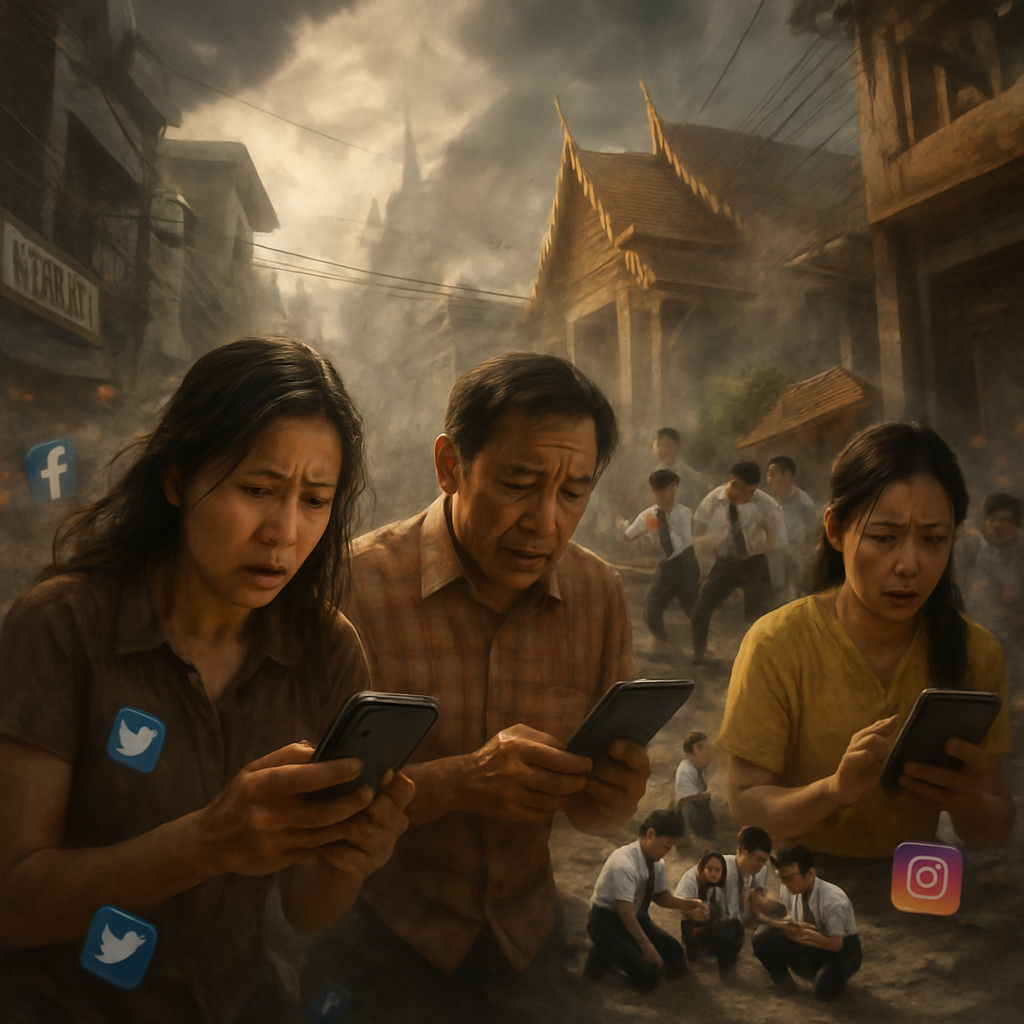
Imagine a sunlit Thursday afternoon when the intellectual giants of Chulalongkorn University gather to ponder the mysteries and mishaps of communication during crises. At the helm of this insightful dialogue, aptly titled "Knowledge Forum: After the Quake," stands Assoc Prof Alongkorn Parivudhiphongs, the ever-astute Deputy Dean of the Faculty of Communication Arts. With a stride both authoritative and measured, he brings to light the fragile art of crisis communication in an era where information often moves faster than a tempest.
The subject at hand? A jarring seismic event—the reverberations of which were felt far beyond its epicenter in Myanmar's Mandalay, shaking life (and a few buildings) in as many as 57 Thai provinces. This recent quake underscored an ever-pressing issue: the government's faltering communication strategies during emergencies, a scenario that frequently breeds public panic akin to bees without their queen. As Prof Alongkorn passionately notes, the chaos following a quake is echoed by a cacophony of misinformation readily distributed via social media, a realm where fact and fiction sometimes dance too closely.
"It's not just about sending out a warning," he asserts with a professor's fervor. "It's crucial that the recipients understand these alerts and know exactly what to do next." Imagine, if you will, an emergency alert blaring through the city streets, only to be met with collective shrugs. Such was the challenge unveiled when the earthquake came uninvited, rattling not only buildings but the very confidence of the city's residents.
Interestingly, our savvy Japanese comrades—students of Prof Alongkorn who happened to be residing in Thailand—demonstrated commendable nous. They quickly assessed the tremor's unwelcome jig and whisked themselves to safety with the kind of precision you'd expect from a practiced drill. Meanwhile, the local students, caught in a momentary limbo, sought cues from their environment, embodying a need for more robust educational frameworks in natural disaster response.
Mainstream media, with a juggler's finesse, must harmonize with social platforms to ensure the dissemination of nothing short of the truth. Here, Prof Alongkorn calls upon the titans of tech and traditional media alike to curate content that's as reliable as a compass in a sailor's hand, thus sheltering the public from the storm of misinformation.
As echoes of the earthquake still subsist in the minds of many, Prof Alongkorn sends a clarion call: the development of a comprehensive crisis communication strategy. This isn't just a scribbled note in a suggestion box but a blueprint for preparedness—embracing not just earthquakes, but potentially any natural disaster that might stumble across the land unexpectedly.
Emergency plans need more than mere architecture—they demand responsive public health systems, ready to spring into action like a well-oiled machine. Understandably, this is no small task. Yet, as Prof Alongkorn eloquently advocates, foresight in these endeavors is akin to a safety net, offering solace and assurance before the ground even thinks of quaking.
As the forum attendees filtered out of their intellectual oasis, minds rich with new insights and challenges, the proactive seeds of change were sown. In the dance of disaster, communication isn't just a tool—it's the maestro orchestrating the symphony of preparedness.



Comment verification
Step 1 of 3
Verify your email once to publish your comment. Your email is never shown publicly.
Enter the 6-digit code sent to .
Choose the display name shown next to your comments.