Thailand

Ayutthaya's High-Speed Rail Station Project: SRT's Commitment to Heritage Preservation

The State Railway of Thailand (SRT) is taking a thoughtful approach to its ambitious project of constructing a high-speed rail station in the ancient city of Ayutthaya. After consultations with international heritage…
Ayutthaya's High-Speed Rail Station Project: SRT's Commitment to Heritage Preservation

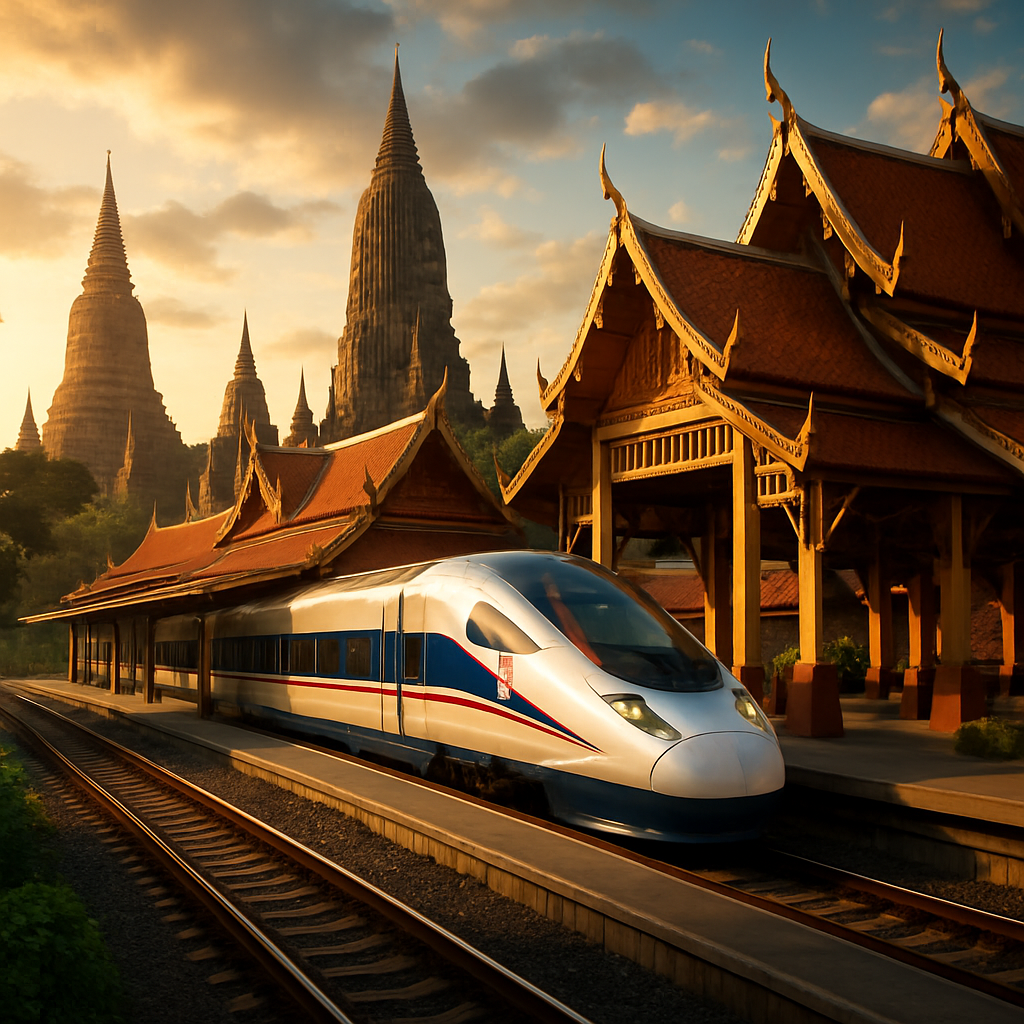
The State Railway of Thailand (SRT) is taking a thoughtful approach to its ambitious project of constructing a high-speed rail station in the ancient city of Ayutthaya. After consultations with international heritage specialists, SRT is embracing a meticulous blend of modernization and preservation to honor the city's storied past. Leading the charge, SRT Governor Veeris Ammarapala announced the receipt of an insightful report from world-renowned organizations such as the International Centre for the Study of the Preservation and Restoration of Cultural Property (ICCROM) and the International Council on Monuments and Sites (ICOMOS). These organizations, serving as the guiding stars for the World Heritage Committee, embarked on an informative visit to Ayutthaya from January 19th to 22nd.

This visit wasn't just a routine check; it was an immersive dive into the city’s rich tapestry of culture. The experts engaged in firsthand site inspections and meticulously evaluated the Heritage Impact Assessment (HIA) entwined with the high-speed rail endeavor. Their findings were illuminating. They determined that rerouting the rail line to skirt around Ayutthaya wasn't plausible. Instead, they proposed redesigning the station and elevating tracks such that they remain invisible to those wandering within the sacred heritage zone, ensuring uninterrupted vistas of the city's historic splendor.

Collaboration emerged as a key recommendation from this elite gathering of minds. They advised a coalition of the Department of Rail Transport, the Fine Arts Department, tourism authorities, and various stakeholders to collectively address the inevitable long-term impacts - both direct and incidental. Their emphasis was not merely on the immediate future but also on crafting a legacy that endures gracefully through time.

The aesthetics of the station came under the spotlight as well. The experts urged a transformative reimagining—one where the station seamlessly integrates into the terrestrial embrace of Ayutthaya. Suggestions flowed in: a reduction in building height, scales that resonate with their environment, and architectural elements that echo the vernacular heritage, right down to the walls and ceilings.

But they didn’t stop there. To restore visual harmony and breathe new life into the landscape, they proposed an ambitious landscaping effort. This includes planting trees in designated public park areas, curating lush green spaces that beckon tranquility. For every tree felled during construction, a new one would rise, a living testament to renewal and balance.

Embracing these rich suggestions, Mr. Veeris proudly confirmed that SRT has already embarked on a journey of redesign, adjusting the station plans to sync with the experts' wise counsel. In this tale of rails and roots, Ayutthaya stands on the cusp of an era where advance meets ancestry, crafting an enduring narrative of balance and brilliance.


30Comments
Sort by:
SSamanthaG··1 pts · 3 replies
S
SamanthaG
I'm really impressed with the SRT's commitment to preserving the heritage of Ayutthaya while advancing infrastructure. It shows that progress doesn't have to come at the expense of history.
1
HHistoryBuff92··1 pts
H
HistoryBuff92
I agree, Samantha. It's refreshing to see that stakeholders are considering historical contexts. Often, rapid development can erase centuries of cultural heritage.
1
EElliot·1 pts
E
Elliot
But don't you think this could potentially slow down the much-needed development? We have to balance preservation with practicality.
1
TBTommy B··1 pts
TB
Tommy B
Samantha, while I get your point, I'm worried these efforts can only stay on paper. Once construction starts, many might prioritize speed over culture.
1
MLMaria L.··1 pts · 2 replies
ML
Maria L.
The involvement of ICCROM and ICOMOS is crucial. These are the right steps to ensure that the heritage impact assessments are taken seriously.
1
PGPete G··1 pts
PG
Pete G
True, Maria. But hasn't there been a history of such reports being ignored when push comes to shove? Perhaps there's more to it than meets the eye.
1
MLMaria L.·1 pts
ML
Maria L.
That's undeniably a concern, Pete. There must be checks in place to hold the SRT accountable to their commitments.
1
JJake··1 pts · 2 replies
J
Jake
This project could set a precedent for future projects across the world. Blending progress with preservation might just be the future of urban development.
1
GGreenArchitect··1 pts
G
GreenArchitect
Absolutely, Jake! Sustainability is the way forward. Other countries can learn from SRT's approach here.
1
CCynicalGuy··1 pts
C
CynicalGuy
I doubt it. Let's see if they truly follow through first. Many initiatives start strong but eventually lose direction.
1
CMCharlotte M··1 pts · 2 replies
CM
Charlotte M
Designers should focus on making the station a landmark as well. It will play a huge role in the tourism and economy of the area.
1
TTravelerBeth··1 pts
T
TravelerBeth
Charlotte, turning it into a landmark could risk overshadowing the heritage sites themselves. We shouldn't lose focus of what's truly important.
1
CMCharlotte M··1 pts
CM
Charlotte M
Good point, Beth. But striking a balance where the station complements rather than competes with the heritage might work wonders.
1
SSkepticalMind··1 pts · 2 replies
S
SkepticalMind
Rerouting the rail was shot down. Imagine the loss of culture if the structures get damaged during construction. Some things are irreplaceable.
1
LLogan12··1 pts
L
Logan12
That's a valid concern. Is it really worth the risk just for a more 'convenient' rail line?
1
SSkepticalMind·1 pts
S
SkepticalMind
Exactly, Logan. Convenience today could lead to regret tomorrow. We've seen it happen before.
1
EEthanD··1 pts
E
EthanD
It's ambitious but necessary. We can't shy away from modernization just because it poses challenges.
1
NNatureFirst34··1 pts · 2 replies
N
NatureFirst34
Those landscaping efforts seem performative. Why weren't they part of the original plan to begin with?
1
UUrbanPlanPro··1 pts
U
UrbanPlanPro
NatureFirst, sometimes plans evolve. We have to appreciate the changes and corrections being made now.
1
NNatureFirst34·1 pts
N
NatureFirst34
It's hard to trust them when it feels like they're just reacting to criticism.
1
TThinkerBell··1 pts
T
ThinkerBell
I hope they provide transparent updates as the project progresses. Public transparency is key in gaining trust from stakeholders and residents.
1
TBTommy B··1 pts · 1 reply
TB
Tommy B
The idea of planting new trees sounds great on paper, but it won't replace the mature trees lost during construction.
1
JJake··1 pts
J
Jake
Maybe it's not a perfect solution, Tommy, but it's better than doing nothing at all.
1
KLKara L.··1 pts
KL
Kara L.
Could be a great model if implemented correctly. Future projects would benefit from such a forward-thinking approach.
1
FFutureTraveler··1 pts · 1 reply
F
FutureTraveler
As someone who hopes to visit Ayutthaya one day, I think this project, if done right, could greatly enrich the visitor experience.
1
DKDavid K··1 pts
DK
David K
I visited a few years back. The blend of new and old could definitely add another layer to the city's charm.
1
EEcoWarrior··1 pts · 1 reply
E
EcoWarrior
What about the impact on wildlife and local ecosystems? Has that been considered thoroughly?
1
EElliot··1 pts
E
Elliot
Good question, EcoWarrior. We hope they're looking at the big picture and not just focusing on the human aspect.
1
ACAmanda C··1 pts · 1 reply
AC
Amanda C
It's not perfect, but at least steps are being taken. We should acknowledge efforts where due.
1
PGPete G··1 pts
PG
Pete G
Amanda, complacency is the enemy of genuine progress. We can't be satisfied with mere steps; we need strides!
1
