Thailand

Bangkok Battles PM2.5 Dust Crisis: Governor Chadchart Sittipunt Leads Innovative Rainmaking Efforts

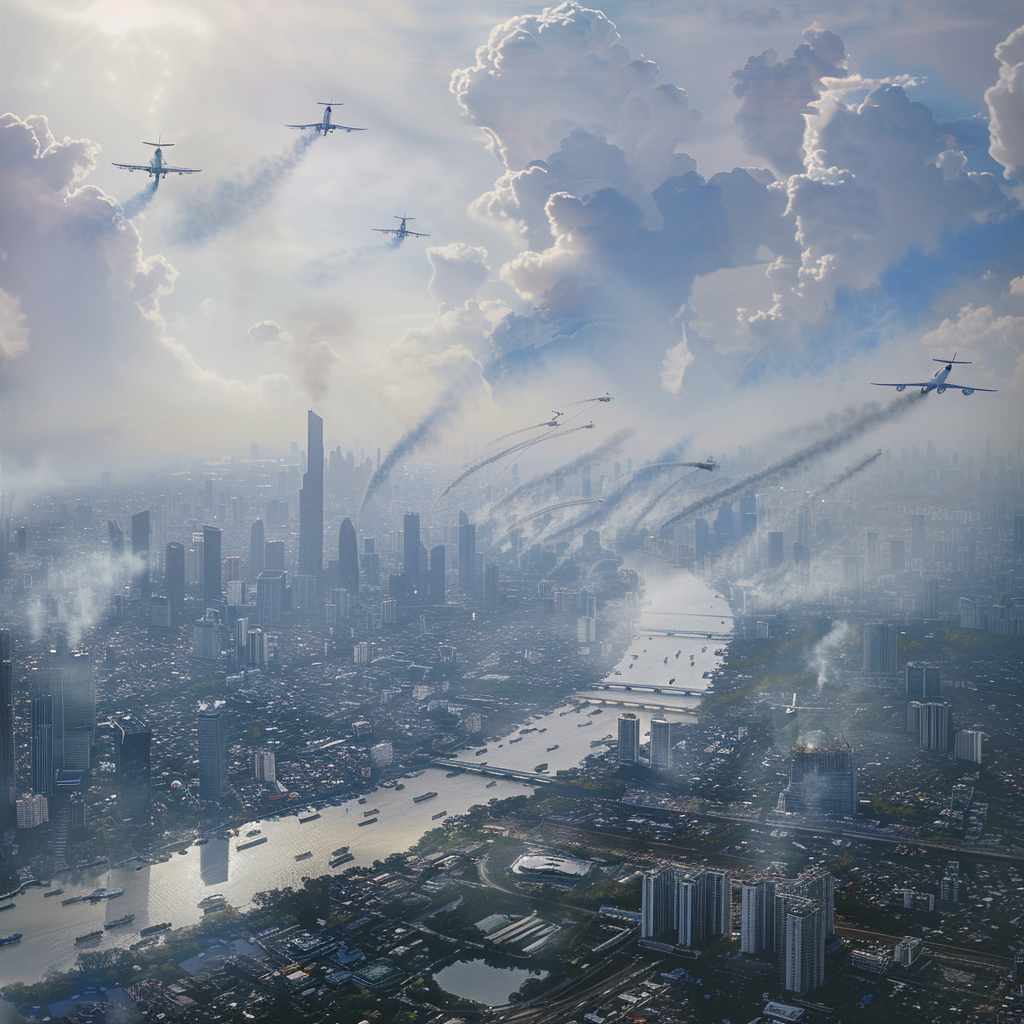
Picture this: a sweeping vista of Bangkok, nearly obscured by a thick layer of dust, as seen from the height of the Samut Prakan City Observatory. The image is both stunning and a stark reminder of an environmental…
Bangkok Battles PM2.5 Dust Crisis: Governor Chadchart Sittipunt Leads Innovative Rainmaking Efforts

Picture this: a sweeping vista of Bangkok, nearly obscured by a thick layer of dust, as seen from the height of the Samut Prakan City Observatory. The image is both stunning and a stark reminder of an environmental crisis. As the mercury climbs this January in the bustling city, so too do the levels of PM2.5, those pesky airborne particles that turn otherwise breathable air into a potential health hazard. Across many provinces in Thailand, air quality consistently drifts past governmental safety standards, sparking concern and action alike. (Photo: Somchai Poomlard)

Enter the Bangkok Metropolitan Administration (BMA), the eco-warriors of urban governance, led by none other than Governor Chadchart Sittipunt. Unfazed by the smog that threatens to linger well into February, the BMA amps up their efforts to clear the city's skies. On a recent expedition, Governor Sittipunt journeyed to the Hua Hin Royal Rainmaking Centre to hatch a novel plan—using atmospheric openings to whisk away the dust shrouding the city.

The plot thickens, backed by scientific heft and an impressive 300 tonnes of dry ice provided by PTT Plc. The dry ice, scientists say, will be used in royal rainmaking operations to create the much-needed meteorological openings. Picture the rainmaking airplanes, once skirting around Bangkok due to air traffic constraints at Don Mueang and Suvarnabhumi airports, now weaving through the city's heart for the first time—a historic choreography approved by the Aeronautical Radio of Thailand.

Currently, Bangkok's air quality displays an ominous average of 42.9 micrograms per cubic meter. When normalcy means breathing orange-level air, the call to action is clear and urgent. But fear not, for the BMA's strategy to combat the dusty menace is multifaceted and rigorous.

Take, for example, their vehicular initiatives: the call to arms for 160,000 vehicle owners to swap out old air filters and refresh engine oil. Or the green vehicle crusade, where an impressive 10,000 trucks now fly the environmental flag, surpassing initial targets. In a savvy switch to reduce vehicular emissions, policies are underway to encourage 80,000 citizens to work from home during peak dust moments.

The pièce de résistance of Bangkok’s clean-air mission lies in Governor Sittipunt's faith in synergy—the combined efforts of agencies, notably the Air Force, which has stationed larger aircraft for rainmaking operations. "Without this, our dust dilemma would be all the more dire," reflects Sittipunt.

Befitting the innovative spirit of late King Rama IX's dream of bringing rain to his people, the governor champions a data-driven, research-backed initiative to craft solutions tailored to Thailand’s unique environmental challenges. The mission: to drive the dust from the streets, working hand-in-hand with science, strategy, and a dash of royal inspiration.


24Comments
Sort by:
JJo_L··1 pts · 3 replies
J
Jo_L
Bangkok's efforts seem impressive, but I'm skeptical about using dry ice for rainmaking. Isn't this just another band-aid solution?
1
AAnnaGrace··1 pts
A
AnnaGrace
You might be right, Jo_L, but given the severity of the PM2.5 crisis, any effort is better than none. Plus, it's backed by science, right?
1
JJo_L·1 pts
J
Jo_L
True, AnnaGrace, but we should focus on preventing the dust from forming in the first place. How sustainable is rainmaking in the long run?
1
EEcoLover99··1 pts
E
EcoLover99
Rainmaking is a bit of a stretch, but think about it: this crisis might force Bangkok to adopt more green policies like reducing vehicle emissions.
1
CContrarianLou··1 pts
C
ContrarianLou
Why aren't we holding industrial polluters accountable instead of putting the burden on drivers to change filters?
1
SStephan··1 pts · 2 replies
S
Stephan
This is about collective responsibility. Everyone needs to pitch in, including industries. But changing air filters is a simple first step for individuals.
1
CContrarianLou··1 pts
C
ContrarianLou
I get that, but shouldn't the government crack down harder on industries causing more pollution than these cars?
1
SStephan·1 pts
S
Stephan
Certainly, but enforcement of industrial regulations takes time. Personal actions are immediate and impactful.
1
SSkyHigh··1 pts
S
SkyHigh
Impressive coordination by BMA! But rainmaking? Sounds like something out of a sci-fi movie. Can't we rely on technology instead of interventions?
1
MPMary P.··1 pts
MP
Mary P.
Technology got us into this mess, SkyHigh! Sometimes traditional methods, albeit unconventional, can remind us of natural solutions.
1
TThanu··1 pts · 1 reply
T
Thanu
Has anyone considered the impact of rainmaking on local farmers? Could this affect their crops?
1
AAgriBen··1 pts
A
AgriBen
Absolutely, Thanu! Farmers might face unpredictable weather. However, some might benefit from the well-timed rains.
1
NNina··1 pts · 1 reply
N
Nina
The move to work from home during high dust days is innovative! Could this policy be a permanent solution for other urban crises too?
1
FFuturistTom··1 pts
F
FuturistTom
It's certainly possible, Nina! This could pave the way for flexible work models and reduced carbon footprints.
1
BBangkokJoe··1 pts · 1 reply
B
BangkokJoe
As someone living in Bangkok, I can say any step, even rainmaking, is better than choking on dust.
1
AAnnaGrace··1 pts
A
AnnaGrace
I can only imagine how tough that is, BangkokJoe. Stay safe! Hopefully, the measures will help soon.
1
PPond_Hopper··1 pts
P
Pond_Hopper
Isn't Bangkok just putting all its eggs in one basket with rainmaking? What happens if it fails?
1
SSteveO··1 pts · 1 reply
S
SteveO
Might not be perfect, but give credit where it's due! Coordinating air traffic for this is a feat in itself.
1
PPond_Hopper··1 pts
P
Pond_Hopper
SteveO, sure, coordination is great, but aren't we overlooking longer-term strategies here?
1
ARAlia R.··1 pts
AR
Alia R.
Any good results so far? It's crucial to have updates on the air quality changes.
1
JJohn_D··1 pts
J
John_D
Not to sound pessimistic, but will these efforts last beyond this crisis?
1
UUrbanBliss··1 pts
U
UrbanBliss
Happy to see action but hope this sparks more lasting environmental awareness in the city.
1
GGretaPlant··1 pts
G
GretaPlant
Will this rainmaking create dependency, though? What about natural rainfall cycles?
1
EEve_o··1 pts
E
Eve_o
Is the government funding this? It could divert resources from more important areas.
1
