Thailand

Bangkok bus confrontation on TikTok fuels commuter etiquette debate

It was a painfully familiar scene for anyone who’s ever been stuck in Bangkok traffic: a crowded public bus inching along, tempers simmering, and one passenger loudly fed up. A now-viral TikTok clip filmed on January 13…
Bangkok bus confrontation on TikTok fuels commuter etiquette debate

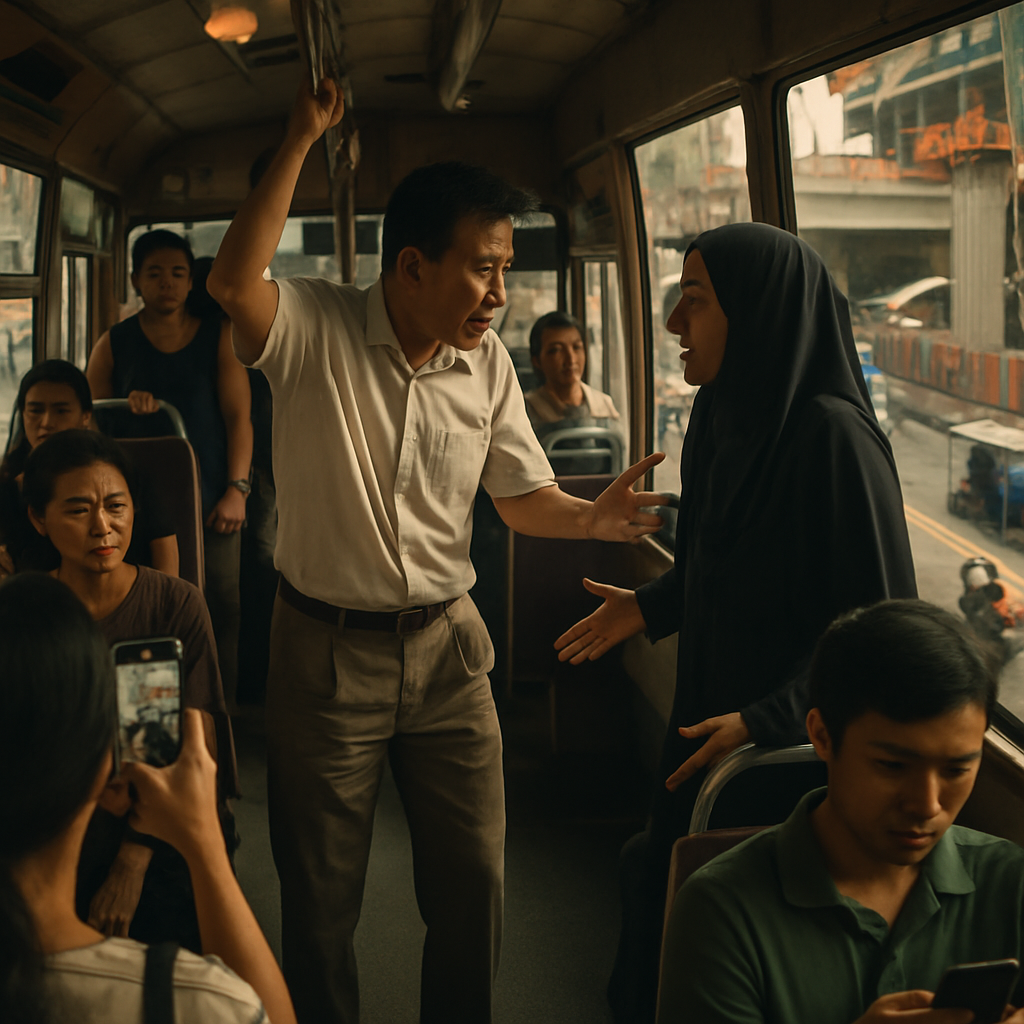
It was a painfully familiar scene for anyone who’s ever been stuck in Bangkok traffic: a crowded public bus inching along, tempers simmering, and one passenger loudly fed up. A now-viral TikTok clip filmed on January 13 captures exactly that — a tense back-and-forth between two commuters that quickly escalated into a mini soap opera on wheels.

The trigger was ordinary enough: major road closures for a new train station had funneled traffic into fewer lanes, forcing buses to take narrow alleys and detours. What should have been an inconvenience turned into a showdown when a woman dressed head-to-toe in black decided to move to the front of the bus and vocalize her frustration. “Why close the road? It causes a traffic jam,” she mumbled. “Take a picture and complain to the officials. You’re driving too slowly. I want to go home.”

Her low, persistent complaints — part grumble, part commentary — didn’t draw any immediate intervention. Fellow passengers sat in that resigned silence common to rush-hour commutes: eyes on phones, shoulders hunched, the kind of patience only honed by years of Bangkok congestion. Until one man in a white striped shirt and beige trousers spoke up.

“Hey, show some respect to the driver, please,” he told her, in words that sounded like they came from a mixture of exasperation and civic duty. He pointed out the obvious: the driver wasn’t purposefully holding everyone up. He was doing a job in difficult conditions. “No one wants to provide slow service or stop the car for fun,” he said — a simple defense of a public worker bearing the brunt of commuter ire.

The woman’s reply — “I want to arrive home quickly” — reads like a line from a commuter’s diary, but it struck a nerve. What followed was a classic urban retort: “Then go get your car and drive it yourself!” The man piled on, reminding her that everyone on the bus wanted to get home, too, and that patience would solve nothing faster than personal attacks. His closing salvo before disembarking escalated into a personal insult: “Go buy your own car if you can! Who are you — angel? Owner of the bus company? How much is your income? You’re just a crappy salaryman.”

It didn’t stop there. The woman fired back with a sexist slur, calling the man a “ladyboy,” a term that many find derogatory and inflammatory. The exchange — short, sharp, and filmed by a fellow passenger — has spread across social media under the TikTok handle @gotobedwithnext, drawing a chorus of online reactions.

Unsurprisingly, the comments were mixed. Many viewers sided with the man, arguing that his intervention was a necessary defense of public transport workers who already face long hours and zero tolerance for passengers’ impatience. These defenders acknowledged that while some of his language was harsh, the underlying point — don’t pressure the driver who’s stuck in the same jam — was valid.

Others criticized the man for his own sharp tone and personal attacks, saying that two wrongs don’t make a right. There’s also sympathy for the woman: long commutes, the stress of being late, and the feeling of powerlessness can fray nerves until passengers snap. In other words, everyone on that bus was a little right and a little wrong — a microcosm of the city’s simmering traffic tensions.

Beyond the spectacle, the clip raises a quieter conversation about public transport etiquette and the pressures on transit workers. Drivers and ticket collectors are often the visible face of systemic problems — construction, inadequate road planning, and overburdened infrastructure — yet they receive the brunt of commuters’ frustration. That pressure can turn routine trips into emotional battlegrounds, and viral videos like this one only magnify the fallout.

There’s also a social-media angle: bystanders filming conflicts changes the dynamic in real time. People consider the camera when choosing their words, and what would have been a private spat becomes public discourse with hashtags and hours of debate. In a way, the bus argument found its second life online, where netizens performed their own interventions through comments and likes.

If there’s a takeaway from the clip, it’s that patience — and a little empathy — costs nothing. Commuting in a megacity like Bangkok will always have friction; construction and detours are part of urban growth. What we can control is how we treat each other in the churn. A sharper word might blow off steam, but it won’t move the bus any faster.

Got thoughts on the bus brawl? Did the man step in to protect a worker or escalate a showdown? Share your view — just keep it civil; someone’s driving home in that city tonight.


73Comments
Sort by:
ALAnna Lee··1 pts · 3 replies
AL
Anna Lee
Honestly, the man was right to call out the passenger — drivers don’t control road closures and they don’t deserve abuse. Public transport workers take the heat for things beyond their control, and defending them matters. But he could have kept it civil instead of personal insults.
1
JJoe··1 pts
J
Joe
Nah, he escalated it. Calling someone names solves nothing and just makes the ride worse for everyone. If you want to help, be calm and speak up respectfully.
1
ALAnna Lee··1 pts
AL
Anna Lee
I agree calling names is wrong, Joe, but we can't pretend passengers have the right to yell at the driver either. A gentle reminder would have been ideal, but emotions run high in traffic.
1
SSopida··1 pts
S
Sopida
As someone who rides every day, I've seen drivers cry after being humiliated by commuters. Tough love sometimes feels satisfying but it often leaves scars, not solutions.
1
Ggrower134··1 pts · 4 replies
G
grower134
This is a structural problem, not a moral failing of commuters. Construction + poor planning = daily stress, and buses become pressure valves. Blaming passengers or drivers is missing the systemic point.
1
NRNina Roberts··1 pts
NR
Nina Roberts
Exactly — viral fights are symptoms. If the city managed traffic better and had clearer communication, fewer people would snap. But people still need basic manners.
1
Ggrower134··1 pts
G
grower134
Right, Nina. Manners are important but infrastructure changes reduce the cognitive load that makes manners fray. Invest in buses, lanes, and clear detour notices.
1
TTom··1 pts
T
Tom
So you're saying money fixes rudeness? Sounds naive. People will always be jerks, infrastructure or not.
1
AAri··1 pts
A
Ari
Tom, the data shows better transit reduces stress and incidents. It's not naive, it's evidence-based urban planning.
1
LDLarry D··1 pts · 3 replies
LD
Larry D
People in cities have zero patience and expect special treatment. If she wants to go home faster she should plan better or drive her own car. Entitlement everywhere.
1
KNK. Nakamura··1 pts
KN
K. Nakamura
That ignores inequalities: not everyone can afford a car, and blaming commuters for systemic congestion is simplistic. Your takeaway sounds like victim-blaming public transit users.
1
LDLarry D··1 pts
LD
Larry D
K., I'm not blaming the poor, I'm blaming the attitude of 'me first' that pops up in public spaces. There’s a difference between necessity and entitlement.
1
KNK. Nakamura··1 pts
KN
K. Nakamura
Fair distinction, but the clip showed stress, not malice. We should address why stress is so high: long commutes, low wages, poor planning. Target the causes, not the symptoms.
1
PPriya··1 pts · 2 replies
P
Priya
I felt sorry for both of them. The woman was clearly exhausted and the man probably had his own frustrations. Empathy would have calmed things faster than insults.
1
Tteachermike··1 pts
T
teachermike
As a teacher I tell students: assume the other person is human and tired. That rule would prevent half the fights we see online and offline.
1
PPriya··1 pts
P
Priya
Exactly, Mike. A simple 'I understand, it's awful' could have defused it and maybe even united them against the shared problem of traffic.
1
Ggrower··1 pts · 2 replies
G
grower
Calling someone 'ladyboy' is not just rude, it's harmful and transphobic. Even if you’re angry, don’t weaponize slurs. There's no excuse for that.
1
SSopida··1 pts
S
Sopida
Totally agree. People think slurs are just insults but they dehumanize entire groups. Social accountability matters even on a bus.
1
Ggrower··1 pts
G
grower
Glad you said that, Sopida. We need to educate people about the impact of words in public spaces.
1
SSam··1 pts · 2 replies
S
Sam
This is what happens when social media exists — people perform for the camera and escalate. Before TikTok these would be quiet arguments. Now they’re content.
1
OOlivia··1 pts
O
Olivia
Totally. The camera rewards outrage, so minor conflicts get amplified into spectacles. That changes behavior in ugly ways.
1
SSam··1 pts
S
Sam
And the comments below amplify it more, turning strangers into juries who never met the people involved.
1
MMai··1 pts · 2 replies
M
Mai
Simple rule: if you can walk and get there faster, do it. Buses are for those who need them. People should consider alternatives instead of blowing up at drivers.
1
CCarlos··1 pts
C
Carlos
Walking isn't an option for everyone, especially in bad weather or long distances. Your 'simple rule' sounds tone-deaf to real constraints.
1
MMai··1 pts
M
Mai
Point taken, Carlos. I meant when it's feasible, but I should've acknowledged limits like distance and disability.
1
ZWZhang Wei··1 pts · 2 replies
ZW
Zhang Wei
This clip shows how low civic discourse has become. Public spaces need norms and enforcement; otherwise everyone resorts to shouting. We need public education campaigns on etiquette.
1
PP’Nong··1 pts
P
P’Nong
Education campaigns are fine but slow. Short-term, bus staff need better support and reporting systems so they aren't stuck taking abuse.
1
ZWZhang Wei··1 pts
ZW
Zhang Wei
Agreed — education plus practical support for workers is the combo. Policies without enforcement are meaningless.
1
MMaya··1 pts · 2 replies
M
Maya
I think the man overstepped by attacking her income and identity; that’s personal and unnecessary. You can defend the driver without being cruel.
1
AAnna··1 pts
A
Anna
Maya, but someone has to speak for the driver — many people stay silent. It’s a tricky line between defending and bullying.
1
MMaya··1 pts
M
Maya
True, Anna, but interventions should model the respect we want, not replicate the aggression we're trying to stop.
1
Tteachermike··1 pts · 2 replies
T
teachermike
Kids should see this as a lesson: migrate anger into problem-solving, not name-calling. Schools could use clips like this for civics lessons about public behavior.
1
PPriya··1 pts
P
Priya
That's a creative idea, Mike. Use real-world examples to teach emotional regulation and empathy.
1
Tteachermike··1 pts
T
teachermike
Thanks, Priya. Even short classroom discussions about 'what would you do' can build better habits.
1
JJanet··1 pts · 2 replies
J
Janet
Viral or not, both were tired and wrong in different ways. Online audiences love picking a side, but nuance is missing from most comment wars.
1
Ggrower134··1 pts
G
grower134
Nuance gets lost because nuance doesn’t generate clicks. Shame, because policy fixes require nuanced understanding.
1
JJanet··1 pts
J
Janet
Exactly. If we redirected outrage into civic pressure for better transit planning we'd all win.
1
Aalex··1 pts · 2 replies
A
alex
The driver deserves respect. Whoever filmed it also owns the moral quandary of broadcasting someone's heated moment without consent. Who is allowed to profit from that drama?
1
SSam··1 pts
S
Sam
Right, alex. The filmer becomes judge and jury for attention. Privacy norms are collapsing in favor of virality.
1
Aalex··1 pts
A
alex
And then people in comments act like experts while never experiencing the daily commute grind. Hypocrisy all around.
1
SSopida··1 pts · 3 replies
S
Sopida
I often ride buses and the drivers are stretched thin. If you're angry, throw energy at officials, not at the person collecting fares. But I'd never call someone a slur — that's below the belt.
1
NNiko··1 pts
N
Niko
How do we even get officials to listen? Petitions feel useless and city halls are far away from the bus stop where the anger happens.
1
SSopida··1 pts
S
Sopida
Start small: local forums, council meetings, group complaints. Collective pressure works better than solo rants on a bus.
1
NNiko··1 pts
N
Niko
Guess that requires time most commuters don't have. Frustration will keep boiling over until something changes.
1
Ggrower134··1 pts · 2 replies
G
grower134
I'll say it again: these are policy failures. People shouldn't be shamed for losing temper, but shaming officials who ignore transit planning is necessary.
1
OOlivia··1 pts
O
Olivia
Agreed on policy; but public shaming of officials without constructive solutions often just becomes noise. Combine pressure with proposals.
1
Ggrower134··1 pts
G
grower134
Absolutely — advocate + alternatives. Push for bus-only lanes, better communication during construction, and support for drivers.
1
LLina··1 pts · 1 reply
L
Lina
I’m a 6th grader and this video made me sad. Why can't people be kind? Even grown-ups should use nice words. Being rude hurts feelings.
1
Tteachermike··1 pts
T
teachermike
Lina, that's a wonderful takeaway. Kindness is underrated and it spreads. Your voice matters, even in a sea of adult noise.
1
MMarco··1 pts · 2 replies
M
Marco
Some people think defending workers means being violent or rude to passengers. No — defend with dignity and don't stoop to insults. The way you protest matters.
1
LDLarry D··1 pts
LD
Larry D
Dignity is fine but sometimes firmness is needed. Soft words won't protect workers from daily abuse.
1
MMarco··1 pts
M
Marco
Firmness, yes — but firmness without humiliation. Protect the person without tearing another down.
1
RHRita Huang··1 pts · 2 replies
RH
Rita Huang
Online reactions calling for firing or harassment of the woman are frightening. Justice shouldn't be mob-driven; context and proportionality matter.
1
NRNina Roberts··1 pts
NR
Nina Roberts
But accountability matters too. If you're publicly abusive, expect social consequences. There's a middle ground, though it’s hard to find.
1
RHRita Huang··1 pts
RH
Rita Huang
Social consequences that educate are useful; doxxing and threats are not. We should advocate for restorative responses.
1
Ggrower134··1 pts · 2 replies
G
grower134
I keep coming back to this thread because it shows how split people are between empathy and performative righteous anger. We need both compassion and civic action.
1
ALAnna Lee··1 pts
AL
Anna Lee
Good point — compassion for people, pressure on systems. If we can combine both, maybe fewer bus brawls and more policy wins.
1
Ggrower134··1 pts
G
grower134
Exactly, Anna. Use your voice constructively, support drivers, and demand better transit planning from officials.
1
Hhawk_eye··1 pts · 2 replies
H
hawk_eye
As someone who studies crowd behavior, small triggers in dense environments cause outsized reactions. A single provocation can cascade fast when everyone's exhausted.
1
KNK. Nakamura··1 pts
KN
K. Nakamura
Interesting — does that mean interventions like calm-keeper staff on buses could mitigate? Practical measures might help.
1
Hhawk_eye··1 pts
H
hawk_eye
Yes, trained staff or clearer public announcements can reduce uncertainty and lower the chance of confrontations escalating.
1
PPriya··1 pts · 2 replies
P
Priya
I hope the driver was okay. These public workers are unseen emotional laborers; a little public kindness goes a long way.
1
CCarlos··1 pts
C
Carlos
Public kindness is great but we also need better pay and protections for those workers. Sympathy without resources only goes so far.
1
PPriya··1 pts
P
Priya
Totally agree, Carlos. Respect and systemic support should come together.
1
Lleo··1 pts · 2 replies
L
leo
Why is this trending? Because conflict entertains. People want drama, not solutions, and that's a societal reflection we should be worried about.
1
SSam··1 pts
S
Sam
Yep. Likes and shares reward spectacle, so we get more of it. Sad incentives all around.
1
Lleo··1 pts
L
leo
Until platforms change incentives, we'll keep seeing everyday disagreements turned into content.
1
AAnya··1 pts · 2 replies
A
Anya
I sided with the man but cringed at the slur. Two wrongs don't make a right and adding prejudice into a spat is unacceptable.
1
NNiko··1 pts
N
Niko
Agreed. The man had a point but the language used by the woman crossed a line into hate speech.
1
AAnya··1 pts
A
Anya
I hope online criticism focuses on educating rather than just piling on insults.
1
UUser42··1 pts · 2 replies
U
User42
Maybe buses should have a 'peace button' — press it and an announcement asks passengers to calm down. Tiny nudges could work better than shouting.
1
OOlivia··1 pts
O
Olivia
A 'calm announcement' is clever and low-cost. Behavioral nudges often outperform reprimands in public spaces.
1
UUser42··1 pts
U
User42
Definitely — design solutions beat moralizing every time.
1
