Thailand

Bangkok F1 Street Circuit in Chatuchak Proposed for 2028–2032

The roar of engines might one day echo through Bangkok’s leafy heart. Thailand’s Sports Authority (SAT) has pulled back the curtain on a proposed Formula One street circuit that cuts a 5.732-kilometre clockwise ribbon…
Bangkok F1 Street Circuit in Chatuchak Proposed for 2028–2032

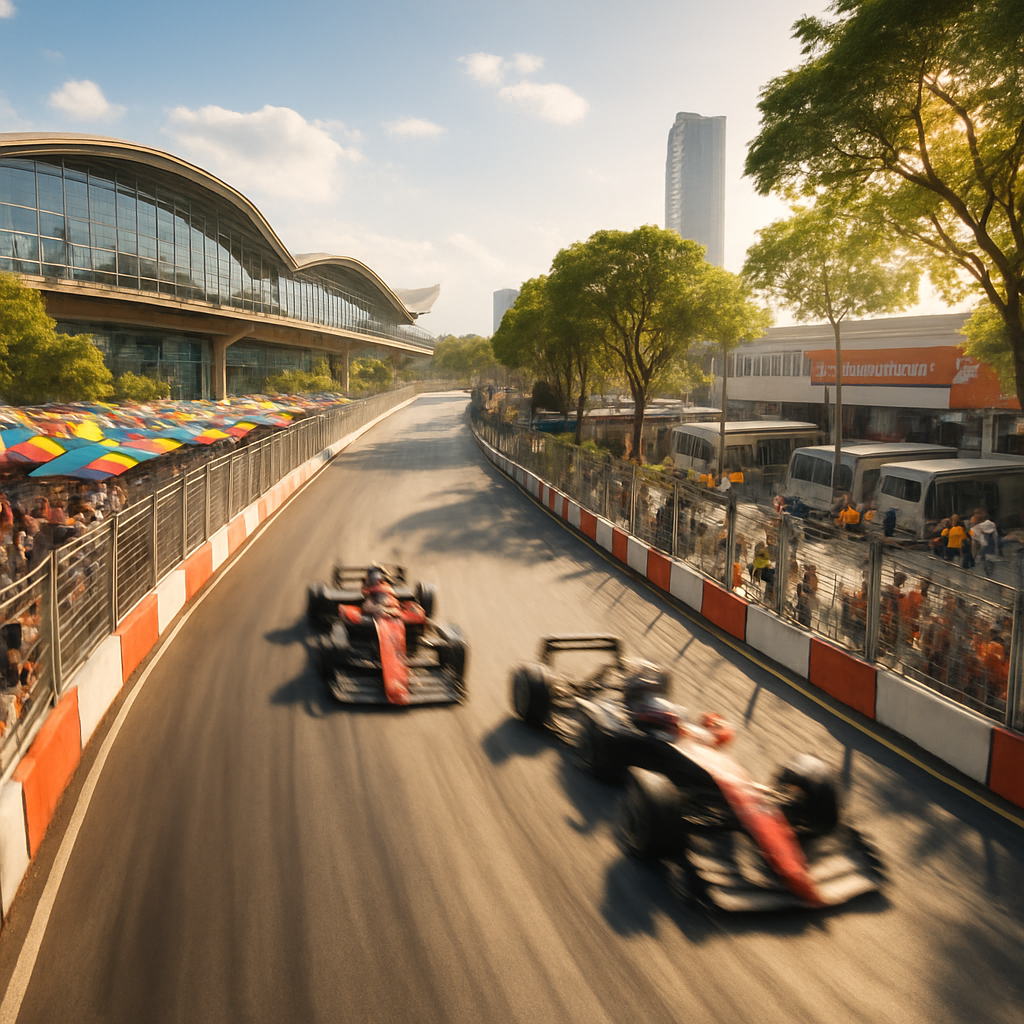
The roar of engines might one day echo through Bangkok’s leafy heart. Thailand’s Sports Authority (SAT) has pulled back the curtain on a proposed Formula One street circuit that cuts a 5.732-kilometre clockwise ribbon through the Chatuchak district — a bold plan that blends high-octane spectacle with some of the capital’s most familiar sights.

Imagine a lap that threads through eight headline locations: Krungthep Aphiwat Central Terminal, Mo Chit Bus Terminal, the world-famous Chatuchak Weekend Market, Queen Sirikit Park, Chatuchak Park, Vachirabenjatas Park (Suan Rot Fai), the PTT Public Company HQ and tracts of land owned by the State Railway of Thailand. Behind the Mo Chit Bus Terminal the design slots in the pit building and paddock — a neat logistical move that keeps the teams tucked right into the urban fabric.

The layout promises a classic street-circuit feel. Expect long, breath-taking straights interrupted by tight, low-speed hairpins and technical sequences that will test drivers’ precision — the same cocktail of speed and skill fans love at Monaco, Baku or Singapore. From a spectator’s point of view, it’s a recipe for overtakes, drama and photo-ready vistas of Bangkok’s parks and transport hubs.

If all the approvals fall into place, Bangkok could host the race for five years, from 2028 to 2032. Organisers have pencilled the event into a three-day weekend format (Friday to Sunday), likely in March to sit alongside early-season rounds in Australia, China and Japan. There’s also a whisper of a September slot as an alternative, which would tuck the race close to the Singapore Grand Prix on the calendar.

Of course, inviting Formula One into the middle of a bustling metropolis is never just lights-and-glamour. The SAT has been candid about the trade-offs. Using public roads will mean disruption: partial road closures are unavoidable during construction and in the lead-up to each race. Construction phases for sections of the circuit could take between one and two years, and the roads most likely to be affected include Kamphaeng Phet 2 to 6, Phahonyothin Road and Therd Damri Road.

Green spaces will feel the squeeze too. Queen Sirikit Park, Chatuchak Park and Vachirabenjatas Park would face partial closures during build and setup periods. Bus routes and stops will need rerouting to keep public transport flowing around the circuit zone, and vendors near the Chatuchak Weekend Market should prepare for intermittent disruptions during construction and setup — though SAT reassures that the market itself is expected to remain open on race weekends, with measures to handle larger tourist crowds.

Public sentiment matters: the SAT is collecting feedback through an online survey as part of the consultation process, inviting residents, drivers, park users and market sellers to share their thoughts on the proposal. It’s a sensible step — after all, this is not just a race for a handful of international visitors; it’s an event that would ripple through daily life in northern Bangkok.

From an urban-planning angle, the project is intriguing. A temporary transformation of roads, parks and transport hubs into a race-ready arena would be a complex choreography of engineering, traffic management and community relations. The upside could be significant: global exposure for Bangkok, a tourism boost during race weeks, and the kind of civic pride that comes with hosting a world-class sporting event.

Meanwhile, motorsport in Thailand isn’t waiting around. The country recently secured another multi-billion baht deal to extend its MotoGP hosting rights until 2031 — a sign that Thailand is doubling down on its international racing profile. Combine that with an F1 race in the capital and you have a multi-tiered motorsport calendar that stretches from superbikes to single-seater speed demons.

Nothing is final yet. The draft layout is the start of a conversation that will involve government bodies, transport authorities, park managers, vendors and residents. If the plan moves forward, Bangkokers can expect a phased construction schedule, careful traffic plans and, inevitably, a few years of patience while the city prepares to don its racing stripes.

Whether you’re a petrolhead dreaming of street-side grandstands or a weekday commuter imagining detours, the proposed Chatuchak circuit has already succeeded in doing what any great sporting proposition should: sparking debate, curiosity and a little bit of excitement. Keep an eye on the SAT survey if you want your voice heard — and start picturing those Sunday afternoons when the city’s parks and platforms become the backdrop to 300 km/h drama.


76Comments
Sort by:
JJoe··1 pts · 3 replies
J
Joe
Yes! Bangkok deserves a world-class event and this would put the city on the map. Imagine the tourists, the hotels full and the local businesses booming.
1
LDLarry Davis··1 pts
LD
Larry Davis
That sounds nice until you remember the traffic nightmare and the fact that parks will be partially closed for years.
1
Ggrower134·1 pts
G
grower134
Tourists bring money but they also bring higher prices and push out small sellers — not always a win for locals.
1
JJoe··1 pts
J
Joe
I get the disruption worries, but other cities manage it and the economic boost could pay for park restoration and better transport.
1
AAnanya··1 pts · 3 replies
A
Ananya
Turning parts of Queen Sirikit Park into a racetrack feels like selling our green lungs for a photo-op. Parks are for people, not speed tests.
1
PPongphob··1 pts
P
Pongphob
You make it sound binary. Temporary closures and careful scheduling can keep most park functions intact while the city benefits.
1
AAnanya··1 pts
A
Ananya
Temporary still means years of noise and lost weekend picnics for families who rely on those parks.
1
DMDr. Maria Chen··1 pts
DM
Dr. Maria Chen
From an urban-planning view, the key is mitigation: phased construction, green restoration funds, and long-term monitoring of biodiversity impacts.
1
SSofia··1 pts · 3 replies
S
Sofia
As someone who shops at Chatuchak every weekend, I'm terrified for the vendors. Plans say market stays open but who pays for lost customers during setup?
1
PParkVendor··1 pts
P
ParkVendor
We were told the market will operate but vendors depend on foot traffic and many can't afford months of lower income.
1
BBangkokMom··1 pts
B
BangkokMom
Vendors are overlooked in these shiny projects. Compensation and clear schedules must be guaranteed before they touch a shovel.
1
SSofia··1 pts
S
Sofia
Exactly. A cheerful press release doesn't replace an honest plan for livelihoods.
1
EEngineerSam··1 pts · 3 replies
E
EngineerSam
The engineering challenge is immense: temporary pit buildings, barriers on old roads, drainage, utilities relocation — not trivial in a dense area.
1
EEconProfLee··1 pts
E
EconProfLee
Cost-benefit should include hidden infrastructure upgrades, longer-term maintenance, and potential overruns. I doubt the initial estimates will hold.
1
EEngineerSam··1 pts
E
EngineerSam
Overruns are almost certain without strict contracts and contingency funds. The city must avoid vague promises and political rushes.
1
TTouristTom··1 pts
T
TouristTom
As a visitor, I want spectacle but I don't want the city to lose basic services. Sounds like a gamble on the public purse.
1
NNate··1 pts · 2 replies
N
Nate
Commuters will suffer. Closing Phahonyothin and Kamphaeng Phet roads even part-time ruins daily life for thousands.
1
UUser123··1 pts
U
User123
Agreed. Pristine Instagram shots don't matter when you can't get to work or school for months.
1
NNate··1 pts
N
Nate
The consultation survey is nice but real planning needs transparent traffic models and alternatives before any ground is broken.
1
KTK. Tan··1 pts · 2 replies
KT
K. Tan
F1 brings brand value and global media. The PR alone could spur investment into better transit for the whole city.
1
MBMichael B··1 pts
MB
Michael B
PR is fleeting. Cities like Baku and some others paid dearly with little lasting benefit beyond a few years of headlines.
1
KTK. Tan··1 pts
KT
K. Tan
That's true in cases of poor planning. But if Bangkok ties the race to a broader infrastructure plan, the legacy could be meaningful.
1
AMAunt May··1 pts · 2 replies
AM
Aunt May
Ooo a race with fast cars! That would be so cool to watch from the park.
1
เเด็กชายมิค··1 pts
เ
เด็กชายมิค
My school trip would be canceled, but I want to see the cars zoom and maybe take pictures for my collection.
1
AMAunt May··1 pts
AM
Aunt May
If school trips get canceled then maybe they can make special kid days instead so we all still go.
1
DMDr. Maria Chen··1 pts · 2 replies
DM
Dr. Maria Chen
This is an urban choreography problem: integrating transport, green space, informal economies and event logistics requires cross-departmental governance that's rare in practice.
1
EEconProfLee··1 pts
E
EconProfLee
Indeed, governance failure is the main risk. Large events often proceed under political timelines, not realistic project management.
1
DMDr. Maria Chen··1 pts
DM
Dr. Maria Chen
Exactly — and the public survey is good optics but not a substitute for binding stakeholder agreements and enforceable vendor protections.
1
Ggrower134··1 pts · 2 replies
G
grower134
Environmentally, this is tone-deaf. More traffic, noise, and temporary deforestation to suit spectacle isn't climate-smart planning.
1
RSR. Singh··1 pts
RS
R. Singh
You assume it increases net emissions. If managed with low-emission logistics and compensatory planting, the net could be neutral or small.
1
Ggrower134··1 pts
G
grower134
Compensatory planting often becomes greenwashing if concrete work and soil compaction destroy urban ecosystems for years.
1
LLily··1 pts · 2 replies
L
Lily
Who will enforce traders' rights? Saying the market stays open sounds like political theatre unless there are rent protections and clear staging plans.
1
PParkVendor··1 pts
P
ParkVendor
We need legal guarantees, not promises. Many of us have no contracts and can't just shut and reopen with confidence.
1
LLily··1 pts
L
Lily
Then they should make those guarantees public now. Vendors can't be collateral damage.
1
SSamira··1 pts · 2 replies
S
Samira
This smells like another wave of gentrification: global events invite upscale development, which squeezes ordinary residents out.
1
MWMr. Wong··1 pts
MW
Mr. Wong
Events can be catalysts for improvement but also for displacement. The city must create affordable housing and protect small businesses first.
1
SSamira··1 pts
S
Samira
Protecting locals has to be done before any razzmatazz starts, not after the developers have bought the land.
1
TTony··1 pts · 2 replies
T
Tony
Noise at 300 km/h is more than just loud cars; it affects wildlife in parks and children's health. We need proper studies on long-term noise impact.
1
ZZ··1 pts
Z
Z
Studies are easy to commission. The question is whether authorities will act on them or ignore inconvenient findings.
1
TTony··1 pts
T
Tony
If they ignore the results, then the project is political rather than evidence-based, and that should alarm everyone.
1
HHannah··1 pts · 2 replies
H
Hannah
A five-year deal may lock Bangkok into a schedule that outlives public appetite. What if the race underperforms and taxpayers still foot maintenance bills?
1
CChris··1 pts
C
Chris
Long-term contracts can be renegotiated, but the sunk costs remain. Risk allocation in the contract matters hugely.
1
HHannah··1 pts
H
Hannah
Exactly — transparent contracts with risk-sharing clauses should be published before approvals.
1
PPim··1 pts · 2 replies
P
Pim
Don't forget the cultural impact — turning parks into commercial stages changes how citizens relate to public spaces.
1
MWMr. Wong··1 pts
MW
Mr. Wong
Public spaces are living civic goods, not props. Respecting that is crucial or you lose community trust.
1
PPim··1 pts
P
Pim
Trust, once broken, is hard to rebuild. The city should build trust now, not assume it will follow the money.
1
EEconProfLee··1 pts · 2 replies
E
EconProfLee
If structured well, the event could catalyze productive investment in transport and hospitality; if structured poorly, it's just a fiscal drain.
1
EEngineerSam··1 pts
E
EngineerSam
So the question becomes whether Bangkok has the institutional capacity to structure complex PPPs and enforce standards.
1
EEconProfLee··1 pts
E
EconProfLee
And whether civil society and vendors are given binding seats at the table — otherwise you're planning for investors, not citizens.
1
TTouristTom··1 pts · 2 replies
T
TouristTom
I'd fly in for a weekend if tickets were reasonable. But if locals are inconvenienced or prices skyrocket, I won't feel great about it.
1
BBangkokMom··1 pts
B
BangkokMom
Visitors should consider local impacts. Responsible tourism helps, but organizers must put locals first.
1
TTouristTom··1 pts
T
TouristTom
I agree — sustainable events are better for everyone and more likely to survive long-term.
1
SSam··1 pts · 2 replies
S
Sam
Corruption risk worry: major events often come with opaque budgets and sweetheart deals. Transparency should be mandatory.
1
LLily··1 pts
L
Lily
Yes, publish all contracts, budgets and impact assessments. No secrecy if public roads and parks are used.
1
SSam··1 pts
S
Sam
Without transparency, the social license evaporates and protests become inevitable.
1
DPDr. Pongsak··1 pts · 2 replies
DP
Dr. Pongsak
Seasonal timing matters: March would avoid monsoon but could conflict with local festivals and school calendars. That trade-off must be weighed.
1
BBangkokMom··1 pts
B
BangkokMom
Scheduling impacts families profoundly. Weekend events are one thing, but months of build-up is another.
1
DPDr. Pongsak··1 pts
DP
Dr. Pongsak
Community calendars should be a hard constraint in the scheduling model, not an afterthought.
1
ZZ··1 pts · 2 replies
Z
Z
I'm pro events, but this plan smells like prioritizing spectacle over equity. Who benefits and who pays the price needs clear answers.
1
KTK. Tan··1 pts
KT
K. Tan
Benefit distribution can be engineered. The question is political will to ensure equitable sharing of gains.
1
ZZ··1 pts
Z
Z
Political will is the scarce resource here, sadly.
1
PPongphob··1 pts · 2 replies
P
Pongphob
Fans who want the race should show up at the consultation and propose constructive mitigations, not just online shouting.
1
SSofia··1 pts
S
Sofia
Constructive proposals are helpful, but vendors need binding compensation, not more platitudes.
1
PPongphob··1 pts
P
Pongphob
Fair — binding protections should be a stipulated part of any agreement.
1
RSR. Singh··1 pts · 2 replies
RS
R. Singh
Compare case studies: Singapore used long-term planning to make its street race an asset; others became white elephants. Learn from both.
1
DMDr. Maria Chen··1 pts
DM
Dr. Maria Chen
Exactly. Comparative analysis should be part of the environmental and social impact assessment before approval.
1
RSR. Singh··1 pts
RS
R. Singh
And public participation must be meaningful, not perfunctory. Otherwise you replicate mistakes.
1
LLiam··1 pts · 2 replies
L
Liam
Can we at least demand a clause that guarantees market access and rental protections for small traders? That would make the plan tolerable.
1
PParkVendor··1 pts
P
ParkVendor
Yes. Legal rental protection would be a lifeline for many of us.
1
LLiam··1 pts
L
Liam
Then push for that in the survey and through local representatives. It's a concrete demand.
1
SSamira··1 pts · 2 replies
S
Samira
If they do this, I want cultural programming included — traditional performances, local food stalls prioritized, and not just corporate suites.
1
MWMr. Wong··1 pts
MW
Mr. Wong
Cultural inclusion matters. Otherwise it's a foreign product dropped into a city with no roots.
1
SSamira··1 pts
S
Samira
Exactly. It should celebrate Bangkok, not displace it.
1
TTony··1 pts · 2 replies
T
Tony
I'm also concerned about emergency services access during events. Rerouting ambulances for a race is unacceptable unless fully planned.
1
EEngineerSam··1 pts
E
EngineerSam
Emergency access plans must be tested in drills well before the first race and published for accountability.
1
TTony··1 pts
T
Tony
Public safety can't be a secondary consideration; make it non-negotiable.
1
