Bangkok Man Jailed for Defacing Temple: Suttawee Soikham's Bold Stance Against Lese-Majeste
Two police officers sprang into action last year on March 28, hastening to arrest a man they spotted defacing the hallowed walls of Bangkok’s Temple of the Emerald Buddha. Armed with black spray paint, the perpetrator…
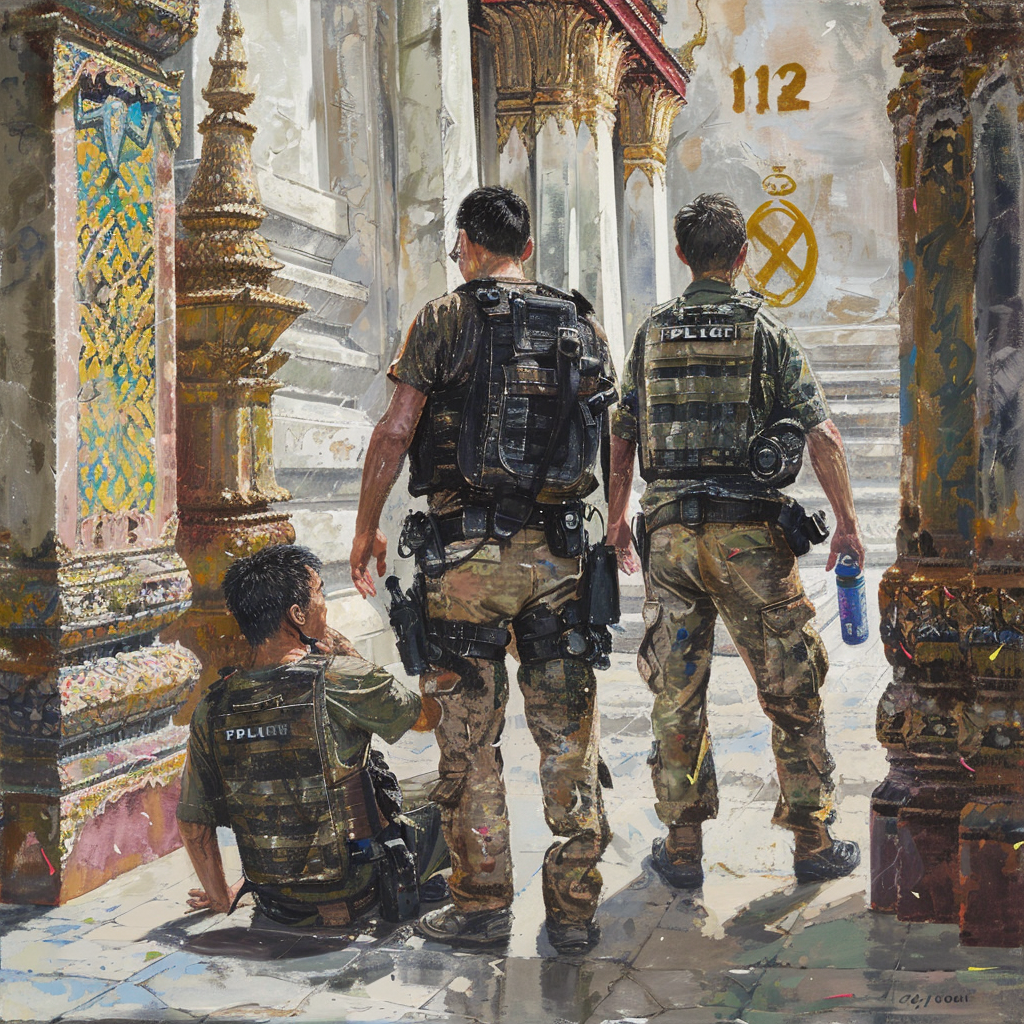
Two police officers sprang into action last year on March 28, hastening to arrest a man they spotted defacing the hallowed walls of Bangkok’s Temple of the Emerald Buddha. Armed with black spray paint, the perpetrator brazenly scribbled and then crossed out the infamous number 112, a nod to Thailand's controversial lese-majeste law. This audacious act, captured on video, sent ripples through the community.
The man behind the spray can, Suttawee “Bang-urn” Soikham, a 26-year-old from Khon Kaen, now faces eight months behind bars for his rebellious venture. The original sentence was a year, but his confession earned him a reduction by a third—no suspension included. Unbowed, Suttawee plans to appeal the Criminal Court's decision and has secured bail to do so.
Rewind to that fateful day—March 28. Atop the ancient stones of the temple’s exterior, situated within the grandeur of the Grand Palace compound in Bangkok’s Phra Nakhon district, two officers witnessed Suttawee's act of defiance. The number 112 symbolizes Section 112 of Thailand's Criminal Code, addressing lese-majeste offenses. With an anarchist symbol to boot, this was an unmistakable political statement.
The police promptly nabbed Suttawee and whisked him to the Metropolitan Police Division 6 for interrogation. But his story was far from over. Fast forward to Thursday morning, and Suttawee, alongside his lawyer, braved the court hearing with resolve. Two of his friends, themselves ensnared by similar charges, stood by him in a show of solidarity.
In his verdict, the court found Suttawee guilty of violating several laws, including the Ancient Monuments, Antique Objects and National Museum Act, as well as the Cleanliness Act. Despite his guilty plea and subsequent reduction in sentence, the verdict stood firm: eight months in jail, without suspension.
However, Suttawee’s saga has entangled others. Two journalists, present during the act of vandalism, are also under the legal microscope. Curiously, charges were not brought against them until February 13 of this year. The reporters in question—freelance photographer Nattaphon Phanphongsanon and Nuttaphol Meksobhon of the online news outlet Prachatai—claim they were merely documenting events, with no involvement in the actual graffiti.
Yet, police contend they hold CCTV footage capturing the duo alongside Suttawee, supposedly plotting the spray-painting misadventure. The lack of audio, however, throws a veil of ambiguity over their purported discussions. What were they really talking about? It remains unclear.
Now, as Suttawee prepares for his appeal, his case continues to elicit broader questions around freedom of expression, political dissent, and the stringent lese-majeste laws in Thailand. His friends and supporters, along with the two journalists, represent the many voices striving to be heard in a complex and charged socio-political landscape.
As the narrative unfolds, one can’t help but ponder: will justice prevail, or will Suttawee’s audacious act paint an indelible mark on the country's history of civil liberties? Only time and a higher court's judgment will tell.



Comment verification
Step 1 of 3
Verify your email once to publish your comment. Your email is never shown publicly.
Enter the 6-digit code sent to .
Choose the display name shown next to your comments.