Thailand

Bangkok Takes Bold Steps Towards Emission Control: A Future of Clean Air Awaits

Amidst the bustling streets of Bangkok, a war is being waged against a silent adversary—air pollution. The BMTA’s Zone 4 Depot, nestled along the vibrant Sathupradit, Ratchadaphisek Road in the heart of Yannawa…
Bangkok Takes Bold Steps Towards Emission Control: A Future of Clean Air Awaits

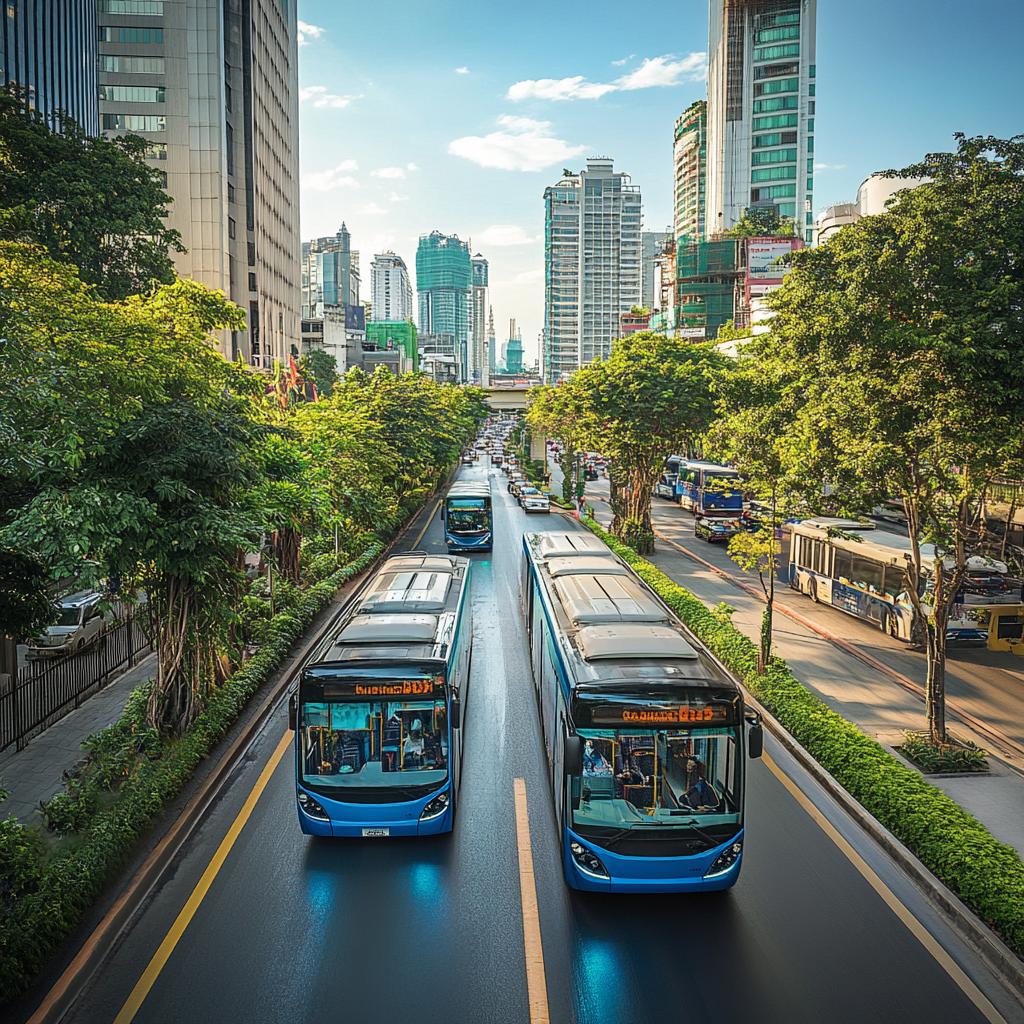
Amidst the bustling streets of Bangkok, a war is being waged against a silent adversary—air pollution. The BMTA’s Zone 4 Depot, nestled along the vibrant Sathupradit, Ratchadaphisek Road in the heart of Yannawa District, served as the battleground for recent inspections targeting the notorious PM2.5 microparticulates that linger in the city air like an unwelcome guest.

The inspection team descended upon five unsuspecting buses, screening them for compliance with the smoke emissions standards that dictate whether they are fit to roll through the city streets. In what was a somewhat encouraging outcome, four buses managed to meet the stringent requirements, keeping their black smoke emissions within the permissible opacity limit. However, a fifth contraption, presumably with a tainted tailpipe, overshot the standard 30% opacity threshold. The BMTA has been handed a stern directive—to fix this rebel bus before it's allowed back on the roads.

While one might think the saga ends there, the plot has thickened considerably. “Would you believe it?” remarked Phronphrom, gesturing towards the smoke trails the buses left in their wake. “Even those buses that technically ‘passed’ the tests are still puffing out visible clouds of ‘white smoke’ like little steam engines. Quite ironically, these clouds contribute to the city's pollution problem despite being under the legal limit. It's like asking someone to eat only slightly expired cheese—doable but not advised.” While these vehicles adhere to the current 30% opacity cap, there's no doubt that simply meeting this outdated benchmark is akin to stepping over a low bar in the marathon against environmental degradation.

In an ambitious twist to the tale, the city stewards are eyeing the horizon with plans to refine stringent regulations further. There's talk of slashing the permissible opacity to around 15%, pushing the boundaries for what constitutes a clean convoy. The future they envision, however, is not simply shrouded in tighter regulations but is electric—literally. As whispers of switching gears towards electric vehicles (EVs) gain volume, there's a tangible hope that Bangkok's streets will soon resonate with the quiet hum of progress, casting out the city's smoky, old-school woes.

Perhaps in this dance between regulation and innovation, lies the key to a cleaner future. The journey towards clean air in Bangkok is certainly not set to proceed quietly into the night, nor is it one devoid of challenges. But if there’s one thing to take away from all this, it’s clear—a metamorphosis is imminent, and the BMTA is smack dab in the middle of the action. Here's to hoping that the vision of an emission-free skyline stretches beyond dreams and lands firmly on the concrete streets of tomorrow.


28Comments
Sort by:
MLMarie L.··1 pts · 2 replies
ML
Marie L.
Why did it take so long for them to realize buses are a problem? Bangkok should have moved to electric years ago.
1
Cchangeman··1 pts
C
changeman
It's not that simple. Infrastructure for electric vehicles is a huge investment. Not every city can just flip a switch.
1
MLMarie L.·1 pts
ML
Marie L.
Sure, but the planet doesn't wait. If we keep dragging our feet, the damage will be irreversible.
1
Eeco_jess··1 pts · 2 replies
E
eco_jess
Interesting that they're targeting just buses. What about all the millions of cars and tuk-tuks?
1
LDLarry D··1 pts
LD
Larry D
Right, but you gotta start somewhere. And buses are at least a scalable first step.
1
Jjoe321··1 pts
J
joe321
I think the sheer volume of buses makes them a more obvious target.
1
PGProf. Green··1 pts · 2 replies
PG
Prof. Green
Switching to electric buses sounds great, but has anyone considered the environmental cost of producing those batteries?
1
Ssustainable_sean··1 pts
S
sustainable_sean
Exactly, there's no perfect solution. The manufacturing impact of EVs is significant.
1
Eeco_jess··1 pts
E
eco_jess
But it's a step in the right direction. Long term, the benefits outweigh the initial cost.
1
AWAdam W.··1 pts · 2 replies
AW
Adam W.
This is all smoke and mirrors, pun intended. Fixing a few buses won’t change the air quality overnight.
1
MLMarie L.··1 pts
ML
Marie L.
I mean, it's not like they're claiming it will. It’s clearly a first step in a bigger strategy.
1
Cchangeman··1 pts
C
changeman
Exactly! Every big change starts small. You have to give credit where it’s due.
1
SBSara B.··1 pts · 1 reply
SB
Sara B.
I wonder if the locals are engaged enough with these changes. Are they aware of the impacts?
1
LDLarry D··1 pts
LD
Larry D
Good point. Public awareness is crucial. But I think most people notice the air quality at least.
1
UUrbanMyth··1 pts
U
UrbanMyth
Don’t forget that cleaner air means healthier people. Long-term healthcare savings should be considered too.
1
NTNaomi T.··1 pts
NT
Naomi T.
I lived in Bangkok for years and the pollution is unbearable. Glad they're finally doing something about it.
1
BBen85··1 pts · 1 reply
B
Ben85
Great move Bangkok! but let’s also put pressure on industrial emissions. That’s the real monster here.
1
Aalex_enviro··1 pts
A
alex_enviro
Absolutely! Industry often gets away because they're harder to regulate publicly.
1
Ggretafan··1 pts · 2 replies
G
gretafan
Every big city dealing with pollution should look to Bangkok. This initiative is commendable!
1
PGProf. Green··1 pts
PG
Prof. Green
While promising, it's far from a gold standard yet. There's still much work needed.
1
LDLarry D··1 pts
LD
Larry D
Yeah, other cities might also have different challenges, so solutions aren't one-size-fits-all.
1
CCuriousMind··1 pts · 1 reply
C
CuriousMind
With the global trend shifting towards EVs, when will public transport fully transition?
1
Ssustainable_sean··1 pts
S
sustainable_sean
That'll probably depend on government support and investment. It could take decades.
1
PPeterP··1 pts
P
PeterP
I hope this is just the start and Bangkok pushes more for green space too. Plants can help improve air quality.
1
Ggrower134··1 pts
G
grower134
As someone passionate about trees, I say plant more! Mix tech solutions with green ones.
1
DKDylan K.··1 pts
DK
Dylan K.
I still think the government’s budget could be better allocated, but cleaning the air is a noble goal.
1
SSimple_Alice··1 pts
S
Simple_Alice
What about all the bikes and motorcycles? They buzz around like flies in Bangkok! Shouldn’t they be next?
1
TGTommy G··1 pts
TG
Tommy G
Mopeds and bikes are smaller contributors compared to buses though. Plus, they're more fuel-efficient per person.
1
