Bangkok Taxi Protest: Worapol Kamkhuntod Leads Charge Against Government Favoritism of Grab
The sun blazed fiercely over Bangkok's bustling streets on May 21, 2025, but the real heat was outside Government House, where over 50 agitated taxi drivers gathered, their spirits as fiery as the midday sun. Armed with…
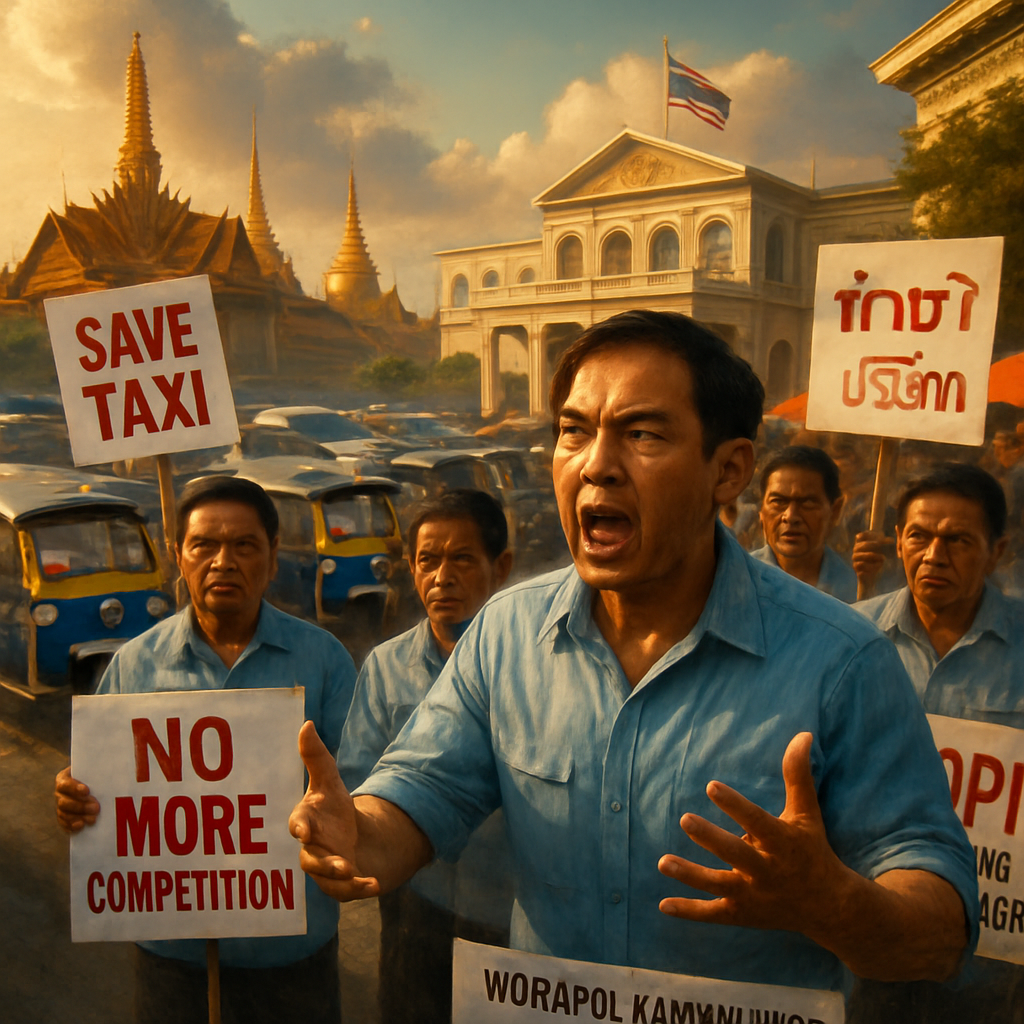
The sun blazed fiercely over Bangkok's bustling streets on May 21, 2025, but the real heat was outside Government House, where over 50 agitated taxi drivers gathered, their spirits as fiery as the midday sun. Armed with placards and an indomitable resolve, they staged a vociferous protest, aiming their pent-up frustrations squarely at Prime Minister Paethongtarn Shinawatra and Transport Minister Suriya Juangroongruangkit. Their beef? The perceived "unfair favoritism" toward the ride-hailing giant Grab, which had been given access to coveted pick-up points at Suvarnabhumi International Airport.
The grizzled, resilient voices of traditional Bangkok cabbies resonated through the air, led by their vocal leader, Worapol Kamkhuntod, the charismatic head of the Association of Professional Drivers of Public Taxi Vehicles. With fire in his eyes and a mic in hand, Worapol painted a vivid picture of betrayal, accusing the government of neglecting its own citizens in favor of a foreign entity. "If the government chooses Grab, it’s treason," he declared, his voice tinged with both anguish and anger. "Grab is not a Thai company. Why are they getting all the benefits while we suffer?"
For Worapol and the throng of drivers around him, the streets aren't mere tarmac; they are lifelines—a symbiotic network that feeds their families and keeps the city's heart beating. But now, it seemed, an invader had entered their ecosystem, upsetting the delicate balance. The group was adamant in their demands for the swift repeal of two ministerial regulations that they claimed were skewed to benefit the more corporately-backed ride-hailers, potentially sounding the death knell for the traditional taxi business.
A sense of urgency crackled in the air as Worapol described the existential threat facing taxi drivers. "Airports are the windows to our country. When tourists get scammed or have bad experiences, taxi drivers are always blamed, even if it’s not us. It ruins our reputation," he lamented to reporters, including those from Amarin TV who were capturing the unfolding drama.
To many tourists, Suvarnabhumi Airport is the first step onto Thai soil, and a ride from there can set the tone for their whole visit. But as the taxi drivers pointed out, platforms like Grab, buoyed by foreign investment and sleek apps, are providing competition that’s tough to beat. It's not just a question of technology, but of preserving a way of life that’s as much a part of Bangkok's fabric as its golden temples and vibrant street markets.
"This isn’t about politics," Worapol insisted, trying to cut through the haze of media narratives. "It’s about survival. The government promised us dignity and fair work. Now they’ve sold us out to the apps." It’s the classic tale of David vs. Goliath, of traditional craftsmen battling sprawling tech titans determined to reshape the world in binary.
The situation was tense, with the threat of escalations hanging in the air. The drivers warned that if Grab remained at the airport, they would answer with dramatic acts of defiance—road blockades that could potentially cripple the bustling hub at Suvarnabhumi. Their ultimatum was clear: take decisive action against Grab, or watch as the engine of traffic and tourism grinds to a halt.
With tensions set to escalate, eyes and cameras remained fixed on the Prime Minister’s office, waiting to see whether the government would placate or challenge this groundswell of discontent. As Bangkok's vibrant tapestry of sounds and stories absorbed this new chapter of intrigue, it promised to be anything but a silent standoff. In this thrilling tale of city streets and cyber revolutions, the next move would define not just the players’ fate, but perhaps the very future of Bangkok's storied roads.



Comment verification
Step 1 of 3
Verify your email once to publish your comment. Your email is never shown publicly.
Enter the 6-digit code sent to .
Choose the display name shown next to your comments.