Bangkok's Public Transport Revolution: Governor Chadchart Sittipunt's 20-Baht Train Fare Ambition
Bangkok is a dazzling metropolis teetering on the brink of a public transport revolution. At the heart of this evolution stands Governor Chadchart Sittipunt, who wears both the lantern of ambition and the shackles of…
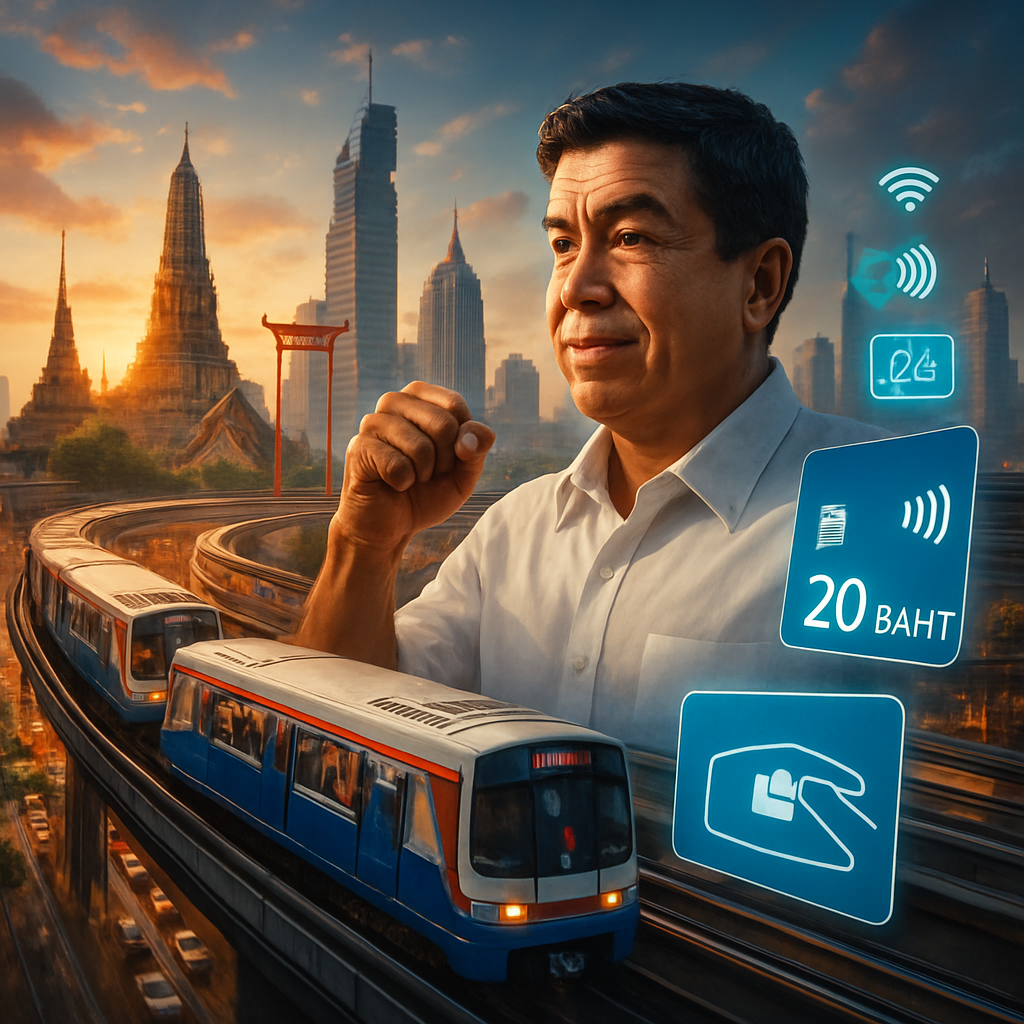
Bangkok is a dazzling metropolis teetering on the brink of a public transport revolution. At the heart of this evolution stands Governor Chadchart Sittipunt, who wears both the lantern of ambition and the shackles of reality. The tantalizing prospect of a city-wide flat-rate electric train fare at a mere 20 baht is poised to ease the financial burden on Bangkokians and lure more commuters onto bustling platforms. But, as with any grand plan, the fine print seldom reads as smoothly as a thriller novel.
The grand announcement from government elites paints a vivid picture: By October 1, 2025, eight train lines weaving through Bangkok and its broader metropolitan hive must all harmonize to a melodious 20-baht fare. This policy promises to revamp urban mobility, akin to upgrading from dial-up to broadband, injecting velocity and ease into daily commutes. A digital usher named the Thang Rat app eagerly awaits to onboard passengers in August, where they will signal their interest and grab digital tickets using either crisp EMV contactless cards or trusty Rabbit Cards. A grand sum, 5.5 billion baht, stands ready to cushion the scheme, ensuring wallets stay plump while encouraging an environmentally friendly rush hour.
However, Chadchart candidly acknowledged that the journey from visionary concept to functional reality winds through a maze of existing concession agreements with private operators. These are not your average speed bumps; instead, they are intricate legal webbing cast over time, demanding navigation akin to a dance with contracts, negotiations, and compromise.
The Bangkok Metropolitan Administration (BMA), led by Chadchart, is diligently scribbling amendments to these complex concession contracts. Their mission? To delineate an equitable financial compensation model that squares operating costs against the government's generous subsidy proposal. Like trimming sails on a stormy sea, they must balance pressures and costs, a task demanding both precise arithmetic and political savvy.
At the core of this venture, a diverse committee convenes—a modern-day council tasked with deciphering feasibility and extracting value from the compensation blueprint. Engaged in fervor and debate, they dissect the layers of existing agreements and their appendages, seeking pathways to overhaul intricate older extensions and align them with visionary new norms.
Chadchart, ever pragmatic yet optimistic, acknowledges the spectrum of contractual nuances requiring resolution before this sleek 20-baht train fare slides into operational life come October. Each unsigned clause, each lingering point awaits its day in the sun—a leap yet to be made before the narrative redefines how Bangkok thinks about public transport.
In this thrilling saga, the amalgamation of policy, technology, and legal strategy forms a riveting backdrop—an inspiring narrative where the promise of accessibility to the masses challenges operational inertia. It’s a story of daring aspiration against logistical might—a tale of how modern cities aspire to orchestrate harmony in their rhythm of progress.



Comment verification
Step 1 of 3
Verify your email once to publish your comment. Your email is never shown publicly.
Enter the 6-digit code sent to .
Choose the display name shown next to your comments.