Bangkok's Red Line Rail Revamp: SRT's Strategic Plan to Enhance Commuter Experience
Imagine this: You're standing amidst the hustle and bustle of Bangkok, a city pulsating with life, and there, slicing through the urban sprawl like a red ribbon of modernity, is the Red Line electric commuter train.…
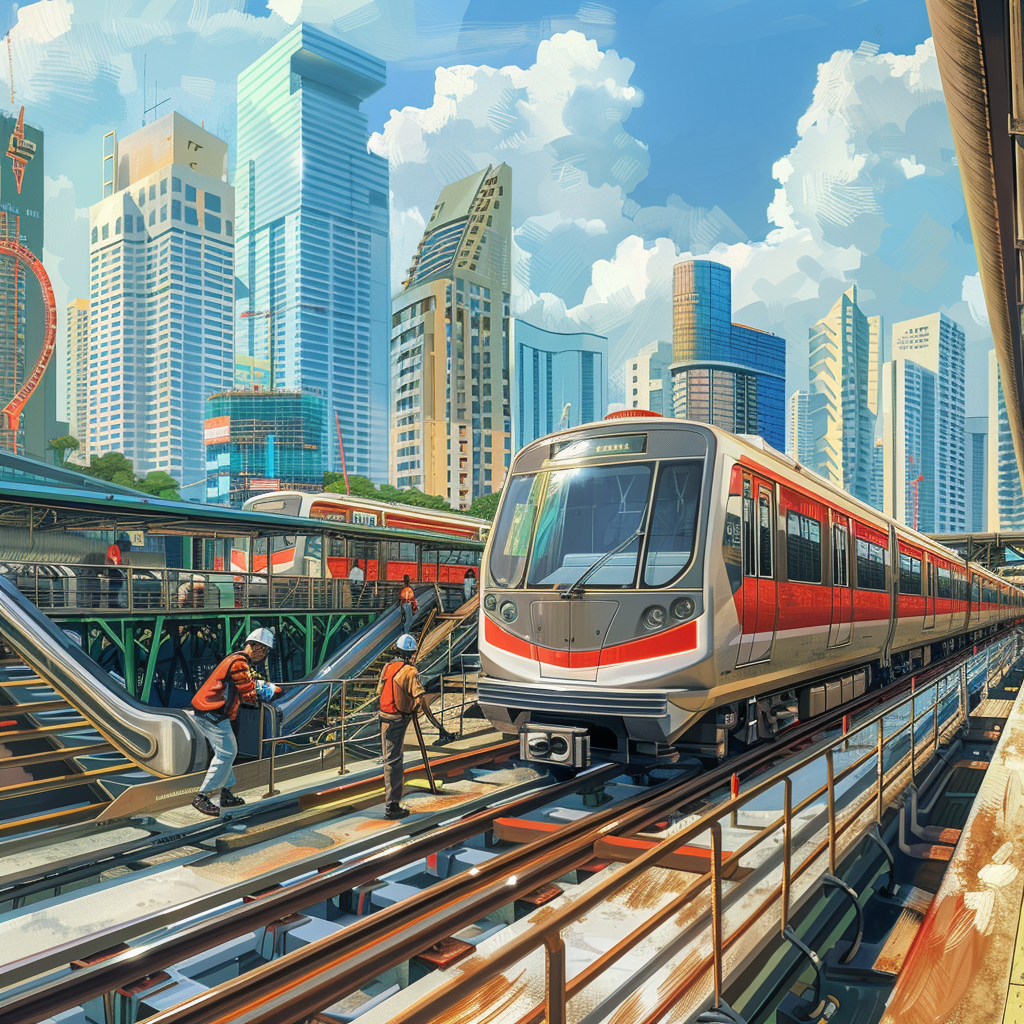
Imagine this: You're standing amidst the hustle and bustle of Bangkok, a city pulsating with life, and there, slicing through the urban sprawl like a red ribbon of modernity, is the Red Line electric commuter train. This marvel of transportation, seen at the majestic Krung Thep Aphiwat Central Terminal, isn't just a train; it's the heartbeat of the city, connecting dreams, lives, and destinies.
But, as with all grand tales of engineering feats, there comes a moment of challenge. Recently, the guardians of this metallic steed, the State Railway of Thailand (SRT), embarked on a quest. It was discovered, during an odyssey of inspection, that not all escalators and elevators were in service, much to the concern of daily commuters. In a realm where time is the currency, such hindrances could not be left unattended.
Ekarat Sriarayanphong, the head of the SRT governor's office, emerged as the herald of news, revealing that out of 228 escalators, a whopping 47 had given in to the wear and tear of their noble purpose. Furthermore, of the 133 elevators standing guard across the line, 22 had succumbed to similar fates. Yet, despair not, for this was not the end, but a call to action.
The SRT, in its wisdom, devised a plan of mythical proportions, segmenting the task of revival into three epic contracts. The first of these sagas involves the restoration of escalators and elevators at the Krung Thep Aphiwat Central Terminal and Chatuchak stations, promising a phoenix-like resurgence by June.
The second act of this epic sees the focus shift to eight stations, namely Wat Samian Nari, Bang Khen, Thung Song Hong, Lak Si, National Housing Authority, Don Mueang, Lak Hok, and Rangsit. Here, the repairmen and women, like skilled sorcerers, will weave their magic to bring back to life the silent machines within a mere 90 days.
But the tale does not end here. The third and final contract is perhaps the most ambitious—a pact to be signed with a single contractor who shall take under their wing the maintenance of all escalators and elevators along the Red Line. This masterstroke by Mr Ekarat promises a future where the flow of life and commerce encounters minimal disruptions, ensuring that the heart of Bangkok beats without pause.
The Red Line, in its essence, is more than just an electric commuter rail service. Operated with zeal by the SRT, it’s a lifeline that binds the historic Taling Chan Station in Bangkok's Taling Chan district to the bustling Rangsit Station in Pathum Thani. Spanning 41.3 kilometres, it’s a testament to human ingenuity and the undying spirit of progress.
So, as the sun sets on the city of angels, Bangkok, and the Red Line continues its ceaseless journey, we're reminded of the silent battles fought to keep our world moving. It's a narrative of resilience, a story where every repair and every maintained escalator and elevator adds a line to the epic chronicle of a city that never sleeps, but always dreams.



Comment verification
Step 1 of 3
Verify your email once to publish your comment. Your email is never shown publicly.
Enter the 6-digit code sent to .
Choose the display name shown next to your comments.