Bangkok's Traffic Solution: Will Congestion Charges Fuel Public Transport Revolution?
As the bustling metropolis of Bangkok contemplates a new frontier in its battle against traffic congestion, the Transport Ministry's proposal to implement congestion charges on some of its busiest roads has stirred up…
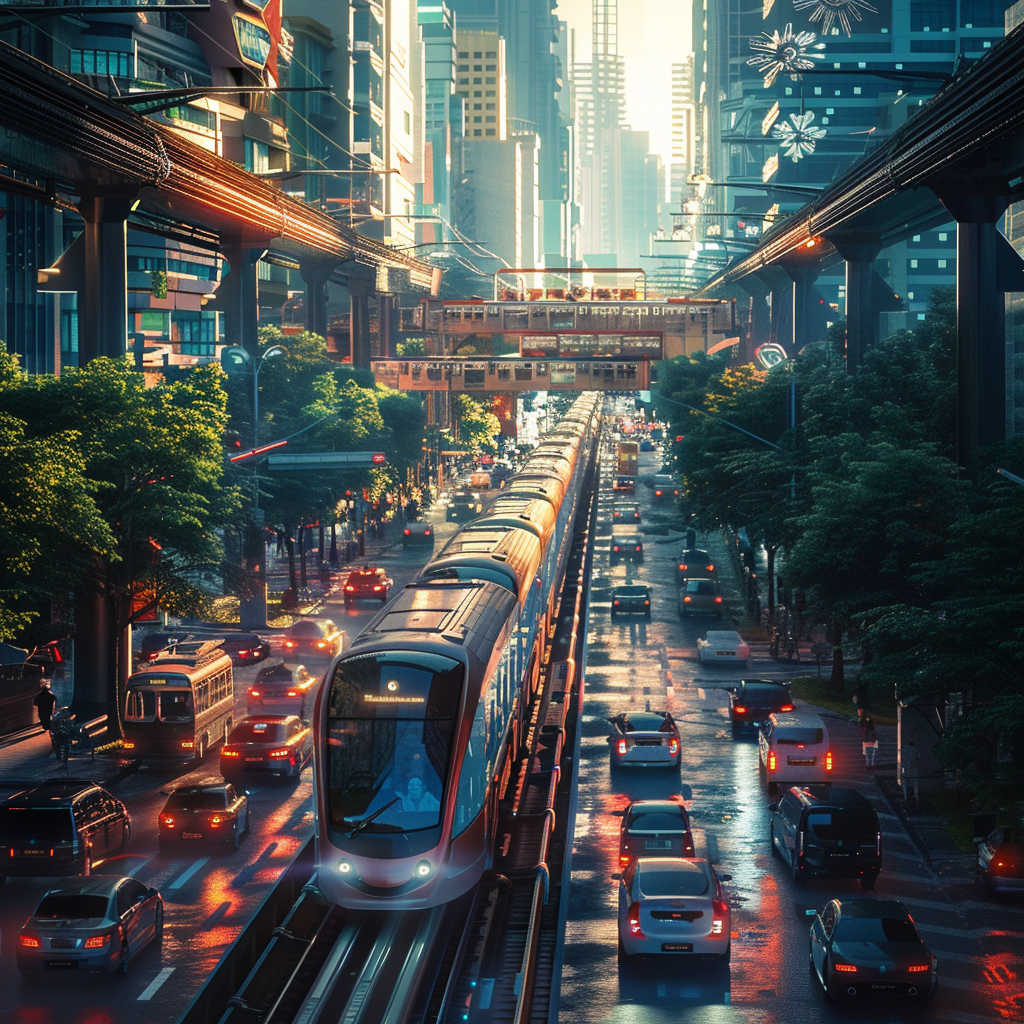
As the bustling metropolis of Bangkok contemplates a new frontier in its battle against traffic congestion, the Transport Ministry's proposal to implement congestion charges on some of its busiest roads has stirred up quite the debate. This ambitious initiative aims not just to unclog the city's notorious traffic but to nudge drivers onto public transportation. In a move that could revolutionize travel, funds raised from congestion fees are earmarked to subsidize a tantalizing 20-baht flat-rate fare for the city's electric trains—making the clunky commute a tad more streamlined.
Delving into the feasibility of this proposal, experts at the Bangkok Post engaged with various stakeholders, including the Office of Transport and Traffic Policy and Planning (OTP), urban planning pundits, consumer rights advocates, police officers, and motorists alike. The burning question on everyone's lips: can this plan really uncork the bottle-necked roads of Bangkok, and is the mass transit system ready to shoulder the weight of change?
The OTP's director-general, Panya Chupanich, underlined a solid groundwork laid through a pre-feasibility study conducted from 2019 to 2022, in tandem with the German agency GIZ. With the next phase supported by the UK Pact (Partnering for Accelerated Climate Transitions), a consultant selection looms in December, eyeing a comprehensive study to unfurl over the next two years. Target areas sprawled across 107 square kilometers of inner-city landscapes, encompassing Klong Toey, Phaya Thai, Dusit, Din Daeng, and Sathon.
The crux of the study hinges on whether a congestion charge of about 45-50 baht could deter private vehicle usage and highlight the potential for broader benefits. Tech-savvy cameras will dot designated zones, capturing license plates to uphold the system’s integrity.
Panya illustrates that congestion measures have borne fruit in many a metropolis, from London's initial grumblings to eventual acceptance and Milan's dual focus on vehicular control and pollution management.
"In tandem with the electric train system's reach, we’ll fund auxiliary services like buses and 'song thaews' to diversify transport options," Panya adds. Those residing in the charged zones may even see a discount or waive of the fee, painting a hopeful picture of accessibility.
Academic voice, Assoc Prof Panit Pujinda from Chulalongkorn University, chimed in, likening congestion charges to tools wielded by major cities globally. New York City and Singapore's experiences serve as data-rich tapestries, laying out strategies ranging from subway overhauls to traffic flow targets.
However, Panit notes a distinct deviation in Thailand's approach, seeking to subsidize fares rather than directly combat congestion or pollution—tasks still crucial but secondary. Yet he warns of a common plight among Thai commuters: the "first-mile and last-mile issue." The reliance on motorcycles or taxis to access public transport highlights an area ripe for development.
Meanwhile, Saree Aongsomwang, secretary-general of the Thailand Consumer Council (TCC), stressed the need for bolstering bus services—a backbone of the transport network's feeder system. She advocated reallocating funds from freeway expansions to bus improvements, envisioning routes seamlessly integrated with electric train systems.
As public sentiment reverberates through the city's veins, voices like that of taxi driver Chor Sua-klin express concerns. "There's always someone willing to pay," he says, worried how fees could impact his livelihood. Yet, he echoes a desire for sustainable traffic solutions, perhaps suggesting an age limit for cars should be considered to mitigate breakdown-induced traffic woes.
Office worker Worawit Prungpaopan also expressed skepticism over the impact of fees on public transport upgrades, reflecting a wider apprehension about the plan's execution. The notion lingers that bettering public transport could alleviate dependency on personal cars.
In the end, the proposal arrives at a crossroads—a moment of potential transformation. Bangkok, teetering on the brink of innovation or entrenchment, gazes toward a future where a harmonious transport symphony might play forth, provided the conductor's baton orchestrates all elements in splendid unison.



Comment verification
Step 1 of 3
Verify your email once to publish your comment. Your email is never shown publicly.
Enter the 6-digit code sent to .
Choose the display name shown next to your comments.