Bitec SAO Building Collapse: Alarming PM10 Levels Spark Health Concerns in Bangkok
The recent site inspection of the collapsed SAO building has unveiled both reassuring and concerning findings, according to the Department of Health's latest reports. While levels of heavy metals and asbestos are…
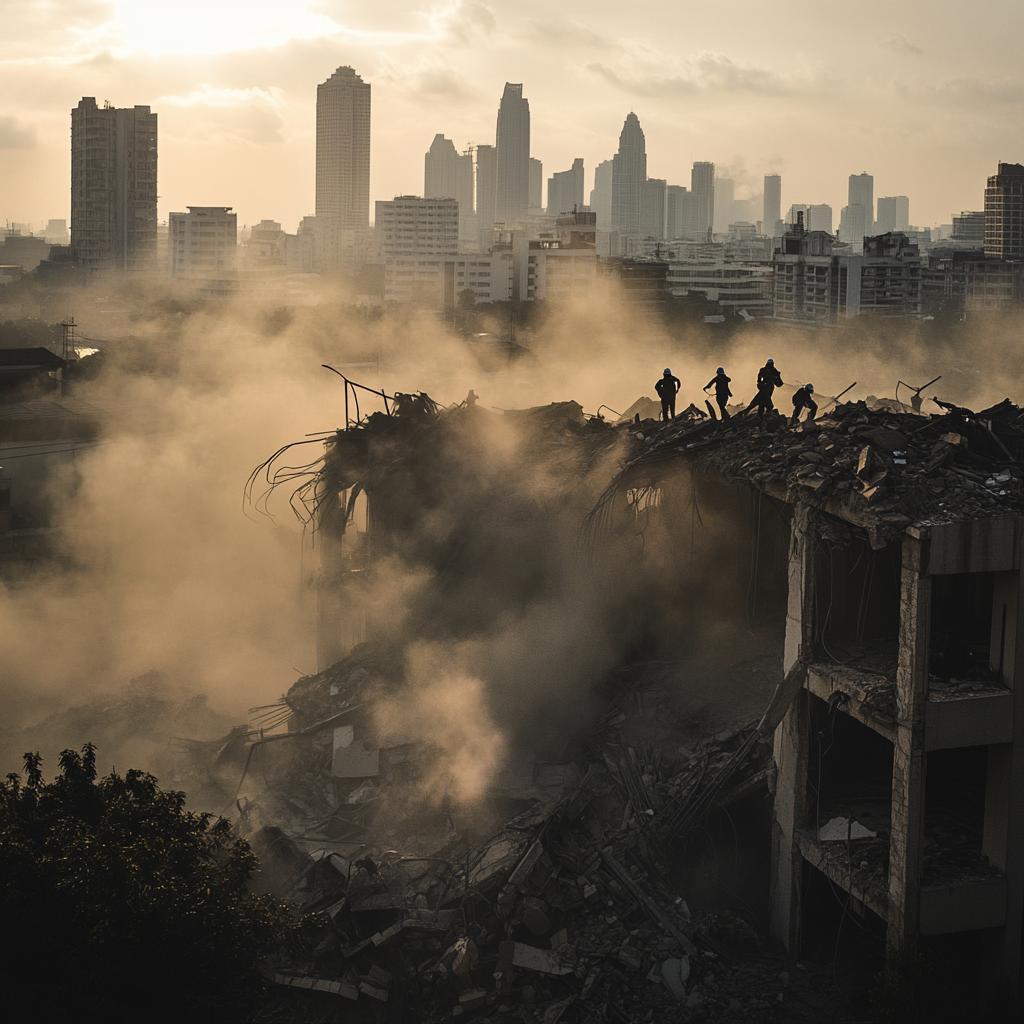
The recent site inspection of the collapsed SAO building has unveiled both reassuring and concerning findings, according to the Department of Health's latest reports. While levels of heavy metals and asbestos are comfortably within normal limits, PM10 dust levels have alarmingly exceeded standard thresholds, signaling the potential necessity for extended monitoring to ensure public safety.
On April 18, Dr. Amporn Benjapolpitak, the vigilant Director-General of the Department of Health, Ministry of Public Health, made known that a dedicated team from SEhRT had been promptly deployed to a makeshift shelter at JJ Mall in Chatuchak. Their mission—assess the air quality and address the concerns of those impacted by the earthquake that shook Myanmar. The purpose of these assessments? To bring some solace to the troubled hearts of the public, rescue workers, and the families of those stricken by the disaster.
In an added layer of caution, the Department of Health expressed their diligence toward the welfare of personnel on-site, extending support with test kits to monitor food and water for harmful bacterial contamination. Dr. Thiti Sawangtham, Deputy Director-General, assured that the SEhRT team had been leaving no stone unturned as they assessed two crucial locations.
The initial evaluation at the temporary shelter tent, a joint effort with the Kanjomphalang Foundation, revealed April 4-5 figures for PM10 levels, spanning 49.1 to 109.1 µg/m3, alongside PM2.5 levels fluctuating between 24.2 to 42.9 µg/m3. Total Volatile Organic Compounds (TVOC) arrived at a steady 160 ppb. While these numbers fell mostly within acceptable ranges, it's a reminder that some zones require more vigilant attention over time.
A separate study targeted the atmosphere at the incident's forefront, just outside the command center tent. Air samples were meticulously analyzed for total suspended particulates (TSP) along with an array of heavy metals like mercury, lead, cadmium, copper, and chromium—not to mention asbestos. Encouragingly, the heavy metals and asbestos were within safe bounds; however, TSP was an unsettling 808 µg/m3, notably exceeding the national environmental standard of 330 µg/m3.
These crucial findings were diligently delivered to Associate Professor Tawida Kamolvej, Deputy Governor of Bangkok, to coordinate preventative measures. Key recommendations include outfitting personnel regularly exposed to dust with appropriate personal protective equipment (PPE), like N95 masks and goggles. Timely body cleansing should follow any hint of irritated skin, and designated dust-free zones should help reduce health hazards for all workers, as highlighted by KhaoSod.
For the families residing in the shelter, precautionary measures are recommended to avert dust-laden air from breaching the tent confines. It's a collective effort in the pursuit of health preservation. Face masks remain a vital line of defense for residents swaddled in the dust-filled surroundings, according to Dr. Thiti.
As the dust settles over this unfortunate event, these efforts reflect a broader commitment to ensuring safety and well-being for all those affected. In a nation bustling with news—the tenacity of Thai sailors vying for victory in Sattahip; tragic accidents, arrests, and the relentless buzz of economic activity—the unified call for preparedness and vigilance in the face of adversity never grows old. With each headline, safety remains the undying priority, a promise held firm amidst the ever-changing tides of time.



Comment verification
Step 1 of 3
Verify your email once to publish your comment. Your email is never shown publicly.
Enter the 6-digit code sent to .
Choose the display name shown next to your comments.