Chadchart Sittipunt: Leading Bangkok's Resilient Response to Chatuchak Building Collapse
In the bustling heart of Bangkok, where the vibrant cityscape grapples with the forces of nature, a story of resilience and empathy unfolds. Chadchart Sittipunt, Bangkok's Governor, took to the airwaves on an otherwise…
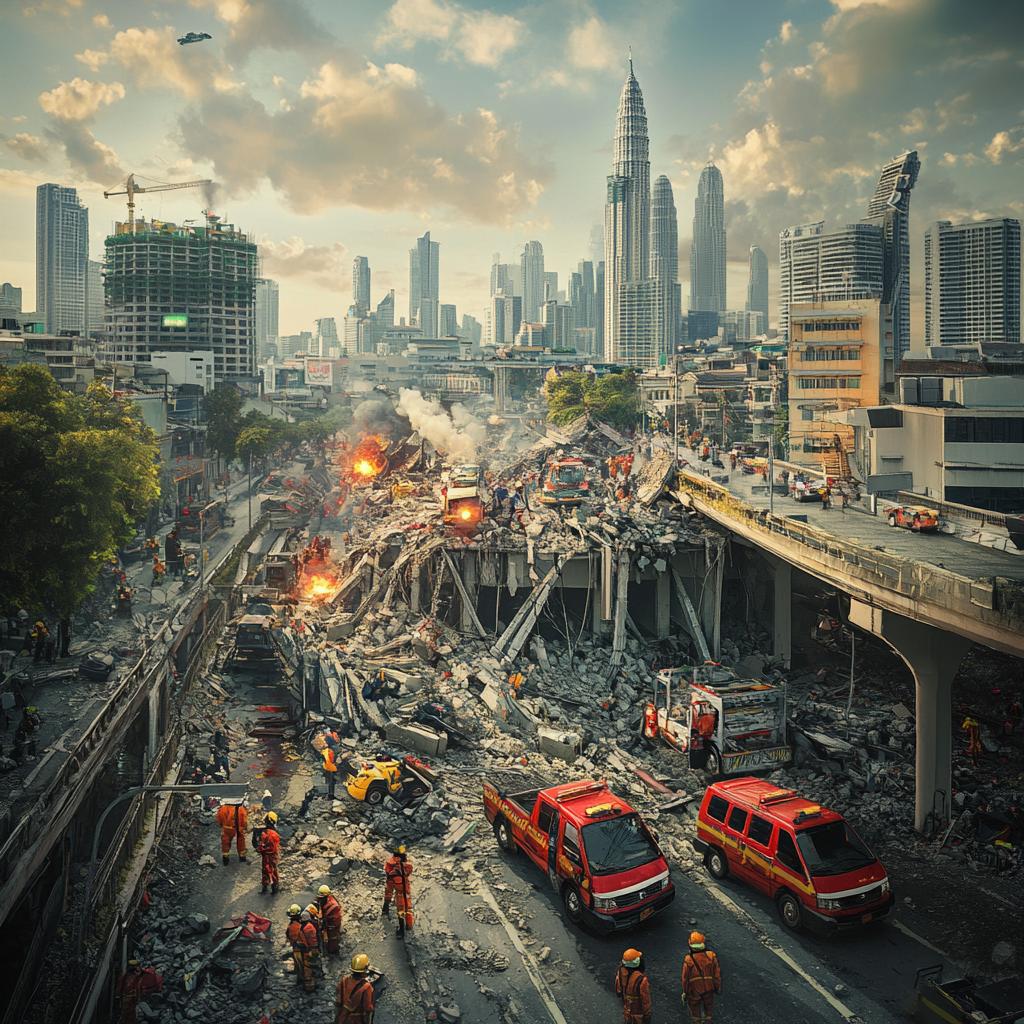
In the bustling heart of Bangkok, where the vibrant cityscape grapples with the forces of nature, a story of resilience and empathy unfolds. Chadchart Sittipunt, Bangkok's Governor, took to the airwaves on an otherwise unremarkable Saturday, addressing concerns spiraling from the recent calamity that befell the metropolis—a catastrophic building collapse in the Chatuchak district. He spoke with a blend of authority and compassion, eager to reassure the public of the Bangkok Metropolitan Administration's (BMA) unwavering dedication to cooperation with every agency involved in the ongoing operations.
Rumors had swirled like transient storm clouds overhead, suggesting discord and disarray, but Chadchart was quick to dismiss these speculations. He emphasized the strides made in fortifying communication and coordination since the initial chaos erupted, marking a significant improvement in the rescue efforts that followed.
The building in question, the State Audit Office (SAO) edifice on Kamphaeng Phet 2 Road, was still under construction when it succumbed to the malevolent tremors of a staggering 8.2-magnitude earthquake in Myanmar's Mandalay region on March 28. This seismic wrath trapped over a hundred workers within its concrete grasp, setting the stage for an extensive and heart-wrenching rescue operation.
Chadchart, in his weekend address, detailed the ongoing efforts to stabilize and search through the wreckage. The building's front section, known as Zones A and D, now stands a humbled 12 meters tall, while the rear sectors, Zones B and C, have been whittled down to just 10 meters. Rescue teams, driven by urgency and hope, have zeroed in on these latter zones—areas presumed to hold many still-unaccounted-for souls.
The somber tally of recovered victims rose with the retrieval of six bodies, found near what was once an emergency staircase adjacent to the elevator shaft. The Governor noted the intention to delve deeper into this area, theorizing that more victims are likely ensconced between floors 14 and 18—a conjecture supported by prior investigative insights.
All discovered remains are subject to meticulous forensic examinations, ensuring precision and respect in the confirmation of identities. The current count of casualties stands at 47 lives lost, nine individuals injured, and 47 more hauntingly unaccounted, out of 103 affected by this disaster's shadow.
Addressing media allegations of obstruction, Chadchart stood firm against accusations of BMA impeding evidence collection, proclaiming an unwavering commitment to transparency and collaborative investigation. He acknowledged initial hurdles with candor, admitting that miscommunications may have seeded misunderstanding, yet assured that inter-agency efforts have since reached a harmonious synchronization.
From amidst the rubble and poignant disorder, emerges a voice of survival—Myan Mong, a 43-year-old worker from Myanmar. Amid the dusty din of catastrophe, Myan offers a first-hand account of the ordeal that unfolded. He narrates with raw emotion how he was stationed on the ill-fated 29th floor, ensconced between Zones B and C, as the structural fabric unraveled. In a poignant twist of fate, he parted ways with his companions mere moments prior to the collapse.
"I was still inside when I felt it succumbing, crashing down towards the earth. My head throbbed with pain, I was injured and ensnared beneath the debris. Slowly, I clawed my way through the rubble to salvation," he recounted with a hushed tone.
Yet, amidst his survival, lies the heartbreak of knowing seven colleagues remain missing, while three more bear the scars of injury. In the wake of such personal tragedy, Myan received a lifesaving gesture—10,000 baht from his employer, Italian-Thai Development, signifying the solidarity and support that arise in times of crisis. Further assistance from the Department of Disaster Prevention and Mitigation (DDPM) is anticipated, a beacon of hope in the aftermath of adversity.
As Bangkok mourns and hopes in equal measure, it becomes clear that in the face of nature's wrath, the ties of humanity grow stronger, binding everyone touched by this tragedy in a shared quest for healing and recovery.



Comment verification
Step 1 of 3
Verify your email once to publish your comment. Your email is never shown publicly.
Enter the 6-digit code sent to .
Choose the display name shown next to your comments.