Champasak Discovery: Unearth 70 Ancient Buddha Statues in Laos Treasure Trove
In what can only be described as an archaeologist's dream come true, the serene district of Champasak in southern Laos has found itself at the heart of a historical treasure chest. During an ordinary Monday morning on…
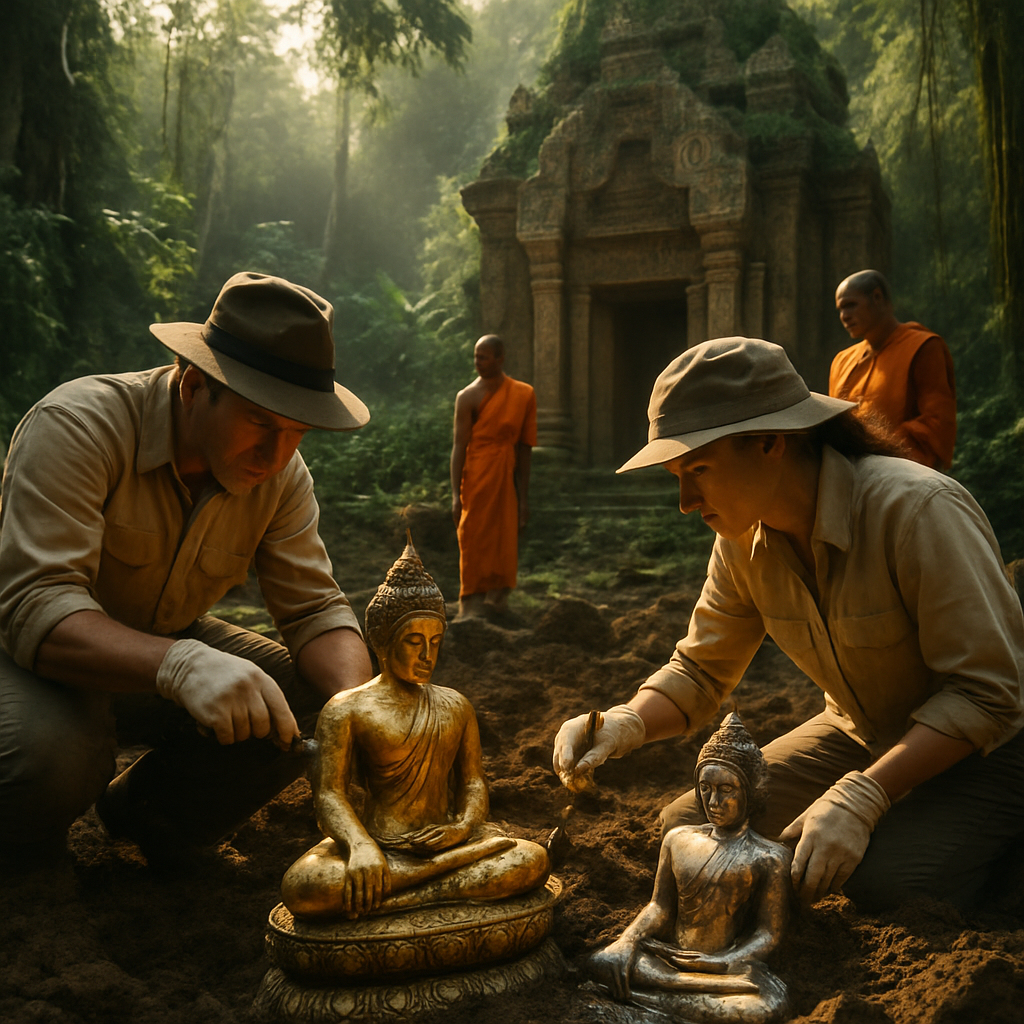
In what can only be described as an archaeologist's dream come true, the serene district of Champasak in southern Laos has found itself at the heart of a historical treasure chest. During an ordinary Monday morning on July 14, as restoration efforts were underway at Vat Meuang Kang temple, a trove of 70 ancient Buddha images emerged from beneath the soil, hidden away in a sizable jar just a mere 45 centimeters below the earth's surface. Seemingly, it's another testament to the region's rich tapestry of history, each artifact serving as a thread weaving into the sacred stories of Champasak.
This peculiar discovery, as reported by Lao National Radio, is not an isolated incident but part of a burgeoning pattern of astounding archaeological unearthings that have recently unfolded across the lands of Laos. Take 2024 for instance, when astonishing finds of Buddha statues were reported in Bokeo and Xiengkhouang provinces. One particularly dramatic excavation along the Mekong River in Tonpheung district revealed over 200 statues, relics of the long-lost city of Souvanna Khomkham dating back four to five centuries. The air in Champasak feels thick with dreams whispered by ancestors long past.
Within this newfound cache nestled beneath Vat Meuang Kang temple lay 69 silver Buddha figures and one fashioned out of gleaming gold, each measuring in height from 10 to 18 centimeters, their lap widths varying from 3 to 5 centimeters. These statues stand majestically posed in two timeless postures: the pang samathi, the serene meditative state, and pang chana man, symbolic of victory over the temptations of Mara. This treasure trove, once illuminated by earthly light after centuries of entombed solitude, quickly became the focal point of the Vat Phou Champasak World Heritage Division. "The artifacts were discovered during routine renovations and have since been securely safeguarded," noted Khamchan Xaimoungkhoun, Head of the Division.
Preliminary analysis by experts situates these images in the timeline of the 17th to 18th centuries. Each statue acts as a beacon, shedding light onto the layered historical richness of the area. Not far from these discoveries lies the Vat Phou temple complex, a UNESCO World Heritage Site known for its ancient Khmer architecture and spanning from the 10th to 14th centuries, according to reports relayed by The Nation. Presently, efforts are underway to collaborate with the temple abbot, local dignitaries, and district authorities to establish a permanent home for these sacred figures – a sanctuary where their cultural and spiritual significance can continue to inspire and unite.
This extraordinary find further amplifies the archaeological allure of Laos, inviting scholars and enthusiasts alike to delve into the spiritual and historical narratives embedded within its soil. By studying these unearthed treasures, there's hope they will unravel some of the mysteries of Laos' opulent bygone eras. Truly, within the dusty folds of history rests the spirited elegance of the Buddha images, whispering tales of a golden past eager to be retold.



Comment verification
Step 1 of 3
Verify your email once to publish your comment. Your email is never shown publicly.
Enter the 6-digit code sent to .
Choose the display name shown next to your comments.